RSS Google AI Blog
Follow
Measuring heart rate with consumer ultra-wideband radar
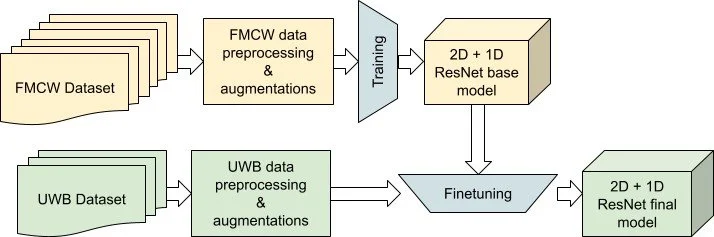
Consumer devices, such as smartphones, are becoming increasingly capable of monitoring fitness and wellbeing through various sensors. Google has previously developed sleep sensing technology using radar, called Soli, which can track vital signs like heart rate and breathing rate during sleep and meditation. Researchers have now demonstrated that ultra-wideband (UWB) technology, commonly found in mobile phones, can be used for radar-based heart rate measurement. UWB technology has been largely untapped for radar sensing, but it has the potential for vital sign monitoring. The radar capabilities of UWB allow for contactless heart rate measurement, which is challenging due to the tiny movements of the chest wall caused by the heartbeat. To overcome this challenge, researchers developed a new method that makes optimal use of the unique properties of the radar signal to achieve highly accurate heart rate measurement. The researchers also investigated if features learned from FMCW radar could be transferred to UWB radar, and found that learned features can be transferred between radar types for vital sign measurement. The study showed that the model can achieve a mean absolute error of 4.1 beats per minute and a mean absolute percentage error of 6.3% for heart rate measurement using UWB radar. This technology has the potential to enable contactless heart rate measurement using consumer devices, especially as UWB technology becomes more prevalent in mobile phones. The research establishes the groundwork for future applications, including continuous monitoring of heart rate in various daily settings.