AWS Machine Learning Blog Note

AWS Machine Learning Blog

The provided URL is for the Amazon Web Services (AWS) Machine Learning Blog. This section of the AWS website showcases articles and updates about machine learning technologies, how to use them with AWS, and real-world applications and use cases of machine learning. These blogs are designed to help developers, scientists, and engineers understand how to leverage machine learning for a variety of tasks such as predictive analytics, natural language processing, and computer vision, among others. The blog section also discusses new and emerging trends within the machine learning field and how to integrate them with AWS services.

Thread Of Notes

Amazon SageMaker AI Async Inference now supports inline request payloads

Today, we’re announcing inline payload support for Amazon SageMaker AI Async Inference. Customers can now send inference payloads directly in the request body of the InvokeEndpointAsync API, removing the need to upload input data to Amazon Simple Storage Service (Amazon S3) before each invocation.

Context intelligence for your data and AI agents at scale

Agents are only as intelligent as the context they can reason over. Today, that context is scattered across data lakes, data warehouses, lakehouses, databases, and streams, and in institutional knowledge that has never been written down. You want to trust the decisions made by your AI agents, but that can't happen until agents have context. Imagine what becomes possible when we give agents a safe way to access the context they need to deliver trusted decisions. This is why at the AWS Summit New York City, we’re announcing a series of innovations that deliver intelligence for your data and AI agents at scale.

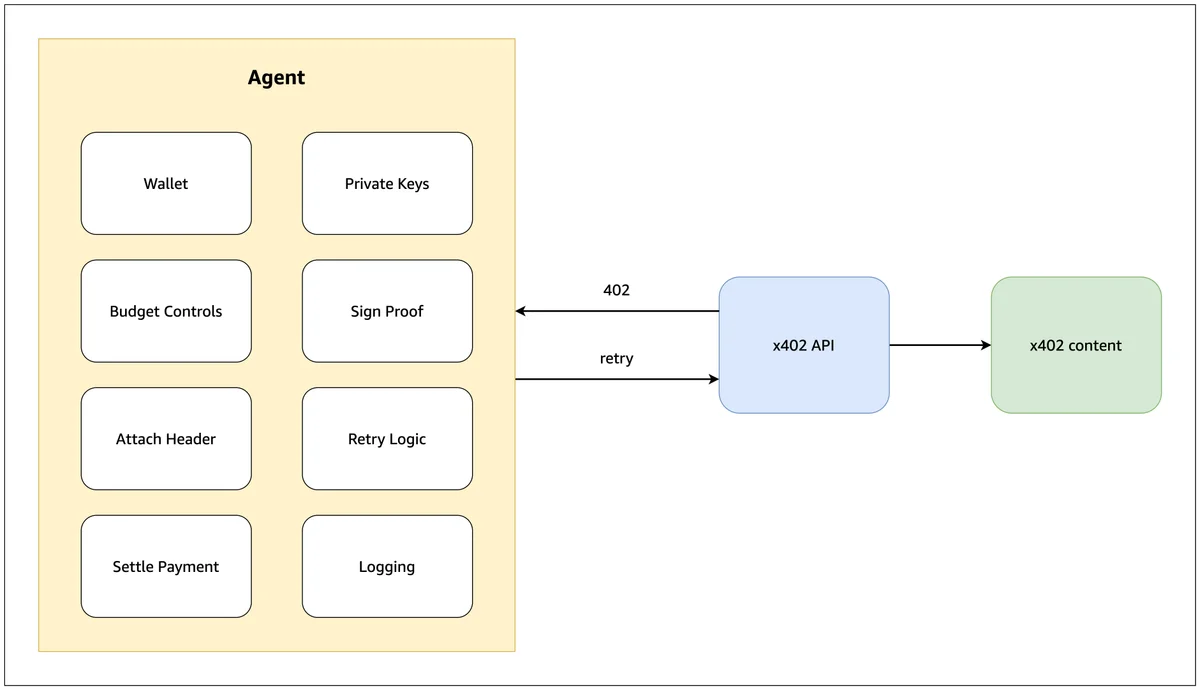
New in Amazon Bedrock AgentCore: Build agents with broader knowledge and continuous learning

Today we're introducing new capabilities on Amazon Bedrock AgentCore, the platform to build, connect, and optimize agents. In this post, we cover how these capabilities close each gap: connecting agents to organizational, web, and paid knowledge; helping teams find and fix what's going wrong in production; and enforcing controls that scale as agents grow more capable. Together, they help you build more capable agents faster, govern them with controls that scale, and improve them continuously.
CdXz5zHNQW_QyFj6ifCjy.png

Safeguard your agentic AI applications with the Amazon Bedrock Guardrails InvokeGuardrailChecks API

Today, we’re announcing a new API with Amazon Bedrock Guardrails. With this API, you can apply individual safeguards, also referred to as safety checks, at any point in your agentic AI applications without creating guardrail resources. In this post, we walk through how the InvokeGuardrailChecks API works and how to use it to build safe, multi-turn agentic AI applications.
CdXz5zHNQW_i2rrGSHwhG.png

Introducing container caching in Amazon SageMaker AI for faster model scaling

Today, we’re excited to announce container image caching for Amazon SageMaker AI inference, the next major advancement in our faster scaling optimization journey. This speeds up end-to-end latency by up to 2x for generative AI models during scale-out events.
CdXz5zHNQW_hsyyUSX0at.png

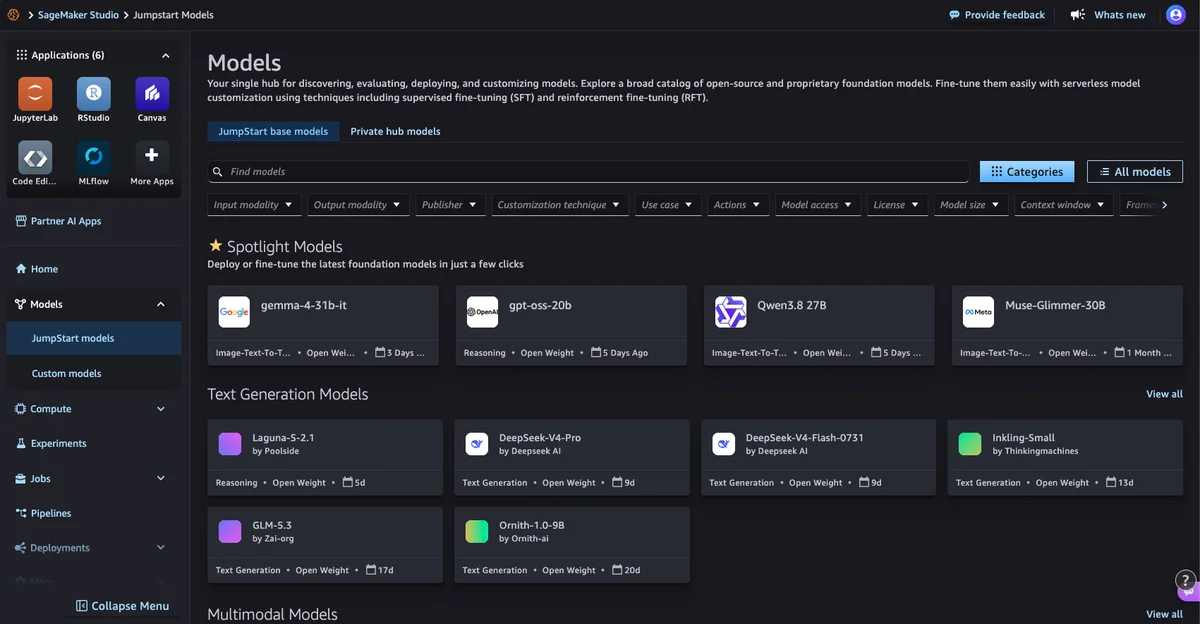
Parallelize speculative decoding with P-EAGLE on Amazon SageMaker AI

This post walks you through how to use P-EAGLE directly within Amazon SageMaker AI. It will demonstrate how to select a compatible model from the SageMaker JumpStart catalog, configure the parallel drafting specifications, and deploy a highly optimized real-time SageMaker AI endpoint to accelerate your generative AI applications.
CdXz5zHNQW_UFPtYiK9fA.jpeg

Introducing Gemma 4 models on Amazon Bedrock

Today, we are announcing the availability of the Gemma 4 family on Amazon Bedrock. Built by Google DeepMind and released under the Apache 2.0 license, Gemma 4 is a family of open-weight models designed with a focus on intelligence-per-parameter across a broad range of deployment scenarios. The family includes three instruction-tuned variants: Gemma 4 31B, Gemma 4 26B-A4B, and Gemma 4 E2B. These cover dense and mixture-of-experts (MoE) architectures, where only a fraction of the model’s parameters activate per request. The variants offer built-in reasoning, native function calling, and multimodal input across text and image.

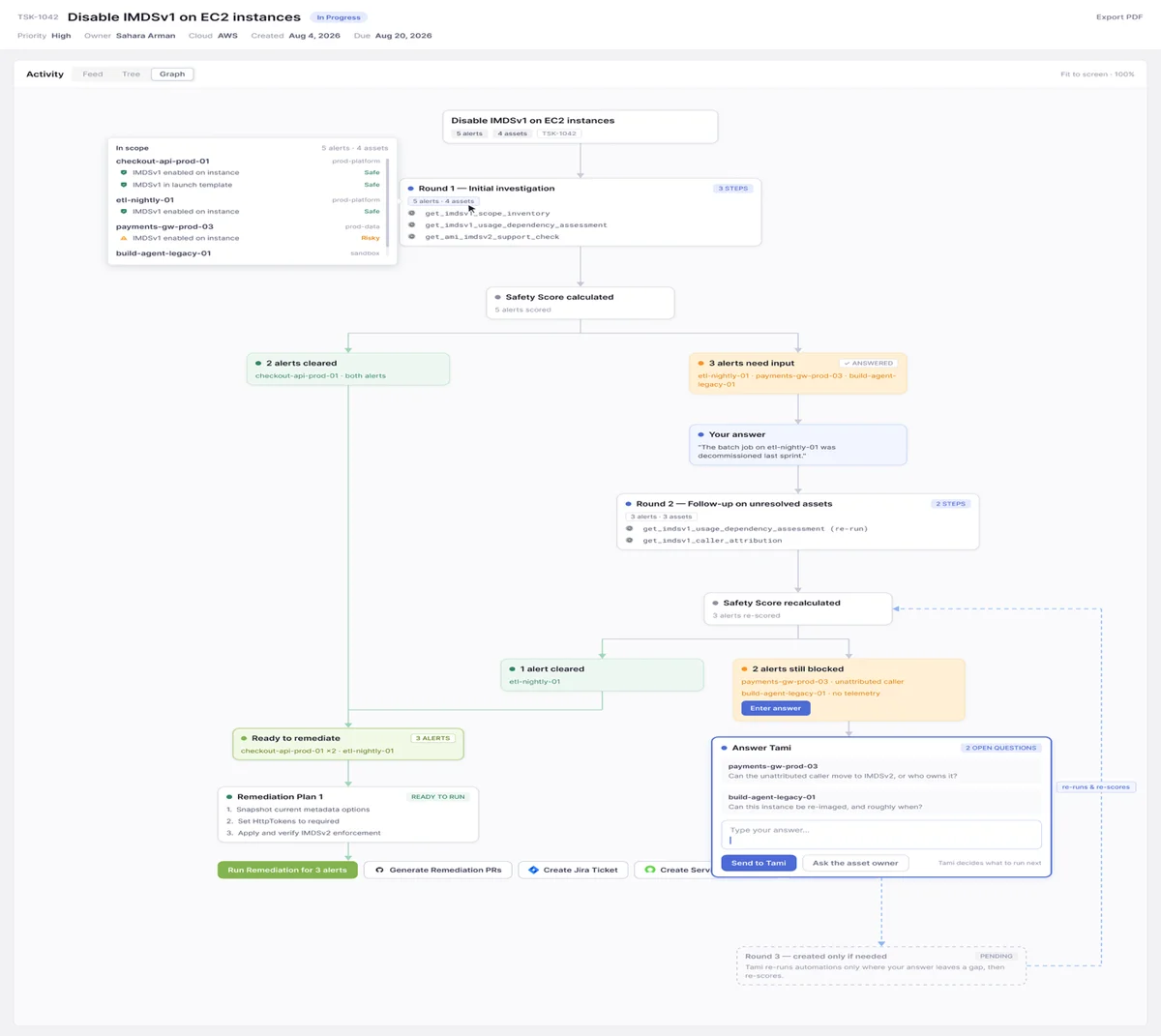
AI Agent Failure Detection and Root Cause Analysis with Strands Evals

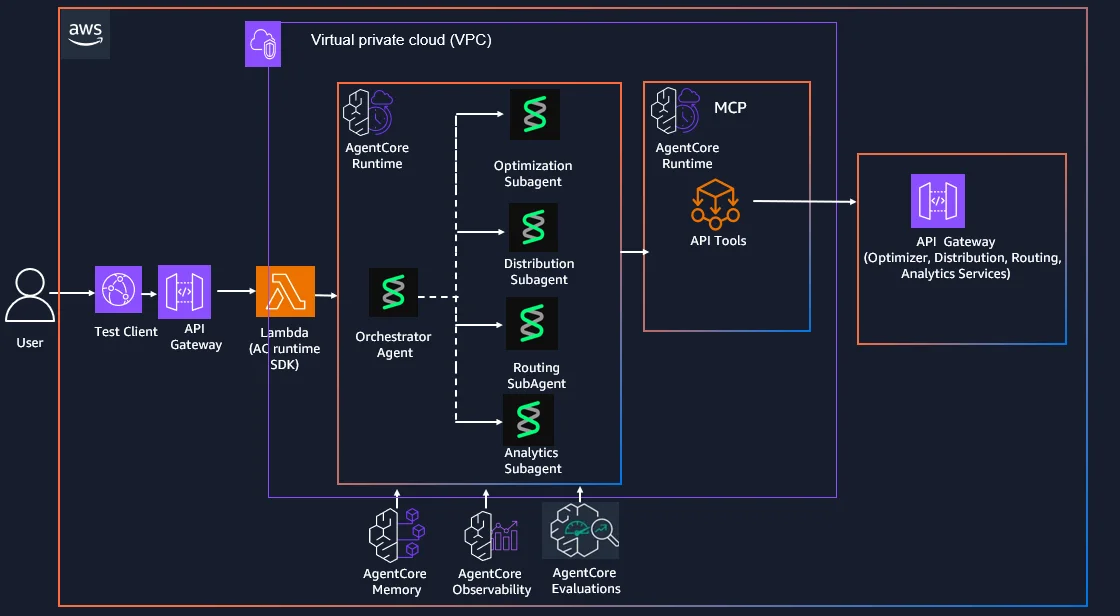
In this post, we walk you through calling the detector functions to diagnose real agent failures. You learn how to interpret their structured output: categorized failures with confidence scores, causal chains linking root causes to downstream symptoms, and fix recommendations specifying whether a change belongs in your system prompt or tool definitions. You also learn how to integrate detection into your evaluation pipeline for automated diagnosis on every test run.
CdXz5zHNQW_zY4s5o3hIt.png

Build context-rich research agents with Deep Agents and Bedrock AgentCore

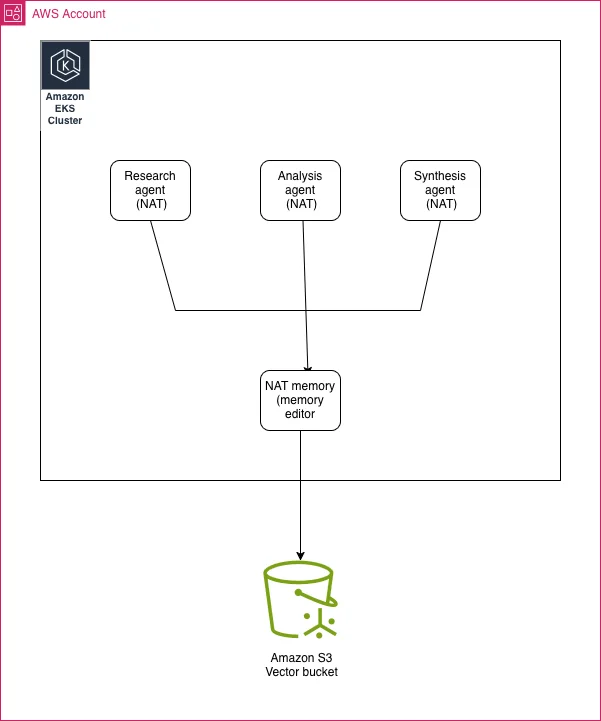
In this post, you'll build a competitive research agent that demonstrates this pattern end to end. This walkthrough targets developers building multi-step AI workflows who need isolated execution environments for their agents. In Part 2 of the notebook, you can deploy this same agent to Bedrock AgentCore Runtime using the AgentCore CLI, so it runs as a managed, session-isolated service.
CdXz5zHNQW_1oUW8HUA2M.png

Building Supercharger: How Rocket Close optimized title operations with agentic AI

In this post, we explore how Rocket Close built a solution using Strands Agents, large language models (LLMs), Amazon Bedrock, Amazon Bedrock Knowledge Bases, and Model Context Protocol (MCP) tools. We cover solution features, the rationale for the technology stack, lessons learned, and the business impact at Rocket Close.
CdXz5zHNQW_LrC3ZbmSJM.png

Build a meeting prep and follow-up assistant with Amazon Quick and Cisco Webex MCP servers

This post shows how to build a custom meeting prep and follow-up assistant using Amazon Quick and Cisco Webex MCP servers. From a single prompt, the agent finds an upcoming Webex meeting, reviews prior meeting summaries and transcripts, and pulls related Vidcast highlights and transcript context. It then searches Webex message threads for unresolved follow-ups and creates a concise prep brief. After the meeting, the same assistant can summarize the discussion and identify action items. It can also find related Vidcast updates and draft a follow-up message for the right Webex space.
CdXz5zHNQW_fnFiuuxGXr.png

From PDFs to insights: Architecting an intelligent document processing pipeline with AWS generative AI services

This post outlines the development of a cost-effective and scalable intelligent document processing pipeline on AWS, powered by Amazon Bedrock and its features. BDA is a managed service within Amazon Bedrock that automates the extraction of insights from documents. We demonstrate how BDA extracts and analyzes document content, while Strands Agent hosted on Amazon Bedrock AgentCore Runtime coordinate specialized processing tasks, and Amazon Bedrock Knowledge Base enable contextual understanding across multiple documents. By combining these capabilities within a unified architecture, organizations can transform their document processing workflows with minimal development effort.
CdXz5zHNQW_peglu7dJbE.png

Built from the inside out: How AWS Professional Services became a frontier team first

AWS Professional Services (AWS ProServe) compressed engagement timelines from months to days, not by adding artificial intelligence (AI) tools to an existing process, but by fundamentally rebuilding how we deliver from the inside out. In this post, we share how AWS ProServe became a frontier team, the practices that enabled it, and what your engineering organization can take from our experience.
CdXz5zHNQW_sdUF0T9PNf.png

Evaluate AI agents systematically with Agent-EvalKit

Agent-EvalKit is an open-source toolkit (Apache 2.0) that makes this evaluation infrastructure available by integrating with AI coding assistants, including Claude Code, Kiro CLI, and Kilo Code. This post walks through how Agent-EvalKit works across its six evaluation phases, using a travel research agent built with the Strands Agents SDK and Amazon Bedrock as a running example.
CdXz5zHNQW_dcCuBEtw7C.png

Spot trends faster, sort smarter: Unlocking Sparklines and Custom Sort in Amazon Quick

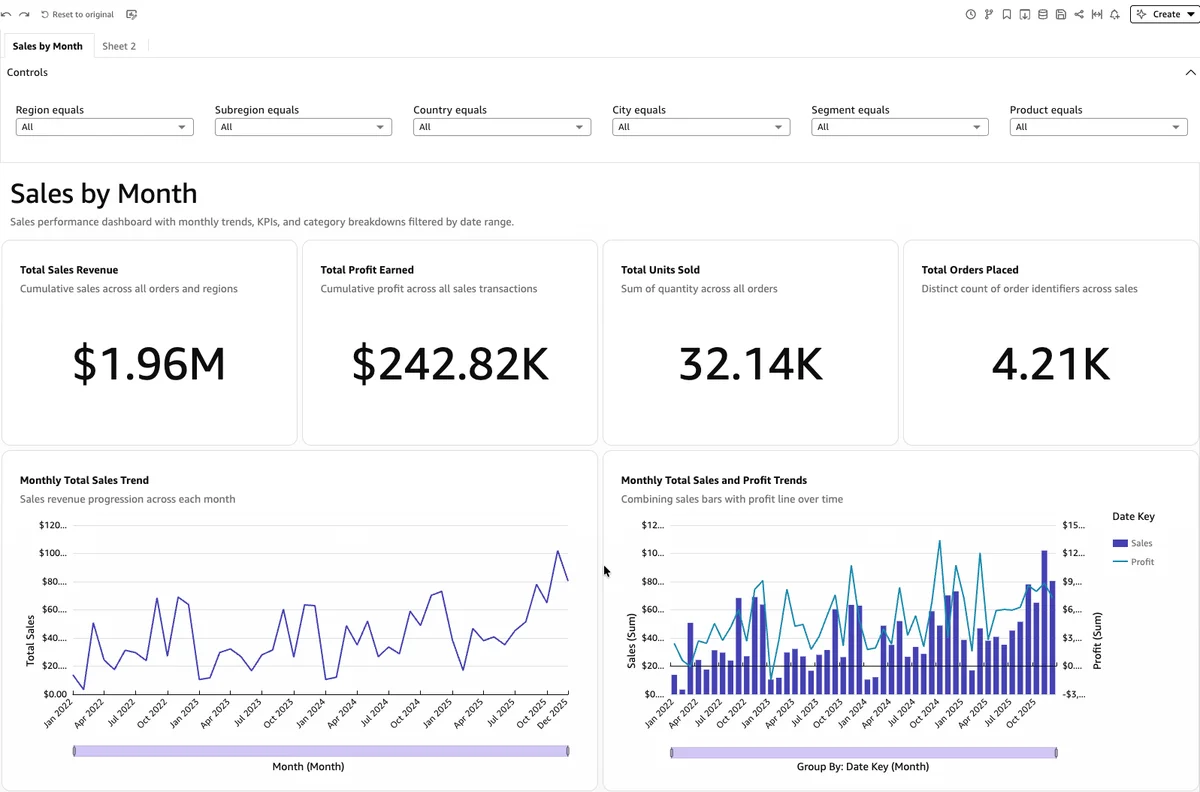
Today, we’re excited to announce two new capabilities that make Quick Sight dashboards even more expressive and business-aligned: sparklines and custom sort for controls. In this post, we walk through both features, what they are, when to use them, and how to configure them, with real-world scenarios that bring them together in a practical, decision-ready dashboard.
CdXz5zHNQW_mwSbD3WsXY.jpeg

Optimize blueprint extraction accuracy in Amazon Bedrock Data Automation

Blueprint instruction optimization is a BDA feature that automatically refines your extraction instructions to address this challenge directly. You provide three to ten example documents with expected values, and BDA refines your blueprint instructions to improve accuracy in minutes, not weeks. No separate model fine-tuning is required. By the end of this post, you can optimize your blueprints to improve accuracy, run the optimization workflow through the Amazon Bedrock console or the API, and apply best practices for selecting examples and ground truth.
CdXz5zHNQW_xJtxMVhvUr.png

Stop hand-tuning kernels: How Neuron Agentic Development accelerates AWS Trainium optimizations

Today, we’re announcing the Neuron Agentic Development capabilities: a collection of AI agents and skills that make this possible for developers building on AWS Trainium and AWS Inferentia. In this post, we explain how the Neuron Agentic Development capabilities accelerate the kernel development workflow.
CdXz5zHNQW_lzsvjzjpDd.png

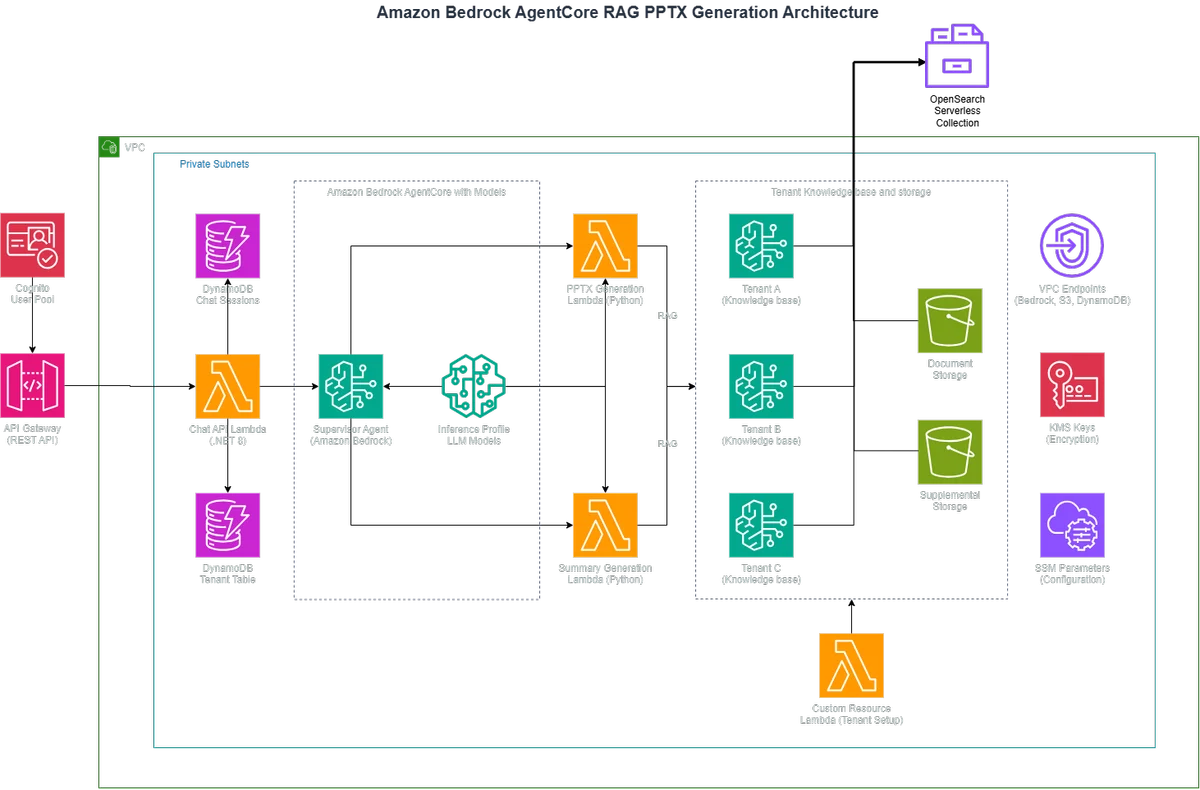
Build an AI-Powered Equipment Repair Assistant Using Amazon Bedrock AgentCore

In this post, you build an AI-powered equipment repair assistant using Amazon Bedrock AgentCore that helps farmers and field technicians diagnose equipment problems, identify required parts, and access manufacturer-approved repair procedures through natural language. The solution uses AgentCore Runtime with the Strands Agents SDK, Amazon Nova 2 Lite as the foundation model, Amazon Bedrock Knowledge Base for retrieval-augmented generation (RAG), and AgentCore Memory for conversation persistence.
CdXz5zHNQW_Elx4ZOLlbW.png

Hands-free first notice of loss: Using Strands Agents and Amazon Bedrock AgentCore Browser Tool for intelligent claims intake

In this post, we demonstrate how a hands-free FNOL intake system combines agents built with the Strands Agents SDK for domain reasoning with Amazon Bedrock AgentCore Browser Tool for live portal interaction. This approach preserves human expertise while removing repetitive screen work.
CdXz5zHNQW_KWCJXGCmIL.png

Build an agentic incident triage assistant with Amazon Quick and New Relic

This post shows engineering teams how to apply that principle to one of the most time-sensitive workflows in engineering: incident triage. You will build a custom incident triage assistant agent using Amazon Quick that orchestrates a response with the New Relic Model Context Protocol (MCP) Server and Asana through native integrations. From a single prompt, the Amazon Quick agent investigates the incident, assembles a root cause analysis (RCA) brief with evidence links, and creates a tracked Asana task ready for handoff.
CdXz5zHNQW_rtLjSHmh5n.png

Unlocking AI flexibility in Europe: A guide to cross-region inference for EU data processing and model access

With access to the latest generative AI models and high-performance accelerated compute in high global demand, AWS customers need tools to take advantage of model availability and capacity across multiple AWS Regions, while still meeting their security and privacy requirements. cross-Region Inference (CRIS) on Amazon Bedrock meets these needs by automatically routing requests across multiple […]
CdXz5zHNQW_pZ99OAWaEx.png

It’s safe to close your laptop now: Hosting coding agents on Amazon Bedrock AgentCore

Amazon Bedrock AgentCore Runtime gives each agent session its own isolated microVM with a persistent workspace, secure tool access through Gateway, and built-in observability—so you can run Claude Code, Codex, Kiro, and Cursor in parallel without sharing secrets, ports, or filesystems. Close the lid, go to dinner, and pick up where you left off tomorrow.
CdXz5zHNQW_uKokJHCyNJ.png

End-to-end encrypted ML inference with Amazon SageMaker AI and FHE

This blog has previously discussed FHE for ML inference in the post Enable fully homomorphic encryption with Amazon SageMaker endpoints for secure, real-time inferencing, but this post goes a little further. That previous post showed how to implement FHE-based inference 'from scratch' by hand-crafting a linear-regression algorithm using a low-level library called SEAL. Instead, this post shows a much more flexible and higher-level approach based on concrete-ml, a high-level library built specifically for FHE-based inference. It supports several common types of models 'out of the box' and is even API compatible with the well-known ML library scikit-learn.
CdXz5zHNQW_lZRyRwHx6Y.png

Amazon Quick ARNs: Cross-account migration and namespace permissions

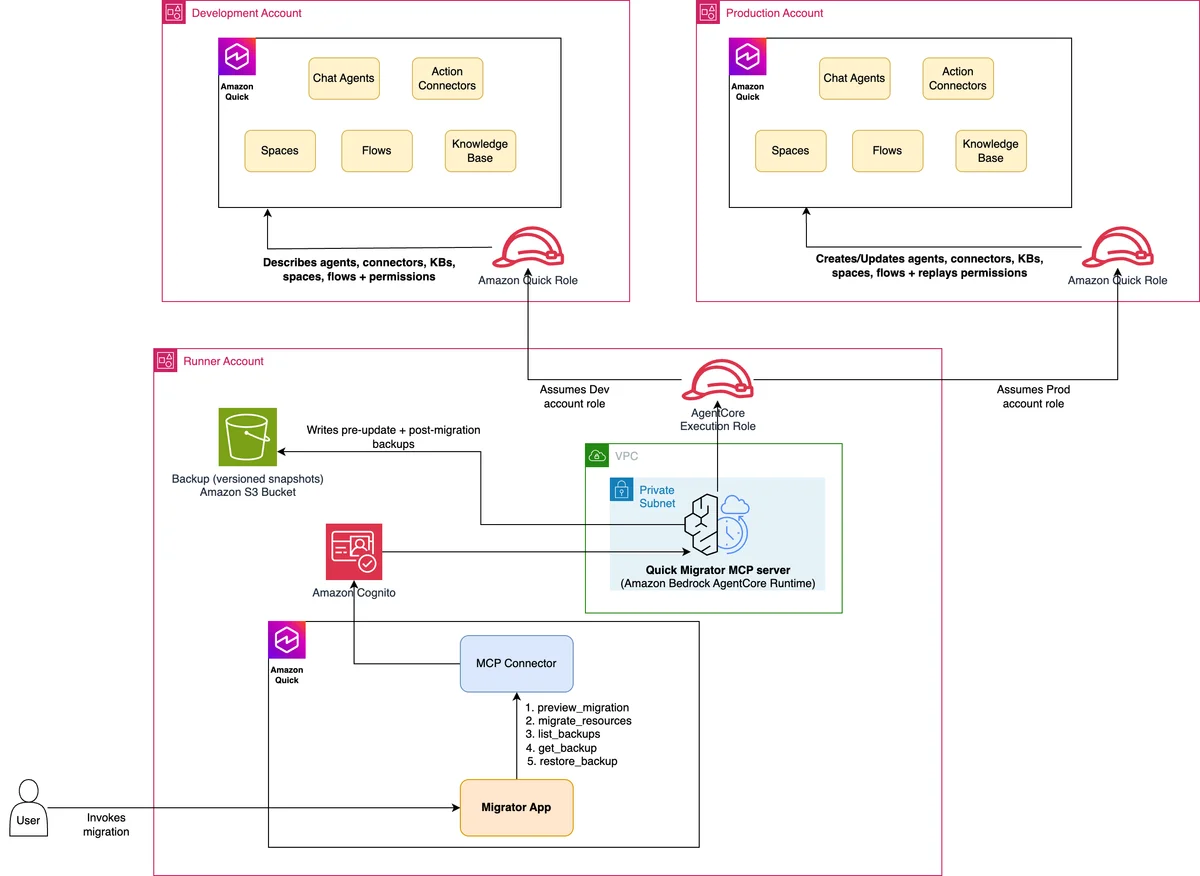
In this post, we cover the structure of Amazon Quick ARNs and provide a practical mental model for working with them. By the end, you can look at an ARN and immediately understand what it means for your migration strategy, diagnose permission issues faster, and design multi-tenant architectures with confidence.
CdXz5zHNQW_KplENPUqkB.png

Evaluate your Amazon Nova Sonic voice agent at scale, no microphone required

In this post, we walk you through the Nova Sonic Test Harness, an open source framework that we built to solve both problems. It serves as a rapid iteration tool for tuning system prompts and tool configurations (run a conversation, see results, adjust, repeat) and as a comprehensive evaluation framework for validating voice agent quality at scale. It runs complete multi-turn conversations with Amazon Nova Sonic automatically, evaluates them using LLM-as-judge techniques, and can even detect cases where the model’s audio output doesn’t match its text output (audio hallucinations). No microphone required.
CdXz5zHNQW_EhsiRQ8N28.png

How to build self-driving AI operations on Amazon Bedrock at scale

In this post, we introduce Amazon Bedrock Ops Alert, a three-layer automated monitoring solution that proactively detects operational issues, dynamically adjusts alarm thresholds, classifies alarms by category, automatically creates context-aware support cases, helps prevent duplicate cases when an unresolved case of the same alarm category is already active, and delivers contextualized notifications to AI SRE teams. We walk through the solution architecture and how you can deploy it in your own environment.
CdXz5zHNQW_3u78FaUwyr.png

Improve your agent’s tool-calling accuracy with SFT and DPO on Amazon SageMaker AI

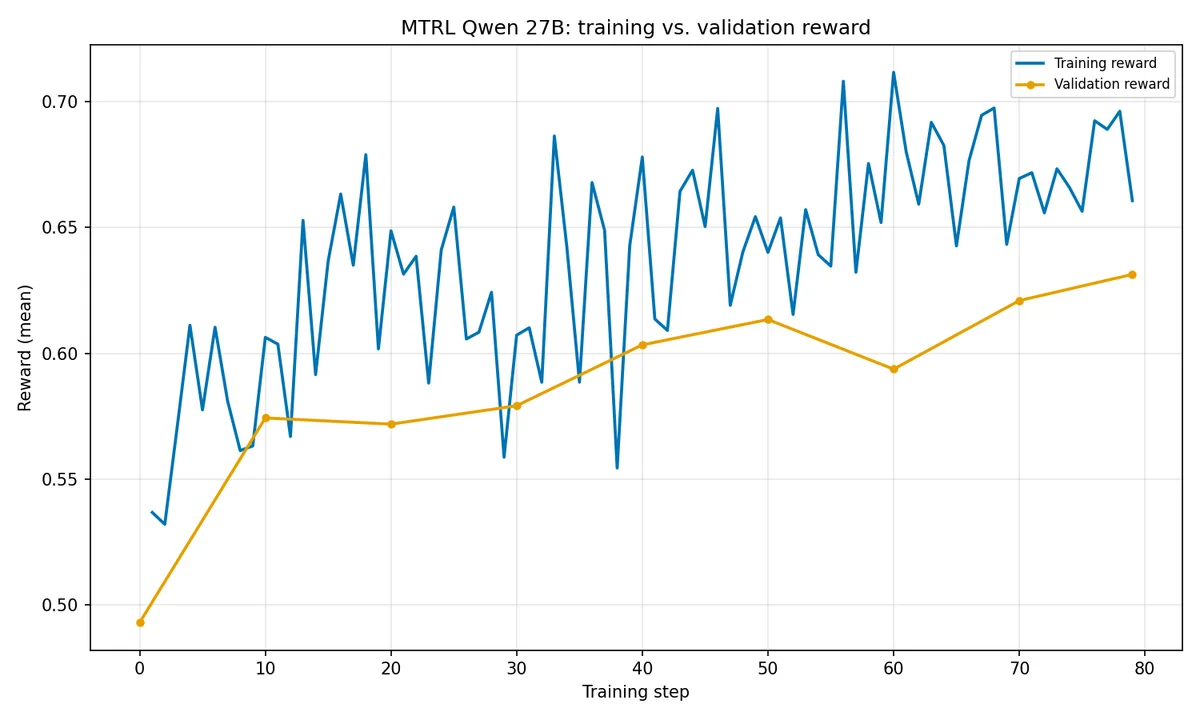
In this post, you learn how to use Supervised Fine-Tuning (SFT) and Direct Preference Optimization (DPO) together to improve the tool-calling accuracy of a small language model (SLM). The example uses Amazon SageMaker AI training jobs, so you can focus on training code instead of managing your own training infrastructure. You also learn how to evaluate tool-calling accuracy and compare a base model to several fine-tuned variants, so you can make data-driven decisions about model quality.
CdXz5zHNQW_5QDwass9I8.png

The art and science of hyperparameter optimization on Amazon Nova Forge

Fine-tuning for domain-specific tasks means improving performance in one area without degrading the model’s general capabilities, and getting that balance right is harder than it looks. This post walks through how to navigate that balance, from selecting the right customization strategy for your data and task, to configuring the training parameters that most influence outcomes, like learning rate, batch size, and checkpointing. We also cover the common mistakes that lead to wasted training runs and how to catch them early, so you can improve domain performance without degrading general capabilities or burning through compute on avoidable failures. By the end, you will know how to improve domain performance without degrading general capabilities and how to avoid the expensive failures that come from getting the balance wrong.
CdXz5zHNQW_6gZKeRry2j.png

Object detection with Amazon Nova 2 Lite

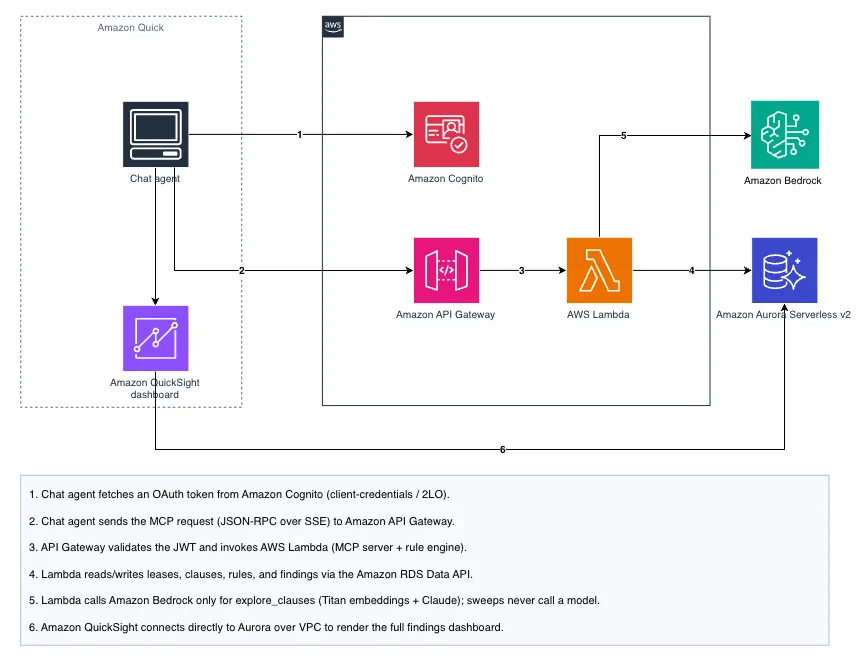
In this post, we'll walk through implementing object detection with Amazon Nova 2 Lite. You'll learn how to deploy an object detection application using Amazon Bedrock, AWS Lambda, and Amazon API Gateway. You'll also learn how to craft effective prompts, process structured JSON output, and visualize results. We explore practical applications across manufacturing, agriculture, and logistics.
CdXz5zHNQW_b6d569sZfw.png

How Baz improved its AI Agent Code Review accuracy using Amazon Bedrock AgentCore

This post walks through how Baz built their Spec Review agent using Amazon Bedrock and Amazon Bedrock AgentCore. We'll cover the architecture decisions, implementation details, and the business outcomes they achieved by leveraging these AWS services to automate their code review process
CdXz5zHNQW_XEQZXdOF8l.jpeg

Building a secure auth code flow setup using AgentCore Gateway with MCP clients

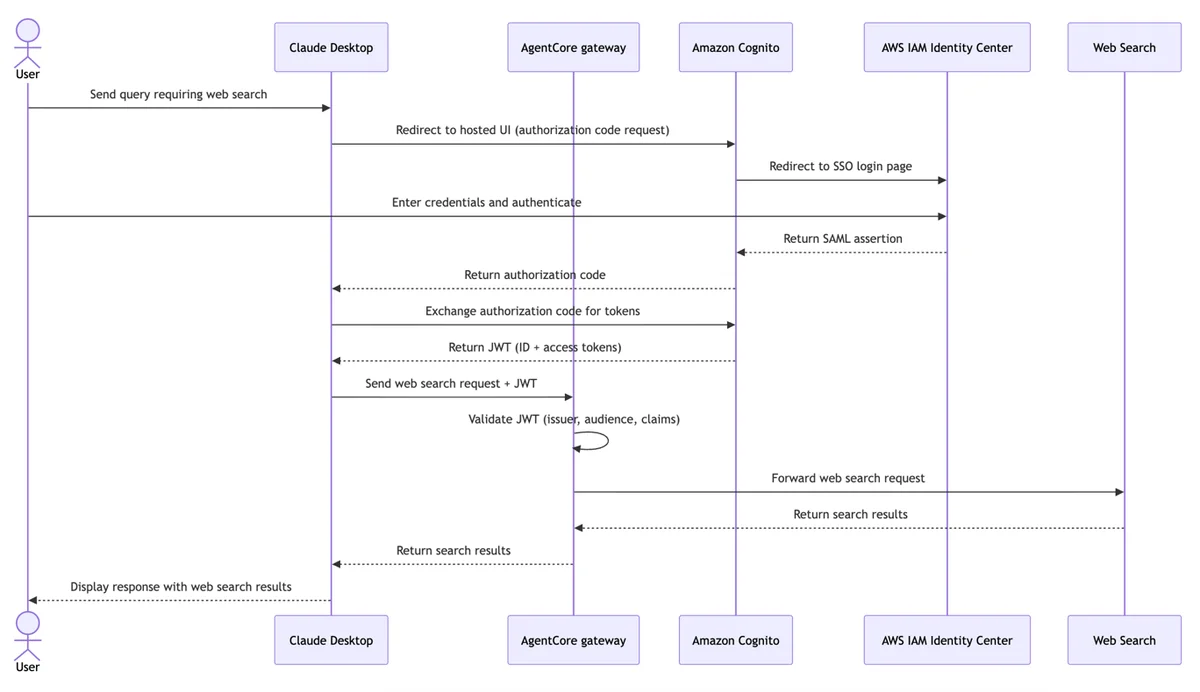
This post demonstrates how to implement Open Authorization (OAuth) Code flow as an inbound authorization mechanism for MCP servers hosted on Amazon Bedrock AgentCore Gateway. By the end of this guide, you will have a production-ready setup where each AI assistant request is authenticated with a valid user identity token issued from your organization’s identity provider.
CdXz5zHNQW_MicsMBiXMo.jpeg

Reference your own AWS Secrets Manager secrets in Amazon Bedrock AgentCore Identity

Today, we’re excited to announce the ability to reference a secret in AWS Secrets Manager for AgentCore Identity, so you can reference your own preconfigured secret from Secrets Manager and retain full control over how it is managed. With this ability, you can extend your organization’s existing secrets governance processes to AgentCore. You can provide an existing, preconfigured AWS Secrets Manager secret to use with your credential provider resources. You retain full control over its encryption configuration, rotation, replication, tags, and resource policies, just as you would manage other secrets in Secrets Manager. You can also choose a secret from another AWS account within the same AWS Region, though cross-Region secret sharing isn’t supported. This also supports secrets brought in through AWS Secrets Manager external connectors, enabling integration with third-party secret managers.
CdXz5zHNQW_zNtYoCtI6A.png

Transforming rare cancer research with Amazon Quick: Integrating biomedical databases for breakthrough discoveries

In this post, we walk through how to use Amazon Quick Research to integrate biomedical data sources for rare cancer research. The walkthrough uses pediatric sarcoma as the research domain and draws on publicly available datasets from PubMed and other open biomedical repositories. It covers the end-to-end workflow: defining a research objective, configuring data sources, reviewing the AI-generated research plan, running the investigation, and iterating on results using the revision and versioning system.
CdXz5zHNQW_JZ57P7YW9R.jpeg

Extending MCP support for Amazon Bedrock AgentCore Gateway

While deploying Model Context Protocol (MCP) servers in production, enterprises need fine-grained access control across servers, observability into which teams use which tools, security guarantees against data exfiltration, and centralized credential management, all at scale. Amazon Bedrock AgentCore Gateway sits between MCP servers and the clients that consume them, centralizing credential management, observability, and secure […]
CdXz5zHNQW_0n3Vui2fh6.png

Secure AI agents with Policy and Lambda interceptors in Amazon Bedrock AgentCore gateway

In this post, we use a lakehouse data agent to demonstrate how you can use Policy for deterministic access control and Lambda interceptors for dynamic validation. We then show how to combine Lambda interceptors and Policy to implement a geography-based access control which requires both dynamic validation and deterministic access control.
CdXz5zHNQW_DEhVNEvCYo.png

AgentOps: Operationalize agentic AI at scale with Amazon Bedrock AgentCore

When you build agentic AI solutions, you face unique operational challenges. Agents make unpredictable decisions, costs spiral unexpectedly, and debugging non-deterministic failures seems impossible. Agentic AI applications don't just execute predetermined workflows. They reason, adapt, and make autonomous decisions, and DevOps practices need to be adapted. That's where AgentOps comes in, the operational discipline for deploying, managing, and continuously improving AI agents in production.
CdXz5zHNQW_8EEvCn1mbX.jpeg

Accelerate LLM model loading and increase context windows with GPUDirect on Amazon FSx for Lustre and TurboQuant

If you’re iterating on deploying large language models (LLMs) on AWS GPU instances, you’ve probably noticed the larger the model to be loaded into GPU High Bandwidth Memory (HBM), the longer the painful wait until the GPUs are ready for inference. As models grow to hundreds of billions of parameters and GPU environments grow ever […]
CdXz5zHNQW_9dUbI7TMgW.png

Amazon Quick integration with time-series databases for market intelligence using MCP

In this post, we walk through a practical implementation using KDB-X MCP server integration with Amazon Quick, demonstrating how traders and analysts can ask questions using conversational language and receive actionable insights from datasets. You can apply this same integration pattern across various domains, from financial market analysis to IoT sensor monitoring to DevOps performance dashboards, where you need to simplify access to time series insights.
CdXz5zHNQW_bwWPbv6dOf.jpeg

Comprehensive observability for Amazon SageMaker AI LLM inference: From GPU utilization to LLM quality

This post demonstrates a comprehensive observability solution using Amazon Managed Grafana dashboards that provides a holistic view of both quality and quantity for LLMs served on Amazon SageMaker AI endpoints with inference components.
CdXz5zHNQW_aDQHc0cILz.png

Training Azerbaijani language models on Amazon SageMaker AI

Azercell Telecom LLC, Azerbaijan's leading telecommunications provider, wanted to build an Azerbaijani large language model (LLM) on Amazon SageMaker AI for telecom use cases and a customer-facing chatbot. The challenge: adapting foundation models (FMs) to a morphologically rich language with limited training data and no existing blueprint for efficient LLM training in Azerbaijani. In a six-week collaboration, Azercell worked with the AWS Generative AI Innovation Center to establish a production-ready framework on Amazon SageMaker AI.
CdXz5zHNQW_Xlbsxkeqf3.png