Google Cloud

cloud.google.com/blog/products/gcp is the official blog of Google Cloud Platform. It provides news, updates, and insights on Google Cloud's products and services. The blog features articles written by Google Cloud experts, engineers, and product managers, offering a behind-the-scenes look at the company's cloud computing technologies. The blog covers a wide range of topics, including new product launches, feature updates, best practices, and success stories from Google Cloud customers. It also provides technical tutorials, code samples, and other resources to help developers and IT professionals get the most out of Google Cloud's services. Some of the key features of the blog include: - Articles on new product launches and feature updates, including Google Cloud's artificial intelligence, machine learning, and data analytics offerings - Technical tutorials and code samples to help developers get started with Google Cloud's services - Success stories from Google Cloud customers, highlighting how they are using the company's services to drive innovation and growth - Insights from Google Cloud experts on industry trends and best practices - News and updates on Google Cloud's partnerships and collaborations with other companies Overall, the Google Cloud blog is a valuable resource for anyone interested in cloud computing, artificial intelligence, and data analytics, and provides a unique perspective on the latest developments in these fields.


Thread Of Notes

What Google Cloud announced in AI this month - 2025

Throughout 2025, Google Cloud focused on accelerating AI innovation and making it more accessible. The year began with foundational model advancements and enhanced security features. February introduced the Vertex AI RAG Engine to improve AI application trustworthiness. March saw the release of Gemini 2.5, Gemma 3, and AI Protection for secure AI deployment. April's Google Cloud Next introduced the Agent2Agent protocol for AI agent collaboration. May's Google I/O showcased advanced creative models like Veo 3 and introduced the Jules coding agent. By June, the Gemini CLI allowed developers to integrate AI directly into their workflows. The second half of the year emphasized real-world AI value and agentic capabilities. July saw the development of Big Sleep for vulnerability detection. August introduced Nano Banana for simplified image blending and released 1,001 gen AI use cases. September launched the Agent Payments Protocol, enabling agents to conduct transactions securely. October introduced Gemini Enterprise as the primary AI platform for businesses and expanded NVIDIA partnerships. The year concluded with Gemini 3, the most intelligent model to date, and the general availability of Ironwood TPUs and the Antigravity development platform. Google Cloud aims for 2026 to be about what users build with these advancements.
CdXz5zHNQW_z4H1PRIBp0.png

What’s new with Google Cloud - 2025

Google Cloud has released several updates, including advancements in AI agents, security features, and API management. Vertex AI Agent Builder now offers enhanced tool governance and new capabilities for building agents. Single-tenant Cloud HSM is generally available, providing secure key control. Security Command Center Premium is now accessible to pay-as-you-go customers, expanding AI security. Application Design Center reached general availability, streamlining cloud infrastructure design. Apigee saw updates, including feature templating and support for Model Context Protocol. New fully-managed MCP servers aim to simplify AI agent integration. Google's Marketplace offers customer credit programs and safer Kubernetes upgrades. Object Contexts in Google Cloud Storage are introduced for semantic data management. Apigee's abuse detection features offer IP allowlisting. n8n deployment to Cloud Run is simplified, and GKE Node Memory Swap is in public preview. The Data Engineering Agent for BigQuery has also been released in preview.

The Year in Google Cloud — 2025

The year 2025 saw Google Cloud announce significant advancements across AI, including new AI models like Gemma 3 and Gemini 2.5, and AI-powered tools such as the Gen AI Toolbox for Databases. Customer stories highlighted the use of Google Cloud by companies like L'Oréal, Deutsche Börse, and Vodafone Italy. Key product launches included the introduction of Ironwood TPUs, Vertex AI RAG Engine, and the Veo 3 video generation model. Google Cloud expanded its reach with a new region in Sweden and acquired the cybersecurity firm Wiz. April saw the annual Google Cloud Next conference, showcasing innovations in AI infrastructure and agentic systems. Readers showed interest in AI-related certifications and learning opportunities, including those related to generative AI. Security remained a focus, with discussions on AI protection and cybercrime alongside agent security. The Agent Payment Protocol (AP2) emerged as a notable method for monetizing AI within the enterprise.
CdXz5zHNQW_HBxJbbSnor.jpeg

Supporting Viksit Bharat: Announcing our newest AI investments in India

India's AI adoption is rapidly growing, prompting significant investments in local tools and infrastructure. Google is expanding its local AI hardware capacity in India, utilizing its AI Hypercomputer architecture and latest TPUs. This increased compute power will allow businesses and public sector organizations to train and serve advanced Gemini models within India. The aim is to enable high-performance, low-latency AI applications while meeting India's data residency and sovereignty requirements. Beyond infrastructure, control over data and models is crucial for digital sovereignty. Google is committed to delivering its latest AI advancements with necessary controls for Indian users. New services will facilitate building models that understand India's unique business logic and cultural context. Gemini 2.5 Flash is now generally available in India with batch support for cost-effective, non-real-time tasks. Document AI is entering preview with local support for automating document processing. A new capability, Grounding on Google Maps, will enhance AI applications with accurate, location-aware answers. Google is also collaborating with IIT Madras on Indic Arena, a platform for evaluating and ranking AI models for India's multilingual landscape, providing cloud credits for this initiative. This sovereign AI ecosystem strategy emphasizes cultivating local talent and innovation. The company invites the Indian ecosystem to leverage this dedicated capacity for Gemini in Vertex AI to build AI solutions for India.

How scientists can leverage AI agents using Gemini Enterprise, Gemini Code Assist, and Gemini CLI

Scientific inquiry is evolving with AI's active participation in discovery. Google Cloud is developing tools to facilitate this transformation. AI assists researchers by analyzing vast datasets, generating hypotheses, designing experiments, and interpreting results. This collaboration amplifies human intellect, enabling faster and more precise exploration. Google Cloud integrates high-performance computing with advanced AI on a unified platform for seamless workflow. AI agents like Deep Research and Idea Generation help identify research opportunities and propose novel hypotheses. Gemini Code Assist and Gemini CLI automate coding, streamline workflows, and accelerate the transition from hypothesis to results. Gemini CLI manages complex research processes and transforms raw data into publication-ready content. Google Cloud offers a unified platform powered by HPC and AI, utilizing specialized VMs and Managed Lustre for efficient data handling. This integrated infrastructure allows researchers to focus on creativity while accelerating scientific progress.

Gemeinsam gegen Geldwäsche: Wie EuroDaT den sicheren Austausch sensibler Finanzdaten ermöglicht

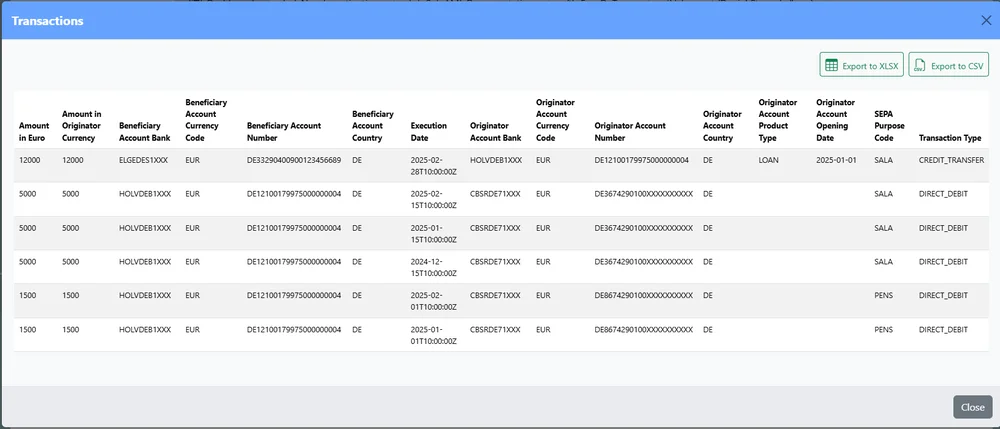
EuroDaT, a subsidiary of the state of Hesse, is a pioneering data trustee enabling controlled, case-specific exchange of sensitive financial data. Their safeAML system, developed with major banks, digitalizes information sharing to combat money laundering effectively. Traditionally, this process involved cumbersome phone calls due to strict data privacy regulations. safeAML allows banks to digitally access necessary transaction details from others without direct data exposure. EuroDaT utilizes Google Cloud's infrastructure, specifically Google Kubernetes Engine, to build a scalable and GDPR-compliant platform. This cloud-native approach ensures secure, isolated environments for each data request, managed through Infrastructure as Code for automated compliance. safeAML is currently being piloted by German banks, accelerating suspicion checks and reducing false alarms. The system facilitates faster, more accurate transaction analysis without compromising data confidentiality. EuroDaT's model extends beyond finance, offering solutions for secure data sharing in areas like ESG reporting and healthcare research. They are collaborating with the German Sustainability Code to help SMEs securely share ESG data with financial institutions. In healthcare, EuroDaT is enabling the secure aggregation of sensitive health and employment data for research and policy decisions, as demonstrated by a study on post-COVID employment impacts. The core principle is to empower data sovereignty by facilitating secure and controlled data exchange when necessary. By acting as a neutral data trustee, EuroDaT ensures data protection remains paramount. Their partnership with Google Cloud embeds data privacy into the foundation of digital collaboration between businesses, authorities, and research institutions.
CdXz5zHNQW_vTMqOoPwid.png

Top 25 blogs of 2025… so far

This Google Cloud blog post provides a mid-year recap of its most popular content from early 2025. It highlights advancements in AI, including new models like Imagen 4 and Veo 3 on Vertex AI, and the Generative AI Toolbox for Databases. The recap also covers enhanced capabilities for BigQuery, now an AI-native data-to-AI platform, and the general availability of Cloud Run GPUs. Security updates are featured, detailing threat detection strategies, espionage actors targeting Juniper Networks and Ivanti Connect Secure, and guidance against cybercrime groups. The post also announces Google's agreement to acquire Wiz to bolster cloud security. Furthermore, it touches upon the growing importance of cloud certifications, the expanding global connectivity with Cloud WAN, and the development of agent-driven enterprises. Innovations like Firebase Studio for full-stack AI apps and Formula E's AI Driver Agent are also showcased. Finally, it emphasizes the real-world applications of generative AI across various industries.
CdXz5zHNQW_sKt2rXL8tL.png

News you can use: What we announced in AI this month

Google Cloud has started the year by investing in its partner ecosystem, open-source, and making AI more useful. The company has announced several updates in AI, including agent evaluation in Vertex AI and the RAG Engine, a fully managed service to build and deploy RAG implementations. Google Cloud has also updated its AI Hypercomputer with A3 Ultra VMs and Hypercompute Cluster, a highly scalable clustering system. The company has invested in its relationship with partners, including the Partner Marketing Studio, and has made several announcements in open-source, such as the public beta of Gen AI Toolbox for Databases. Google Cloud has also showcased its AI capabilities at the National Retail Federation conference, demonstrating how AI agents and AI-powered search can help retailers operate more efficiently. The company has shared several guides and best practices on implementing AI, including a comprehensive guide on Supervised Fine Tuning and how to optimize RAG retrieval. Google Cloud has also published new documentation on using open models in Vertex AI Studio. The company's leaders have shared their observations and guidance on successfully moving AI pilots to production. Google Cloud has seen significant growth in the adoption of its AI technologies, with a 36x increase in Gemini API usage and a nearly 5x increase in Imagen API usage on Vertex AI. The company will continue to provide monthly updates on its AI announcements, news, and best practices.

What’s new with Google Cloud - 2024

Google Compute Engine now supports Windows Server 2025, allowing customers to run Windows Server 2025 Data Center and Data Center Core editions, as well as Windows SQL Server 2022. Google Agentspace is a new tool that helps employees accomplish complex tasks with a single prompt, using advanced reasoning, search, and enterprise data. The Check Grounding API has released a new helpfulness score feature, enabling users to implement Best of N to improve response quality without requiring extensive model retraining. A3 Ultra VMs powered by NVIDIA H200 Tensor Core GPUs and Hypercompute Clusters are now in preview, offering a significant leap in performance for AI workloads. Mandiant Academy has published a new on-demand course, the Cyber Threat Intelligence Program Design Playbook, which explains how to design and build a CTI program. Subsea cable connectivity is coming to Tuvalu for the first time with the addition of the Tuvalu Vaka cable, reducing the digital divide in the Pacific. The reCAPTCHA Password Leak Detection Container App is a new tool that makes it easier to protect users from account takeovers by detecting compromised credentials and prompting users to change their password. Google Cloud has announced GA support for scanning several new operating systems, including Rocky Linux, Alma, and SUSE, as well as upgraded On Demand Scanning to include additional language packages. Term Extension is now available for Compute Engine Committed Use Discounts, allowing customers to extend the term length of their CUDs beyond the preset 1-year and 3-year options. Google Cloud has also announced several other new features and updates, including the Cyber Threat Intelligence Program Design Playbook, the reCAPTCHA Password Leak Detection Container App, and more.

The Year in Google Cloud - 2024

Google Cloud had a busy year in 2024, with many significant announcements and developments. In January, Google Cloud removed data transfer fees for users moving data off its platform. February saw a focus on AI topics, including the expansion of access to Gemini models for Vertex AI customers. In March, developers pushed the boundaries of innovation, while business leaders learned about securely deploying AI on Google Cloud. April brought a record 218 announcements at Google Cloud Next, including the introduction of Google Axion Processors. May saw the introduction of Trillium, the sixth generation of Google Cloud TPU, and a focus on AI-powered applications. June was a month for modernizing databases, delivering higher system reliability, and creating AI-powered apps. July saw the general availability of Google Distributed Cloud air-gapped appliance, and a look back at the history of custom Axion and TPU chips. Throughout the year, Google Cloud expanded its capabilities, introduced new models and services, and explored the impact of AI on various industries. The year closed out with the availability of new image and video generation models and the general availability of Trillium, setting the stage for an exciting 2025.

AI Playground: Where learning and innovation converge in the heart of London

Google Cloud is launching the AI Playground in Central London in the first quarter of 2025 to help bridge the knowledge gap and acquire necessary skills to harness the power of AI. The AI Playground will serve as a dynamic hub for businesses and individuals to demystify AI, explore its potential, and develop practical expertise. The space will feature Google's powerful Gemini model family, including interactive demos showcasing its multimodal and agentic capabilities. Visitors can experience and experiment with Gemini's ability to analyze complex data, generate creative formats, and power innovative solutions. The AI Playground is designed as an immersive learning environment where visitors can engage with AI, participate in hands-on workshops and hackathons, and connect with Google Cloud AI experts. The space addresses the growing need for AI skills development, providing a dedicated space for hands-on experimentation, skills development, community building, and real-world inspiration. The AI Playground will offer interactive workshops and hackathons led by Google Cloud experts, equipping individuals and teams with the expertise needed to thrive in the AI era. By providing accessible learning opportunities and fostering a thriving AI community, the AI Playground empowers individuals and businesses to contribute to shaping a better future. The AI Playground is set to become a place where curiosity meets innovation, learning is hands-on, and the potential of AI is unlocked. The launch is scheduled for the first quarter of 2025, and individuals can mark their calendars to embark on their AI journey at the AI Playground.

London Summit: UK businesses turn to Google Cloud AI

The UK is at the forefront of the AI revolution, with search interest in AI surging by 50% in the past year. Google Cloud's next-generation AI foundation model, Gemini, is empowering UK businesses across various sectors to harness the potential of AI. The Google Cloud Summit London showcases Gemini's impact and features innovations from Google Cloud's extensive portfolio, demonstrating how AI is transforming industries. Google's deepened partnership with Vodafone, involving a 10-year, billion-plus-dollar deal, further strengthens their collaboration in the cloud, cybersecurity, devices, and services across Europe and Africa. Google Cloud's $1 billion investment in a new UK data center in Waltham Cross reinforces its commitment to AI innovation and reliable digital services. The momentum behind AI is evident, with nearly two-thirds of UK organizations allocating a significant portion of their AI budget to generative AI. Google Cloud highlights leading UK companies like BUPA UK, Dunelm, Incubeta, and Vodafone, who are leveraging Gemini and Google Cloud AI to drive real-world impact in healthcare, retail, development, and resource planning. Google Cloud is expanding its data residency commitment, enabling UK organizations to run machine learning processing for Gemini 1.5 Flash within the UK, addressing data sovereignty and compliance concerns. Google Cloud is also supporting UK and EMEA startups, with over 60% of UK-based gen-AI startups being Google Cloud customers. The company launched the Google Cloud Startup Hub in London, providing a dedicated community space for startups and developers. The hub offers hands-on learning, networking opportunities, and access to industry leaders. Google Cloud is also announcing the opening of the AI Playground, an experiential AI demo space designed to inspire and empower developers and organizations. To enhance its data platform, Google Cloud is introducing significant product updates, including the integration of Gemini models with BigQuery, new synthetic data capabilities, conversational analytics, and enhanced security features. Google is also launching an enterprise tier of Code Assist, its AI-powered coding partner, offering enhanced security, context, and integration with Google Cloud services. These investments demonstrate Google Cloud's commitment to making data and AI more accessible and powerful for all users. The summit showcases the UK's role in shaping the future of AI, and the collaborative potential of cloud technology.

Your ultimate guide to the latest in generative AI on Vertex AI

The world of generative AI is rapidly evolving, with constant updates and new model releases. Vertex AI provides access to over 150 models from Google, partners, and the open community. Gemini 1.5 Flash offers low latency and competitive pricing, while Gemini 1.5 Pro boasts an industry-leading 2-million-token context window for complex use cases. Imagen 3 excels in image generation with enhanced features and safety measures. Gemma 2 represents Google's next-generation open model with increased power and efficiency. Anthropic's Claude 3.5 Sonnet joins the Vertex AI model collection. Vertex AI's Model Builder enables model customization and all-in-one development from prototype to production. Context caching significantly reduces input costs for long-context applications. Controlled generation ensures desired output formats. Batch API optimizes efficiency for large numbers of non-latency-sensitive prompts. Enhanced model monitoring capabilities support models hosted outside of Vertex AI and provide unified management. Ray on Vertex AI simplifies distributed AI workloads. Prompt Management offers a library of prompts, versioning, and AI-generated suggestions. Evaluation Services assist in model performance assessment with Rapid Evaluation and specialized metrics for summarization and question answering.

Enhancing LLM quality and interpretability with the Vertex AI Gen AI Evaluation Service

Harnessing the power of LLMs presents two challenges: managing their inherent randomness and addressing occasional factual inaccuracies. To address these hurdles, a new workflow has been developed that utilizes the Vertex Gen AI Evaluation Service to automate the selection of the best response from a diverse set of LLM-generated options. This workflow involves generating multiple responses, pairwise evaluating them to identify the best response, and assessing its quality using pointwise evaluation. The financial institution's use case of summarizing customer conversations exemplifies the application of this workflow to real-world tasks. The workflow enhances the accuracy, helpfulness, and conciseness of LLM-generated summaries, fostering trust and transparency in the system's decision-making. The workflow is applicable to any modality or use case, including question answering and summarization. By leveraging the probabilistic nature of LLMs and the Vertex Gen AI Evaluation Service, this workflow enables the full potential of LLMs to be unlocked.

The overwhelmed person’s guide to Google Cloud: week of June 27

This week's Google Cloud Innovators update highlights several new features and updates. Vertex AI Model Monitoring has been enhanced to improve monitoring of models in production. Newcomers can now try Vertex AI without creating an account or signing in. Single zone instances are now available for managed Redis. IAM conditions can now be used to control access to BigQuery resources. A new fleet-level feature manager for GKE allows for consistent behavior across Kubernetes clusters. The Google Cloud community shares insights on retrieval augmented generation (RAG), proactive security alerts in Security Command Center, and testing SQL queries with BigTesty. Learning opportunities include building AI chatbots with BigQuery, understanding cross-cloud networking, leveraging Cloud Run for AI applications, and grounding Vertex AI results with Google Search. Additionally, Google Cloud has partnered with Oracle to offer a range of database and connectivity options.

What’s new with Google Cloud

Google Cloud provides the latest updates, announcements, resources, events, and learning opportunities. The platform offers Channel Private Offers, enabling efficient private offer transactions via reseller-initiated sales. A benchmark study compares the cost and performance of Apache Flink and Google Cloud Dataflow for streaming data processing. Secure Gateways enhance security with mutual TLS for ingress gateways. Wildcard certificates simplify certificate management for multiple services. Vector search empowers users to analyze logs and asset metadata stored in BigQuery. The Nuvem transatlantic subsea cable system expands to the Azores. Cross-Cloud Networking simplifies infrastructure management, while cloud deployment archetypes guide workload architecture. General Purpose VMs, N4 and C4, optimize costs and performance. Verified Peering Providers simplify connectivity to Google. New training programs expand onramps to tech careers.

What’s new with Google Cloud - 2023

Google Cloud provides a central hub for updates, announcements, resources, events, and learning opportunities. Key highlights include: - Cross-Cloud Materialized Views enable seamless analytics across multiple cloud platforms. - Google Cloud is recognized as Palo Alto Networks' Global Cloud Service Provider of the Year. - GKE Enterprise offers a free 90-day trial for managing critical applications and AI/ML workloads. - BigQuery Cost Management tools help optimize spending and prevent cost surprises. - Generative AI advancements enhance customer service through Google Cloud's offerings. - Cloud FinOps best practices guide organizations in optimizing their cloud budgets. - Google Cloud's Data Analytics Innovation Roadmap outlines strategies for BigQuery, streaming analytics, and data lakes. - Vertex AI Search features generative AI capabilities for customized search applications. - Vector similarity search simplifies building recommendation engines and other applications. - Cloud Deploy enhancements include pre- and post-deployment actions and Skaffold updates. - Artifact Registry's remote and virtual repositories facilitate dependency management.

The year in Google Cloud: Top news of 2023

2023 has been a year of major advancements in technology and cloud computing. Google Cloud has launched several significant new products and services, including generative AI support in Vertex AI, Log Analytics in Cloud Logging, and Application Integration. Google Cloud has also made significant investments in its infrastructure, including the launch of new cloud regions and the development of new AI-optimized hardware. The company has also taken steps to make its services more accessible and affordable, with the introduction of new pricing options and the expansion of its free tier offerings. Looking ahead to 2024, Google Cloud is well-positioned to continue its leadership in the cloud computing market.

Looker Studio brings powerful explorations, fresher data and faster filtering

Looker Studio introduces personal reports, allowing users to explore data and self-serve insights without modifying shared dashboards. Automated report updates ensure data freshness for critical business decisions. Quick filters enable faster and more powerful data exploration within reports. Pausing updates provides control over query volume and costs during report configuration. Viewing underlying data enhances understanding of data context and structure. These updates empower Looker Studio users to access current data, explore insights efficiently, and make informed decisions. Looker Studio continues to expand its user base, contributing to the 10 million users who access the Looker family of products monthly. The platform aims to empower users with self-serve analytics, leading to faster and more informed decision-making.

Looker Studio Pro now available for Android and iOS

Looker Studio Pro, an enterprise business intelligence platform, now offers a mobile app for Android and iOS devices. The app features dynamic report layouts that optimize reports for mobile screens, making them easier to navigate and read. Users can access all their reports through categorized folders and sort them for easy searching. Sharing reports is simplified with a single tap, generating a link for access on any device. The app allows seamless access to interactive reports from scheduled emails and chats. It connects to over 1,000 data sources and community-sourced report templates. To access the Looker Studio Pro mobile app, users must have an existing Looker Studio Pro subscription and sign in with their corporate credentials. By downloading the app from Google Play or the App Store, users can view reports and get real-time data about their business anytime, anywhere.

Getting to know Systems insights, a simplified database system monitoring tool

System Insights is a monitoring tool for Cloud SQL that combines metrics, events, and logs to diagnose database performance issues. It addresses the need for a centralized monitoring dashboard with customizable metrics. The dashboard provides a quick snapshot of key system resources and their status. Pre-built dashboards display actionable metrics based on the RED and USE observability frameworks. The tool allows users to correlate metrics with system events to identify the root causes of performance problems. System Insights offers customizable views to cater to specialist use cases. It complements Query Insights and proactive database wellness recommenders, providing a comprehensive monitoring solution for Cloud SQL. The tool reduces the barrier to entry for database troubleshooting and empowers advanced users with customizable metrics and views. It simplifies the troubleshooting process by integrating events into the dashboard, allowing users to correlate metrics with system events. System Insights is designed to make database monitoring and troubleshooting easier and more efficient.

Build AI/ML and generative AI applications in Python with BigQuery DataFrames

As data analysis evolves, traditional tools like SQL face limitations. BigQuery DataFrames, a new open source library, combines the flexibility of Python with the scalability of BigQuery, enabling large-scale data analysis. BigQuery DataFrames unifies data input/output, data manipulation, and seamless transition to pandas. It also enhances BigQuery's ML capabilities through its ML API, offering scalable Python functions, remote function deployment, and integration with Vertex AI. BigQuery DataFrames integrates with third-party tools like Hex and Deepnote, providing polyglot support and interactive data analysis. It simplifies the handoff between BigQuery and Vertex AI SDK, eliminating the need for manual data movement. With BigQuery DataFrames, developers can use Python to process data directly in BigQuery, leveraging the scalability of the cloud. It offers a familiar Python API for exploratory data analysis and complex data manipulation. BigQuery DataFrames enables large-scale ML training, remote function deployment, and integration with Vertex AI. It provides a Python-accessible interface for BigQuery ML, streamlining generative AI projects and integrating foundation models from Vertex AI. By offloading Python processing to the cloud, BigQuery DataFrames allows seamless production deployments, making it easier to move from data analysis to AI pipelines. It leverages BigQuery's user permission model, allowing Python developers to use their skills within BigQuery. BigQuery DataFrames is available in a unified package that can be easily installed and used in various Python environments, including Jupyter notebooks, BigQuery Studio, and Colab Enterprise. It provides a unified Python API on top of BigQuery's managed storage and BigLake tables, scaling automatically to handle large datasets.

How it works: The novel HTTP/2 ‘Rapid Reset’ DDoS attack

HTTP/2-based DDoS attacks have surged, surpassing previous Layer 7 attacks. Google's global load balancing infrastructure effectively mitigated these attacks at the network edge, preventing outages. The attacks exploit HTTP/2 features like stream multiplexing and Rapid Reset to achieve high request rates. HTTP/2's Rapid Reset attack relies on clients canceling requests immediately after sending them, allowing for an indefinite number of in-flight requests and creating a cost asymmetry between server and client. Attack variants include delayed cancellation and exceeding stream limits. Mitigations involve closing connections when abuse is detected using GOAWAY frames and tracking connection statistics. HTTP/2 servers should close connections exceeding stream limits to mitigate non-cancelling variants. These attack methods are unlikely to translate directly to HTTP/3 due to protocol differences. Google coordinated with industry partners to address the HTTP/2 vulnerability through a coordinated disclosure process.

Google mitigated the largest DDoS attack to date, peaking above 398 million rps

Google has recently witnessed an exponential rise in the size of distributed denial-of-service (DDoS) attacks, with the latest one reaching 398 million requests per second. This attack employed a novel HTTP/2 "Rapid Reset" technique based on stream multiplexing, impacting multiple Internet infrastructure companies. The attack targeted Google services and infrastructure, as well as their customers, highlighting the growing threat of DDoS attacks. Google collaborated with industry partners to develop mitigations and share intelligence about the attack methodology. The attack is tracked as CVE-2023-44487 and affects servers and proxies that support the HTTP/2 protocol. Organizations using HTTP/2-based services are advised to apply vendor patches or verify their systems' vulnerability. Defending against massive DDoS attacks requires significant infrastructure investments, which Google Cloud customers can leverage by utilizing Google's global network and DDoS protection capabilities. Google Cloud's Application Load Balancer and Cloud Armor provide proactive protection against DDoS attacks, including those exploiting vulnerabilities like CVE-2023-44487. To further enhance protection, organizations can deploy Cloud Armor custom security policies with rate limiting and AI-powered Adaptive Protection.

Fine tune autoscaling for your Dataflow Streaming pipelines

Stream processing provides real-time data insights, utilized in applications such as fraud detection and IoT. Dataflow offers autoscaling capabilities to automatically adjust compute capacity for streaming jobs. These capabilities include horizontal and vertical autoscaling, with Streaming Engine providing smoother scaling in response to data volume changes. Customers may need to customize autoscaling parameters, such as adjusting the minimum and maximum number of workers during runtime. To address this, Dataflow has introduced in-flight job updates for user-calibrated autoscaling. This feature allows users to update worker limits at runtime without causing processing delays, ensuring latency guarantees. It is available through the Google Cloud console or Dataflow Update API. Yahoo has successfully implemented this feature to update their streaming pipelines without violating SLAs, reducing latency spikes and optimizing costs. Dataflow offers various autoscaling features, including Streaming Engine and in-flight job updates, empowering users to fine-tune autoscaling for their specific requirements. Autoscaling is crucial for low-latency guarantees and cost optimization. Dataflow provides comprehensive autoscaling capabilities to simplify this process. Contact the Google Cloud Sales team for more information and updates on future enhancements.

Actuate your data in real time with new Bigtable change streams

Cloud Bigtable is a highly scalable NoSQL database offering low latency and high availability. Change streams allow you to track changes to Bigtable data and integrate it with other systems. Change streams can be enabled through various methods and provide access to data changes for up to seven days. Dataflow integration enables processing of change stream data for batch, streaming, and machine learning purposes. Use cases for change streams include analytics, event-based applications, migration, multi-cloud scenarios, and compliance. Peacock utilizes change streams to streamline its data pipeline. Enabling change streams can be done via the Google Cloud console, API, or other tools. Change streams offer flexibility and control through integration with the Bigtable API. They provide valuable capabilities for actuating data on Bigtable and optimizing data pipelines.

Accelerate your cloud transformation with Delivery Navigator

Google Cloud Consulting has developed Delivery Navigator, an internal platform that provides cloud project delivery expertise and best practices. The platform is now being opened up to partners to enhance efficiency and focus on business priorities. Delivery Navigator combines Google technology and methodologies, offering a library of transformation methods, project management integration, and telemetry. It aims to standardize delivery approaches, reduce project risk, and improve communication within the cloud ecosystem. The platform will initially contain a curated knowledge base, but Google encourages partners to contribute to its content. Delivery Navigator integrates with popular project management tools, allowing partners to continue using their preferred workflow. The platform is scheduled for public preview launch in early Q4 and will be accessible through the Partner Advantage portal. Google's vision is to create a vibrant cloud delivery methodology community involving partners and customers to foster collaboration and continuous improvement in the cloud ecosystem.

Welcome to Google Cloud Next ’23

Google Cloud Next '23 showcases advancements in cloud infrastructure, AI, and collaboration tools. The event highlights Google Cloud's revenue growth, profitability, and partnerships with leading organizations. Key announcements include AI-optimized infrastructure, Vertex AI platform updates, and the introduction of Duet AI, an AI assistant integrated with Google Workspace and Google Cloud. Google Cloud's infrastructure offerings include Cloud TPU v5e, A3 VMs with NVIDIA H100 GPU, GKE Enterprise, Cross-Cloud Network, and Google Distributed Cloud. Vertex AI platform enhancements include upgrades to PaLM 2, Imagen, and Codey, as well as new models and tooling. Duet AI expands its capabilities in Google Workspace, offering enhanced writing assistance, code completion, and meeting productivity features. Google Cloud emphasizes the importance of data control and security, ensuring users retain ownership and privacy of their data. The company also introduces digital watermarking for AI-generated images and Colab Enterprise, a managed service for AI workflows. Google Cloud's focus on infrastructure, AI, and collaboration aims to empower businesses and organizations to harness the benefits of generative AI and cloud technologies.

Celebrating the winners of the 2023 Google Cloud Customer Awards

Google Cloud Customer Awards recognize organizations leveraging cloud technologies to drive innovation and positive change. This year's winners include Carrefour Belgium, using AI for data-driven insights; Kakao Brain, utilizing AI/ML infrastructure for generative AI services; and the New York State Department of Environmental Conservation, implementing mobile monitoring of environmental impact. DEI Customer Awards acknowledge organizations promoting representation and inclusion through data and AI, while Social Impact Award winners demonstrate the power of technology to create positive community support and foster economic mobility. Talent Transformation Award winners empower employees with digital skills to drive business success and career growth. Industry Customer Awards celebrate organizations across sectors, including Palo Alto Networks for its cloud-first security platform, FMU for expanding educational reach, and COTA for transforming healthcare through data-driven cancer care. Google Cloud is proud to partner with customers in diverse industries, from manufacturing to supply chain and retail, as they revolutionize their operations and create new possibilities with the cloud.

Introducing new SQL functions to manipulate your JSON data in BigQuery

BigQuery's enhanced JSON support eliminates the need for complex preprocessing, providing schema flexibility and scalability. New SQL functions for JSON enable easy extraction, construction, and manipulation of JSON data. Lax conversion functions handle mismatched data types, making data conversion easier. JSON mutator functions allow for quick and easy JSON data modification. JSON constructor functions enable the creation of JSON objects and arrays directly in SQL. The new functions simplify data analysis tasks, such as extracting user data, removing fields, and modifying or adding fields. JSON_STRIP_NULLS compresses data by removing JSON nulls. JSON_SET allows for the addition or modification of JSON fields. JSON_OBJECT creates JSON objects from property/value pairs. BigQuery's continuous feature enhancements aim to make JSON analysis more efficient and powerful.

Building internet-scale event-driven applications with Cloud Spanner change streams

Cloud Spanner change streams allow near real-time tracking of database changes for analytics, event-driven applications, and more. Change streams can be easily configured to replicate data to BigQuery for analysis. With support for Pub/Sub and Kafka, change streams enable event-driven architectures where Spanner data triggers actions in downstream systems. Creating change streams involves writing DDL and configuring event streaming pipelines. Dataflow templates and Kafka connectors simplify the creation of these pipelines. Change streams can use different value capture types, such as NEW_VALUES, to optimize for different use cases. Change streams offer external consistency, high scale, and availability. They make it easier to build event-driven applications with the flexibility businesses need. Getting started with change streams is straightforward, with resources available for both paid and free usage.

Unlock insights faster from your MySQL data in BigQuery

Relational databases are not optimized for analytical queries, so connecting them to data warehouses provides benefits. Dataflow Templates allows for easy connection of MySQL to BigQuery without custom code or infrastructure management. Dataflow Data Pipelines are suitable for recurring batch jobs, which can be scheduled hourly, daily, or weekly. The MySQL-to-BigQuery pipeline requires configuration parameters including schedule, source connection string, and BigQuery output table. Optional parameters include SQL query, authentication credentials, and Dataflow-related configurations. The Pipeline Info screen provides execution history and job details, while the Dataflow monitoring experience offers a job graph, logging panel, and performance metrics. The final destination of the data is the BigQuery SQL workspace. For continuous data replication, consider Datastream or the Change Data Capture Dataflow template.

How to use custom holidays for time-series forecasting in BigQuery ML

Time-series forecasting is crucial in various industries. Holidays impact time-series data, making it important to account for them in forecasting models. BigQuery ML now offers custom holiday modeling capabilities in ARIMA_PLUS and ARIMA_PLUS_XREG models. These capabilities allow users to access built-in holiday data, customize holiday parameters, and explain the contribution of individual holidays to forecasting results. By creating a custom holiday for an event like Google I/O, users can significantly improve the accuracy of their forecasts. Custom holiday modeling allows users to incorporate company-specific holidays, enhancing the explainability and accuracy of forecasting models. BigQuery ML provides a public dataset and the ML.HOLIDAY_INFO table value function to facilitate understanding of the holidays used in forecasting models. Custom holiday modeling in forecasting models is now available for preview in BigQuery ML. It offers benefits such as ease of configuration using GoogleSQL, enhanced transparency, and improved explainability of time series forecasting.