RSS Google AI Blog
Follow
Zooming in: Efficient regional environmental risk assessment with generative AI
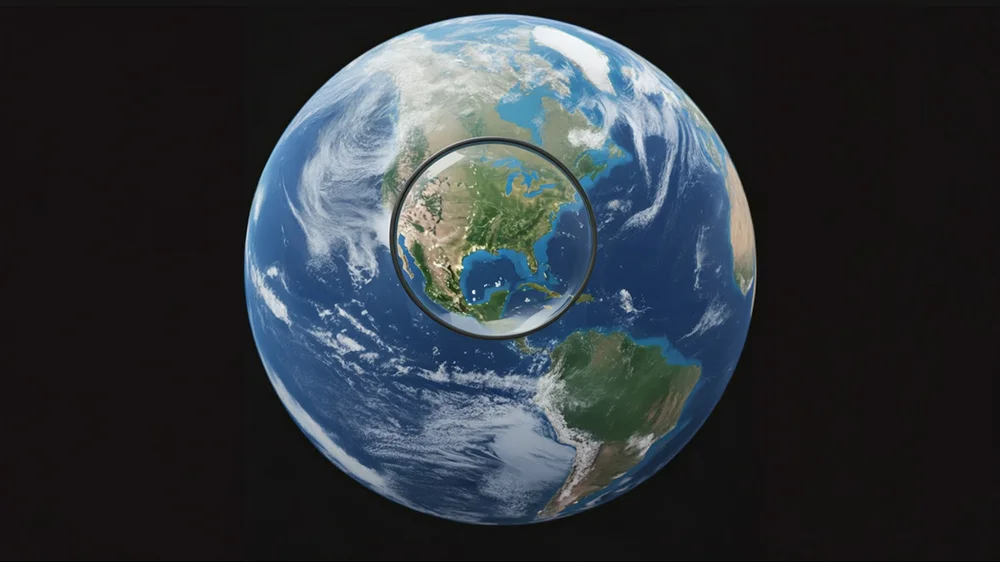
Earth system models are crucial for predicting future environmental changes, but their high computational cost limits their ability to make regional projections at fine scales. To address this, a novel generative AI method has been developed to bridge the resolution gap between Earth system models and downstream users' needs. The method, called dynamical-generative downscaling, applies probabilistic diffusion models to the output of well-established physics-based models to translate global climate projections into local environmental risk assessments. This approach produces detailed local environmental risk assessments at a small fraction of the cost of existing state-of-the-art techniques. The method involves a two-step process, where a regional climate model downscales global Earth system data to an intermediate resolution, and then a generative AI system adds fine-scale details to the output. This hybrid approach leverages the strengths of both methods, providing physically grounded and efficient generation of high-resolution details. The results show that dynamical-generative downscaling reduces fine-scale errors by over 40% compared to statistical methods and captures realistic spatial patterns and correlations between different weather variables. The method also provides better uncertainty estimates and captures regional extremes, such as wildfire risk due to Santa Ana winds in Southern California. This breakthrough enables obtaining comprehensive future regional climate projections at actionable scales below 10 km, making downscaling large ensembles of Earth system models computationally feasible. By providing more accurate and probabilistically complete regional climate projections, dynamical-generative downscaling can dramatically improve environmental risk assessments and inform better-informed decisions for adaptation and resilience policies.