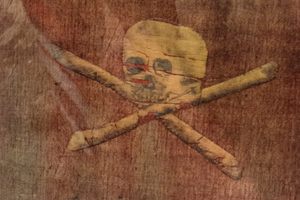
18th Century Pirate’s Jolly Roger in Portsmouth, England
A rare surviving Jolly Roger, captured in 1790, is on display at the National Museum of the Royal Navy in Portsmouth. Pirate flags were typically disposable and it is exceptionally uncommon for them to survive for centuries. Globally, only a few authentic pirate flags are known to exist. Historical understanding of pirate flag designs often relies on secondary sources like historical accounts rather than primary evidence. The popular image of a black flag with a skull and crossbones is not the only design. Originally, Jolly Rogers were often dyed blood red to signify a promise of no quarter. The skull and crossbones motif has its roots in maritime records, marking a death on board. The flag's association with pirates continued into the modern era. Royal Navy submarine crews adopted the Jolly Roger from World War I onwards. They transformed an insult comparing submarine warfare to piracy into a symbol of pride.