ZeroHedge News
Follow
7 Federal Agencies & Big Pharma Quietly Built A Pandemic-Industrial Complex
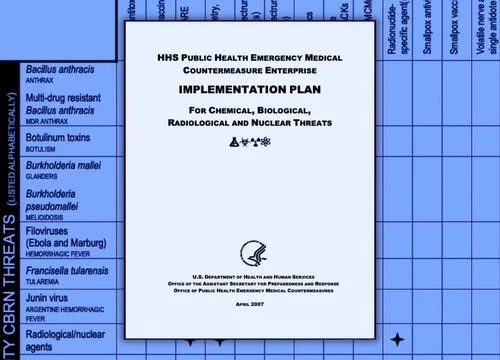
Federal agencies and pharmaceutical companies have quietly established a system called the Pandemic-Industrial Complex. This complex was formalized in 2006 with the creation of the Public Health Emergency Medical Countermeasures Enterprise, or PHEMCE. PHEMCE centralized seven federal agencies across four departments, including HHS, DOD, DHS, and VA. Private industry, such as pharmaceutical manufacturers and biotech companies, was explicitly integrated into this structure. The government aimed to increase industry access, streamline regulations, and offer liability protections to encourage investment. Documents reveal this apparatus spans from threat detection to product deployment and use. A significant concern is when government bodies defining threats are also funding research, regulating products, and managing their purchase and distribution. The author suggests that research within this biodefense ecosystem could potentially create the very threats it is designed to counter. Some intelligence agencies and even HHS itself have acknowledged the possibility of laboratory incidents involving engineered pathogens. DARPA programs exemplify this architecture, moving from predicting viral evolution to developing sequence-based pharmaceuticals. PHEMCE's strategy encompasses surveillance, research, development, acquisition, storage, deployment, and utilization of medical countermeasures. The government justified this centralization by citing biological threats and demanding unprecedented cooperation. Private industry was brought in because of market uncertainties, with HHS promising to remove obstacles and provide liability protections. HHS viewed the lifecycle of a countermeasure, including its storage and deployment, as a benefit. The 2007 implementation plan outlined an "end-to-end" approach for the mission, naming the involved agencies and detailing a threat-to-product sequence. Government procurement was intended to "drive industrial development," and NIH was directed to align its research with PHEMCE priorities. The central conflict highlights how the same system can define a threat, fund research, dictate product requirements, involve industry, influence regulation, create a market, purchase products, and organize deployment. The hypothesis that COVID-19 originated from a laboratory incident involving coronavirus research raises profound questions about accountability within this interconnected system. The author questions who will independently investigate a system potentially implicated in causing a global catastrophe.