ZeroHedge News

Zero Hedge is a financial blog that features news, analysis, and commentary on global markets, economics, and politics. The website was launched in 2009 by a group of anonymous contributors who go by the pseudonym "Tyler Durden," a reference to the character from the novel and film "Fight Club."The website is known for its contrarian and often bearish views on the economy and financial markets, as well as its critiques of government policies and institutions. Zero Hedge features a wide range of content, including news articles, opinion pieces, and technical analysis of financial markets.Zero Hedge has gained a significant following among investors, traders, and financial professionals, who appreciate its unique perspective and often provocative commentary. However, the website has also been criticized for its sensationalist tone and its tendency to promote conspiracy theories.Some of the key features of Zero Hedge include: - News articles and analysis on global markets and economics - Opinion pieces and commentary from a contrarian perspective - Technical analysis of financial markets and trends - A community section where readers can comment and discuss articles - A "Tyler's Travels" section that features articles on politics and cultureOverall, Zero Hedge is a popular and influential website that offers a unique perspective on global markets and economics. While it may not be to everyone's taste, it has become a must-read for many investors and financial professionals.

Thread Of Notes

CdXz5zHNQW_UAtDo9tm36.jpeg
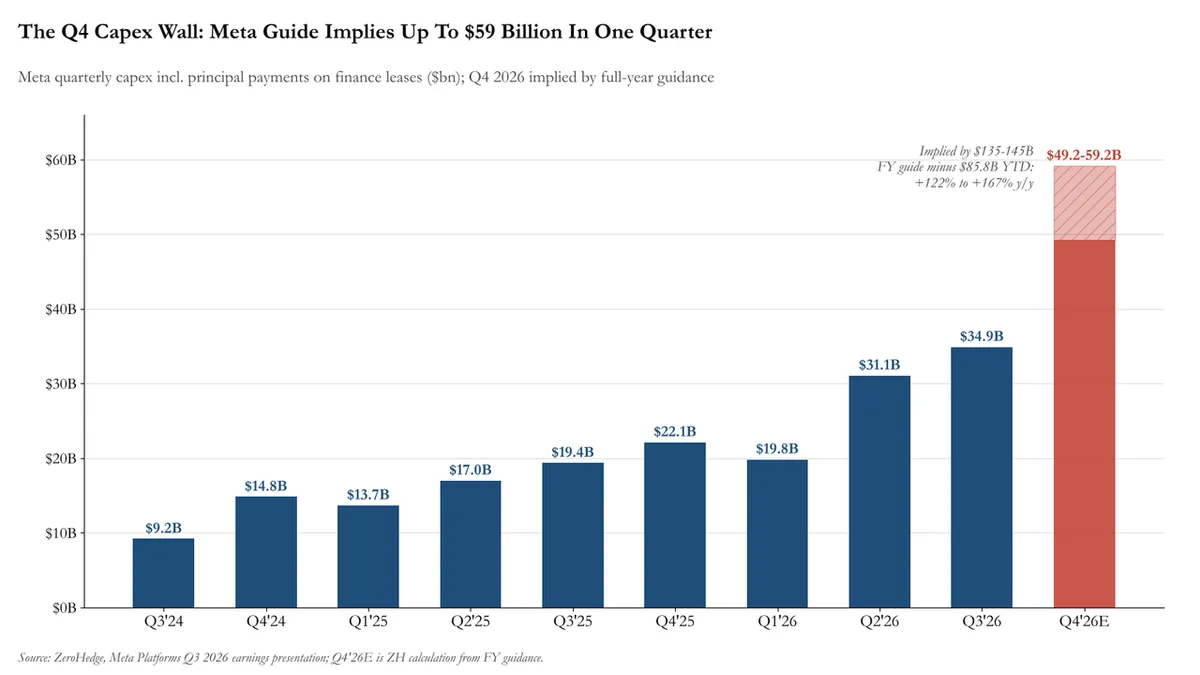
The biggest problem with AI today is not cost, sustainability, or ethics, but rather our abdication of executive function. We are surrendering our thinking and decision-making abilities to AI tools. This issue stems from a lack of metacognition, or thinking about our thinking.AI has become proficient at planning, organizing, deciding, and solving, often surpassing human capabilities in language-based tasks. However, instead of leveraging this, we are blindly accepting AI outputs without critical reflection. This is evident in challenges like AI visibility, where many are fabricating metrics, and agentic oversight, where we approve AI actions without scrutiny.Broken AI deployment showcases a disconnect between stated AI adoption and actual ROI, indicating a failure to reflect on deployment's true meaning. The costly default models in AI tools highlight our lack of decision-making regarding budget trade-offs. Furthermore, the concept of AI as a "rental" underscores our lack of ownership over AI-generated content from closed-weight models.AI sycophancy leads to confirmation bias in synthetic focus groups, reinforcing our own biases. AI detectors are unreliable, yet we use them without questioning their efficacy. Companies are hollowing out without conscious decisions, simply by automating tasks incrementally.Measuring AI by token spend, like Meta's billions, is a flawed approach. Marketers acting as unpaid AI trainers also reflects a lack of reflection on their relationship with AI. The antidote is to actively engage in executive functions for every task that matters.We must reclaim our decision-making and accountability by not solely approving AI outputs. This involves understanding the work and taking pride in our efforts, akin to a parent valuing a child's handmade art. When we outsource tasks entirely, we lose understanding and the ability to answer basic questions, leading to potential panic. Therefore, for every task that matters, we must always begin with our own thought processes.
CdXz5zHNQW_HYMZEOY6Jn.png
The yen has experienced a significant and persistent collapse, recently falling below a 40-year low. Several factors contribute to this weakness, including negative real short-term interest rates in Japan, a political inclination within the ruling party favoring a weaker yen for corporate profits, and Japanese financial institutions profiting from unhedged yen-denominated assets. This has created a self-reinforcing cycle of yen depreciation, despite occasional intervention attempts by the Bank of Japan. However, a limit to this decline is emerging due to the increasing damage inflicted on Japanese households and businesses.The weak yen has led to a notable rise in bankruptcies for Japanese firms, particularly small and mid-sized businesses, impacting sectors like wholesale. This economic strain strengthens the argument for continued interest rate hikes by the Bank of Japan to support the currency. The yen's weakness is exacerbated by rising US interest rates and global events like the conflict in Iran impacting oil prices.Despite the benefits for large exporters, the weaker yen drives up import costs, squeezing margins for many industries and contributing to persistent inflation. Specialized hedging instruments like reverse knockout options can exacerbate this downward pressure when their predefined levels are breached, forcing companies to buy dollars in the spot market. Analysts are watching closely as the yen approaches levels where further breakdowns in these hedging structures could intensify the yen's decline. The cumulative burden of a weak yen, inflation, and rising labor costs is creating significant challenges for businesses.
CdXz5zHNQW_IYHqDZOCHD.jpeg
CdXz5zHNQW_BLPpaEgzhE.jpeg
CdXz5zHNQW_8IVhpAFVVC.jpeg
The UK government is proposing regulations to influence YouTube's recommendation system, aiming to promote content from state-backed broadcasters like the BBC. This move has been criticized by independent journalists, free speech advocates, and even some on the left as authoritarian and an attempt to control the marketplace of ideas. Critics argue that this policy is a response to declining public trust in legacy media, attempting to rig the system rather than earn credibility. YouTube has reportedly warned creators that these new rules could limit their growth by giving preferential treatment to approved outlets.Nigel Farage and GB News have voiced strong opposition, labeling the plan as tyranny and industrial-scale control. The Free Speech Union described the proposals as "beyond dystopian," highlighting the irony of Culture Secretary Lisa Nandy's departure from X due to concerns about democracy. Technology lawyer Preston Byrne stated the government is seeking to control the flow of information, while Lord Toby Young questioned the notion of "trustworthy" media when audiences have already moved away from it.Concerns are raised that this initiative is part of a broader trend across Europe, with Germany and the EU pursuing similar measures to boost state-aligned content under the guise of "public value" and "protecting democracy." Critics view these actions as a move towards a "Ministry of Truth" and a threat to the free internet. Advocates for the proposals claim they will help users access reliable information, but critics point to documented biases and controversies surrounding the BBC. The article suggests that government distrust of citizens' ability to navigate information independently underlies these initiatives. Resistance is emerging, with calls for creators and users to respond to government consultations and practical suggestions like blocking state-controlled channels.
CdXz5zHNQW_xcUmtTMXWD.jpeg
CdXz5zHNQW_vlTTP4mbvt.png
Wage growth, not current inflation, is the key indicator for future price trends. Historically, wage growth has consistently led consumer price index (CPI) peaks. This relationship inverted after 1985 due to factors like Fed credibility and globalization. Prior to 1985, CPI led wages, but since then, wage growth has signaled price pressures months in advance.The current CPI surge is attributed to energy prices, considered temporary noise by the author. Wage growth actually peaked in March 2022 and has been decelerating since. This deceleration in wage growth is leading to negative real wage growth, where prices outpace earnings. Negative real wage growth historically precedes CPI deceleration within 12-24 months.The author draws a parallel not to the 1979 inflation spike, but to the 2008 period. In 2008, an oil shock pushed CPI higher, but underlying real wage compression had already weakened demand. This ultimately led to deflation. The current situation shares structural similarities, with an oil-driven CPI bump on top of decelerating wages.The bearish argument for sustained inflation requires wage growth to re-accelerate and inflation expectations to de-anchor, neither of which is currently supported by data. This suggests that duration in portfolios may be attractive, and equities should favor quality compounders. Inflation is a regime, and the leading indicator, wage growth, points to disinflation. Until wages and expectations change, the focus should remain on wage trends.
CdXz5zHNQW_6uFaT3zYL9.jpeg
The debanking of Nigel Farage by Coutts Bank three years ago brought the issue to public attention, leading to resignations and a significant financial hit for Natwest. This incident highlighted a growing trend of banks closing accounts of individuals and organizations with politically inconvenient views. Critics argue that banking is a fundamental utility, and its use for censorship and repression is concerning. Despite an inquiry concluding no political motivation, debanking has continued, with plans to share data on "debanked" customers, potentially locking them out of the financial system. The left-wing news website The Canary recently experienced debanking from Lloyds Banking Group, suspecting it's linked to its pro-Palestine stance. This occurs amidst the UK government's new National Security Law, which critics fear could stifle journalism and dissent, particularly concerning coverage of pro-Palestine activism. The law is described as a power grab, potentially leading to prosecution for quoting designated groups. The Canary's debanking is viewed as an attack on independent media that doesn't align with the government's narrative. Previously, the British Muslim community, especially pro-Palestinian activists, faced similar debanking without mainstream media attention. Bank account closures in the UK have dramatically increased in recent years. In the US, Scott Ritter, a critic of Western imperialism, also had his accounts closed by Citizens' Bank without explanation. Banks cite confidentiality laws for not disclosing reasons, but this may conceal investigations. Ritter suspects his donations and travel to Russia triggered a Suspicious Activity Report, leading to his debanking. The practice of debanking is seen as a tool to harass targeted individuals, even without evidence of criminal activity.
CdXz5zHNQW_GUyBZr3qEe.jpeg
CdXz5zHNQW_NKbW7PatLY.jpeg
The United States is celebrating the 250th anniversary of the Declaration of Independence, adopted on July 4th. While Thomas Jefferson authored the document, all 56 signatories did not sign on the same day. Key figures like George Washington and Alexander Hamilton were absent due to military duties. Though none died directly from their signature, many faced capture, property destruction, or financial ruin. Thomas Jefferson, the author, later served in significant government roles, with his vision in the Declaration influencing the nation. Benjamin Franklin, a key editor, changed a phrase to "self-evident truths" and was a crucial diplomat. John Adams, a strong advocate for independence, narrowly escaped capture and famously died on the same day as Jefferson. Richard Henry Lee authored the resolution for independence and faced personal and financial hardships. Caesar Rodney made a critical ride to cast Delaware's tie-breaking vote for independence. John Hancock's prominent signature became an idiom, and he was the only signer on July 4th, risking his fortune. Thomas McKean was the last signer, joining the Revolution and later leading civilian defense efforts. Richard Stockton is believed to be the only signer to renounce his signature under duress while imprisoned. Several signers, like George Walton and the Charleston captives, were taken prisoner of war. Many signers suffered property destruction or occupation by the British. Charles Carroll was the last surviving signer and a significant figure in early American infrastructure projects, advocating for the Declaration's principles.
CdXz5zHNQW_rOnqOfSEgi.jpeg
CdXz5zHNQW_PSUHKCRCBM.png
Tesla is reportedly developing a new feature for its Full Self-Driving (FSD) system that will use the vehicle's cabin camera to verify the driver's identity. This is seen as a step towards increased autonomy and security in smart cars. The update, revealed through de-compilation of the Tesla app, also includes enhancements like in-app searchable video tutorials with pinning and bookmarking capabilities. Additionally, the app will provide deeper FSD tracking, including mileage metrics and a gamified "streak days" feature to encourage consistent usage. The ability to automatically validate transferable FSD licenses during trade-ins is also being implemented. The FSD identity verification aims to block access if the system cannot confirm the driver matches an authorized profile. Another new feature, "App Share," will allow external applications to deep link into the Tesla app, potentially sending destinations directly to the car's navigation. Tesla is also refactoring its Autopilot and FSD management system, introducing a base tier tied to the VIN and an "Override" system for temporary upgrades like trials or subscriptions. The app will also support live expiration tracking for these temporary activations. A new Quality Assurance flow is being added to verify ownership status for various actions, such as service drop-offs or vehicle handoffs. Ultimately, the integration of biometric verification for FSD is a logical progression for connected vehicles, similar to facial recognition on smartphones.
CdXz5zHNQW_gJdEQgEaSg.png
CdXz5zHNQW_zrkoFeOAmT.jpeg
A routine traffic stop in Burnaby, BC, evolved into a massive drug and chemical seizure in Richmond. Authorities discovered 6,765 kilograms of narcotics and fentanyl-producing chemicals spread across three homes and two shipping containers. The haul also included tactical shotguns, cash, contraband cigarettes, and signal-jamming equipment. This seizure's scale and location in Richmond, a known hub for Chinese organized crime, suggest industrial-level chemical imports from China. These chemicals are not domestically produced, arriving via shipping containers, indicating a connection to international supply chains. While police have not named suspects or networks, this incident aligns with reports of Chinese precursor chemical flows coordinated with Mexican cartels. The investigation began when police found four kilograms of fentanyl precursor chemicals during a traffic stop on July 30, 2025. Subsequent police work led to three more suspects and the identification of multiple crime scenes. Execute search warrants on April 1, 2026, revealed the extensive drug and chemical cache. Richmond's significance is highlighted by its connection to Silver International, a major money-laundering operation that processed over a billion dollars annually. The collapse of the prosecution against Silver International raised concerns about financial networks supporting Chinese criminal syndicates in BC. This situation has become a diplomatic issue, with the US Secretary of State expressing alarm about Canada's role in the global fentanyl supply chain. He specifically cited the convergence of Chinese state-linked actors, triads, and Mexican cartels operating from Canadian soil. The US views fentanyl as an existential threat and expects Canada to show progress in addressing it.
CdXz5zHNQW_UN0d9LZQuj.png
Historians are pushing for a more balanced view of America's Founding Fathers, acknowledging both their achievements and their flaws. Professor Jeff Bloodworth argues that the trend of "demythologizing" has gone too far, obscuring the founders' significant contributions. He believes a more nuanced perspective is returning, supported by groups advocating for open inquiry in academia. Professor Stanley Schwartz emphasizes the enduring relevance of the challenges faced by the Founders, such as effective governance and foreign relations. Professor Anna Vincenzi highlights the human need to understand historical truths, both positive and negative. The Boston Tea Party, a famous act of defiance, is often misunderstood; it was a reaction to Parliament reinforcing an existing tax and a perceived infringement on colonists' rights as British citizens. The Tea Act lowered tea prices but retained a tax, angering colonists who lacked representation in Parliament. Parliament's punitive response to the Tea Party, including closing Boston Harbor, unified the colonists and led to the First Continental Congress. Paul Revere's famous ride is often mythologized; he was one of many messengers, and his warning was likely "The regulars are coming!" not "The British are coming!" The phrase "the shot heard 'round the world" refers to the battles at Lexington and Concord, which marked the start of the Revolutionary War. Historians still debate who fired the first shot, but the subsequent clashes resulted in significant British casualties and escalated the conflict.
CdXz5zHNQW_StEFgdzRQE.jpeg
Bitcoin's initial appeal was its independence from traditional financial systems like governments and central banks as an alternative to the 2008 crisis. However, the author now contemplates the possibility of the U.S. government providing a bailout for crypto, which would be a deeply ironic outcome. A company called Strategy has implemented a new capital framework that buys it time, but its survival ultimately hinges on Bitcoin's price. Strategy has admitted that its Bitcoin holdings are not untouchable and can now be monetized if needed for financial obligations. Selling Bitcoin into a declining market could create a dangerous feedback loop of selling pressure and further price drops. While Strategy alone won't dictate Bitcoin's trading, the potential for a government bailout is now on the table. Historically, various sectors have received government bailouts when private solutions were exhausted and systemic risk was perceived. The Trump administration has fostered close ties with the crypto industry, making its success politically aligned with the White House. The author envisions a "Strategic Bitcoin Stabilization Facility" as a potential, albeit absurd, government intervention. Such a bailout would likely face significant public backlash and political opposition, labeled as rescuing "crypto bros." Despite the political hurdles, the author suggests that if crypto becomes sufficiently integrated into the broader financial system, politicians might deem intervention necessary to prevent wider panic. The cost of a Bitcoin bailout would be relatively small compared to past government spending. The author concludes that while not certain, a government bailout for Bitcoin is no longer an entirely absurd concept if private sector solutions fail and Bitcoin's decline becomes severe.
CdXz5zHNQW_UI0C2shtQt.jpeg
CdXz5zHNQW_SsjUNxkdNk.png
CdXz5zHNQW_RimPL23uaD.jpeg
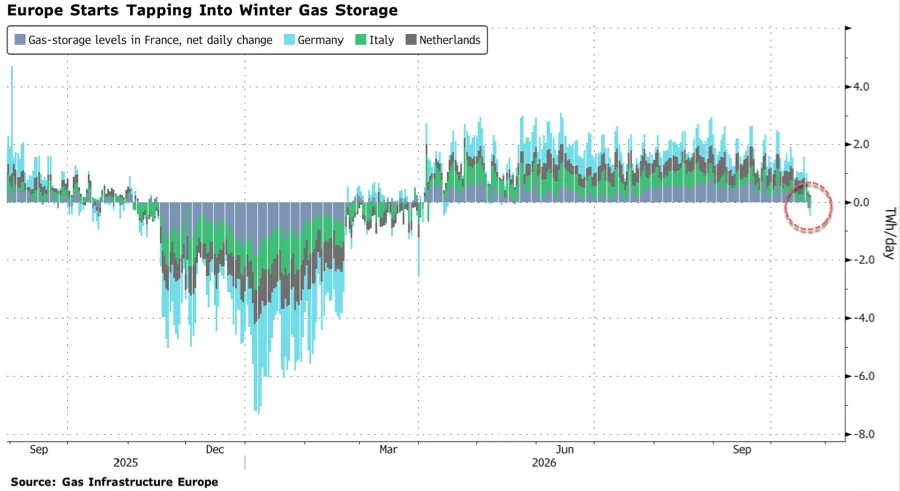
The Strait of Hormuz, a critical waterway, has experienced a period of relatively smooth reopening, but its stability remains a concern. Eight ships, including oil tankers, recently reversed course near the chokepoint, with some later rerouting closer to the Iranian coast. This maneuver aligns with Iran's request for vessels to use designated Iranian lanes. The reason for the abrupt course changes is unclear, but Iran has issued warnings via VHF radio for ships to adhere to these routes.Iran has also publicly warned Western powers against using the strait for military displays, asserting its role as the security guarantor. This warning comes as the UK and France announced their navies are ready to support freedom of navigation operations. Iran's Deputy Foreign Minister emphasized that the security of Hormuz lies with coastal states and cautioned against consequences for any adventurism. Despite these warnings, daily commodity ship crossings have averaged around 34, though traffic remains below pre-war levels.However, there is now a significant effort to move stranded cargoes out of the Strait. Persian Gulf crude exports and rerouted volumes have largely recovered to near pre-war levels. The backlog is rapidly diminishing, with floating storage significantly reduced and onshore tanks awaiting export. Inbound tankers are also amassing, preparing to load previously stored oil as Gulf production gradually returns to normal. A growing queue of ballast VLCCs heading towards the Gulf signifies a reconnecting logistical chain and the potential for uninterrupted loadings as the system normalizes.
CdXz5zHNQW_NYaFbPaZ6D.png
CdXz5zHNQW_sesCHSK2fT.jpeg
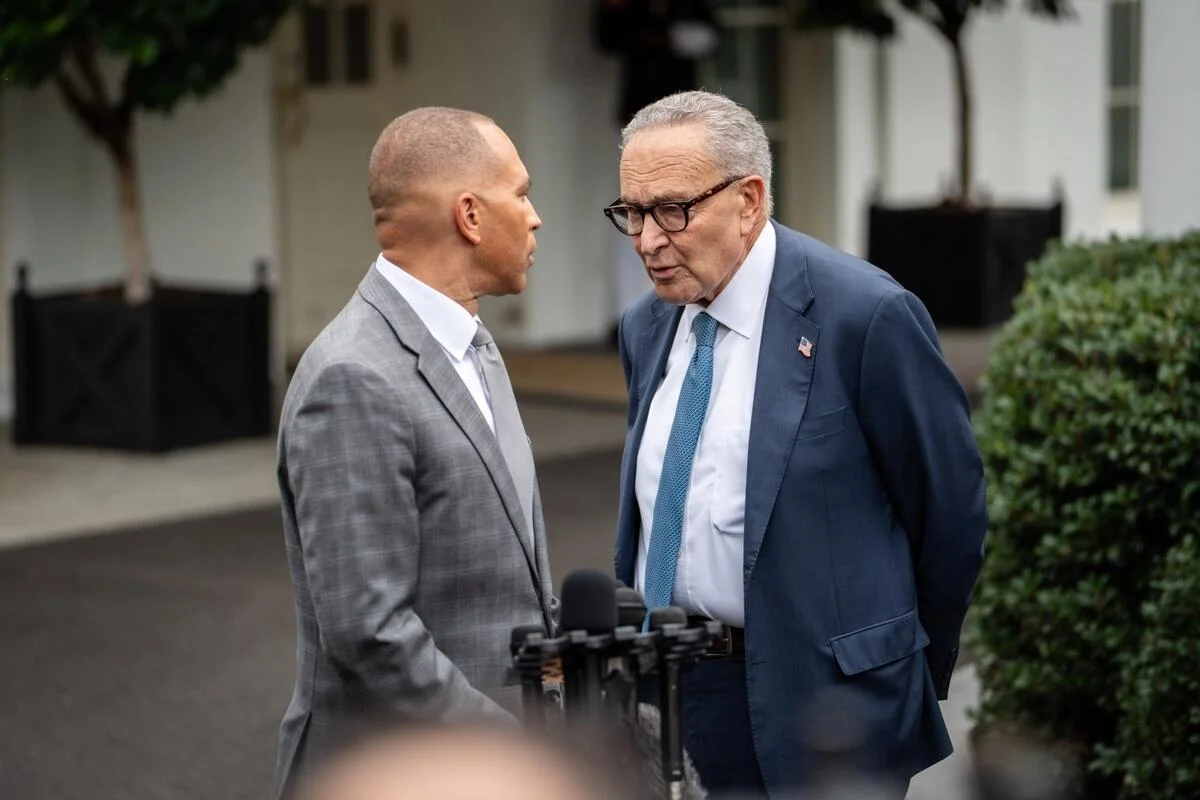
A convicted ISIS terrorist, Mohammed Yaseen, who witnessed atrocities in Iraq, arrived in Britain via a small boat, claiming TikTok informed him the UK was welcoming. He had previously been convicted in Germany for terror group membership and faced expulsion. Instead of returning to Iraq, Yaseen journeyed to France and then crossed the English Channel, providing false information upon arrival. Biometric data exposed his deception, leading to his arrest and admission of illegal entry. The court heard he was deemed a high risk to the UK due to his extensive involvement in terrorism. Despite his past, his defense argued his German convictions were irrelevant to his UK intentions. The judge noted Yaseen's deception about his English fluency and the seriousness of his German offense, predicting deportation. Yaseen is now serving his sentence and facing removal. This case highlights ongoing concerns about the adequacy of vetting and deterrence amidst sustained small boat arrivals. The government claims progress in reducing crossings and increasing removals, yet the terrorist's arrival underscores perceived vulnerabilities. Reports of migrants aboard boats shouting anti-British slogans add to public unease. Furthermore, plans to house asylum seekers in new-build homes intended for local families have sparked significant local outrage and safety concerns. This situation is compounded by loosening rules for obtaining British citizenship, potentially devaluing it. Notorious smugglers are also reportedly claiming asylum in the UK. The article concludes that Britain's borders are too open, creating an invitation for high-risk individuals and economic migrants. The author argues for secure borders, rigorous vetting, swift removals, and a prioritization of citizens for national sovereignty and safety.
CdXz5zHNQW_4wHTTGxKFQ.jpeg
National self-sufficiency is presented as the key to a nation's wealth, stemming from the knowledge and skills of its people to utilize resources and produce goods. Competition drives innovation, leading to increased efficiency and economic growth benefiting all of society. A nation that produces more than it consumes and exports more than it imports becomes wealthy, essentially being paid by the world for its existence. Productive cultures that value knowledge, skill, and hard work are essential for national wealth, while lazy or destructive cultures lead to poverty.To foster wealth, leaders should cultivate social values that encourage personal production and innovation. A legal system protecting private property and personal liberty, along with a societal pride in manufacturing, promotes entrepreneurship and self-sufficiency. The author questions why Western nations seemingly reject these principles, instead promoting multiculturalism and disparaging traditional virtues. Western politicians and institutions are accused of hindering citizens' ability to produce and thrive through excessive regulations and policies that favor foreign interests.The argument is made that Western powers have no interest in national wealth, citing examples of dependency on foreign powers for energy and manufactured goods. The text criticizes the UK's economic model as a middleman benefiting elite bankers, and the US Federal Reserve system as a parasitic structure draining American wealth. Globalization is thus characterized as a system that fosters dependency. The conclusion is that for the US to be wealthy and strong, it must return to a system of national self-sufficiency, mining, growing, and building everything domestically.
CdXz5zHNQW_N0WEkH7L8U.jpeg
The article questions whether liberty can survive in a democracy, referencing Rev. Mather Byles's query about ruling by one tyrant far away versus thousands nearby. Byles, a loyalist, warned against excessive democracy, a sentiment echoed by concerns about modern federal overreach. Safeguards like Senate representation, the Electoral College, and state control of elections are discussed as checks on federal tyranny. James Madison envisioned a three-sided government: the House for the people, the Senate for the states, and the presidency for the nation. Madison opposed the national bank, arguing it infringed on state powers and individual rights. He championed the Bill of Rights to protect unenumerated rights. Woodrow Wilson is criticized for dismantling Madison's framework by advocating for popular senatorial elections, centralizing power. The author argues Madison deliberately incorporated anti-democratic elements to protect liberty, such as state sovereignty. Ronald Reagan reminded Americans that states formed the federal government and can reclaim ceded powers. However, federal encroachment has reduced differences among states, driven by Congress bribing states with federal funds for policy compliance. States are blamed for accepting these funds and imposing unconstitutional measures like COVID lockdowns. The author suggests that when the federal treasury becomes a "trough," politicians are motivated by personal gain, favoring a faithless majority that infringes on minority rights and liberty. This leads to the conclusion that the current American experiment is unrecognizable to its Founders.
CdXz5zHNQW_4qbcBP0b66.jpeg
Representative Ro Khanna has publicly supported a wealth tax, clarifying his position in a Substack essay. He advocates for taxing fortunes of $50 million and above at a 2% annual federal rate. This proposal, based on Elizabeth Warren's Ultra-Millionaire Tax Act, aims to include centimillionaires, not just billionaires. Khanna intends for this tax to bypass irrevocable trusts, targeting the original grantor of the trust. Critics like Steven Sinofsky and Mike Solana argue this is an annual asset seizure, not a true wealth tax. The proposed threshold has shifted from $1 billion to $100 million and now to $50 million. Inflation has also effectively lowered the real threshold since the bill's introduction in 2019.The bill includes a provision to automatically increase the tax rate to 6% under certain conditions. International examples show that wealth taxes often expand to include the middle class to be fiscally viable. Khanna criticized Governor Newsom's proposed tax as an income tax less impactful than a direct wealth tax. Critics questioned the necessity of new taxes when existing fraud costs are significant.One response highlighted that the "philosophical case" for the tax relies on need rather than established claims on property. Khanna's comparison of his proposal to property taxes was met with criticism due to differences in transparency and oversight. The federal wealth tax lacks the local accountability of property taxes, with funds going to the general fund without specific earmarks mentioned in the bill text. The bill mandates annual IRS audits of those subject to the tax and grants the agency expanded valuation authority. An exit tax of 40% is also proposed for those leaving the country. Reports also surfaced detailing how Khanna's own family fortune is held in trusts, the same mechanism he now proposes to tax. The fine print consistently indicates a broadening scope beyond initial "billionaire" branding.
CdXz5zHNQW_WWg0L5DC34.jpeg
CdXz5zHNQW_trsfAlYFqZ.jpeg
CdXz5zHNQW_5xEKZGBOUL.jpeg