ZeroHedge News
Follow
Financial Repression: How The US Government Will Quietly Confiscate Your Wealth
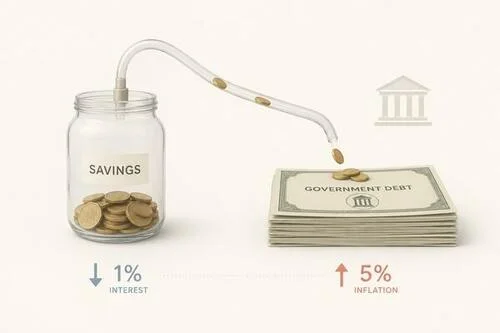
Financial repression is a strategy governments employ to reduce their debt burden by manipulating interest rates below inflation. This allows them to effectively repay loans with less valuable currency. The IMF describes financial repression as including directed lending, interest rate caps, and capital movement regulations. It acts as a tax on bondholders and savers by maintaining negative or below-market real interest rates. The US government faces an "impossible" debt situation due to rising entitlement and defense spending, with no politically feasible cuts. Tax increases, even drastically, are insufficient to address the growing deficits. The author believes the US government will implement financial repression to manage its debt. This involves stealthily confiscating wealth from bondholders through various policies. Examples include mandates for pension funds to buy government bonds and regulations making government debt seem risk-free. The government may also resort to patriotic appeals or force the conversion of retirement assets into government bonds. The core idea is to borrow at artificially low interest rates by pressuring savers and institutions. This method allows politicians to reduce real debt without overt default, tax hikes, or unpopular spending cuts. Financial repression will likely be implemented through policies that seem reasonable and protective. These policies will quietly erode savings and limit financial freedom.