Google Cloud Blog
Follow
Agent Factory Recap: Can you do my shopping?
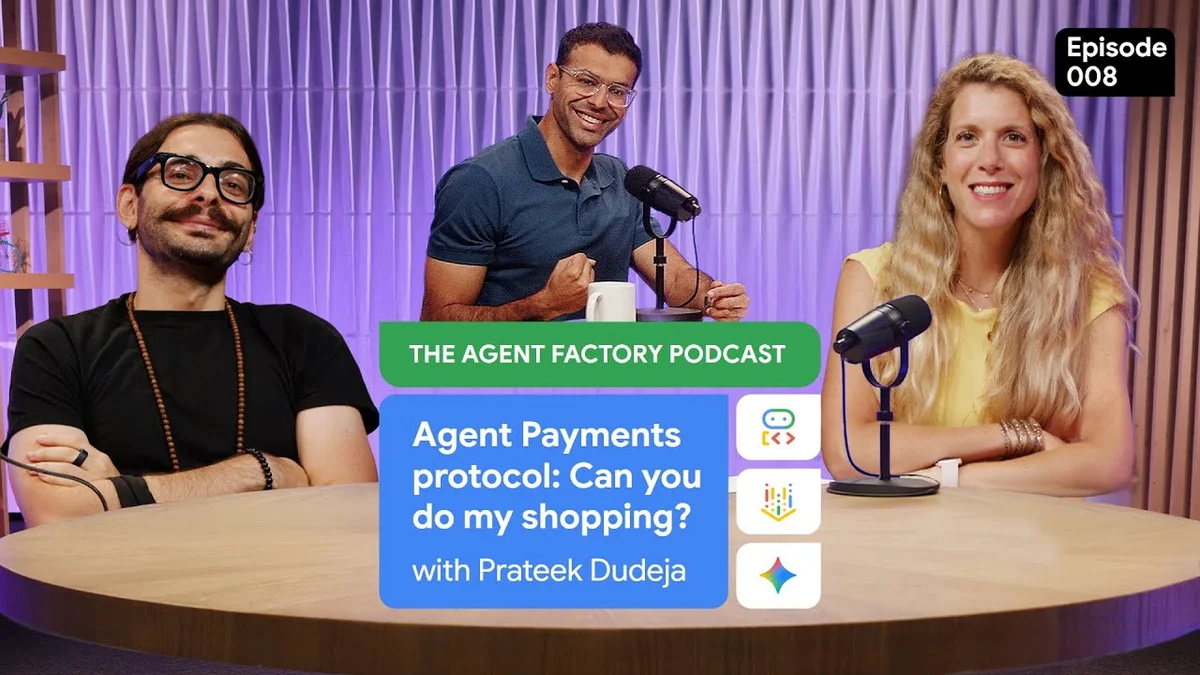
The Agent Payment Protocol (AP2) aims to solve the "Crisis of Trust" hindering AI agent commerce, particularly concerning financial transactions. Google introduced AP2 as an open standard "trust layer" for secure agent-to-agent commerce. Existing payment systems are not designed for autonomous agents, leading to challenges in authorization, error handling, and accountability. AP2 addresses this by enabling secure communication between agents and merchants through existing protocols like A2A and MCP.The protocol establishes a role-based ecosystem with specialized functions: Shopping Agent, Merchant Endpoint, Credential Provider, and Merchant Payment Processor. This division ensures shopping agents never directly handle sensitive payment information, absolving them of PCI compliance burdens. Verifiable Credentials (VCs) secure interactions, acting as cryptographically signed digital receipts. Three types of VCs exist: Cart Mandate for user approval of a finalized cart, Intent Mandate for authorization in human-not-present scenarios, and Payment Mandate for visibility to payment networks.AP2 creates a Contractual Conversational Model, moving beyond simple API calls to a flow based on verifiable proof and user authorization. In a human-present scenario, users delegate tasks, agents discover products, users select payment methods via their Credential Provider, and then cryptographically sign a mandate for approval. This signed mandate acts as a non-repudiable contract, enabling secure transactions. While short-term trust relies on allow lists, future plans include leveraging open web standards for identity verification.The protocol offers "payments-grade security" and is compatible with various agent frameworks. When issues arise, the signed mandate clarifies accountability, protecting both merchants and users. Developers can get started by exploring the AP2 GitHub repo and contributing to specific roles. The future vision includes dynamic negotiation, where agents can automatically fulfill complex requests based on user intent and willingness to pay. Building this secure payment infrastructure is crucial for enabling agents to perform valuable real-world tasks within a conversational, contractual web.