UX Collective | Medium
Follow
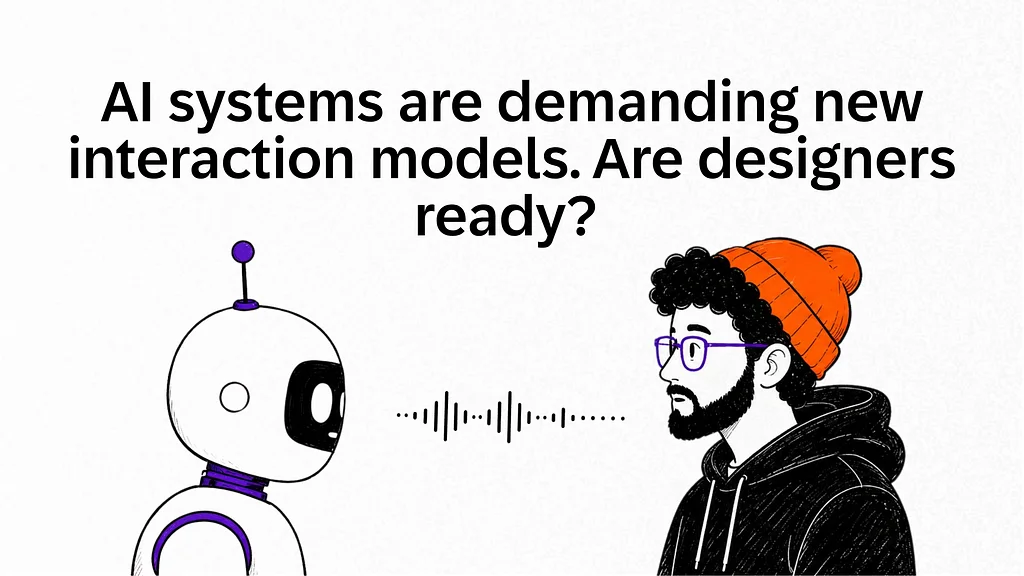
AI systems are demanding new interaction models. Are designers ready?
A significant shift in software interaction is occurring, moving beyond the long-standing desktop metaphor. Traditional interfaces relied on users actively managing applications and files, a model that has persisted for decades. However, recent advancements in AI are challenging this paradigm by enabling systems to interpret user intent and act upon it. This transition signifies a move from task-driven interfaces to intent-driven ones.Thinking Machines Lab has introduced "Interaction Models," a new type of AI model designed for real-time multimodal exchange. This concept differs from the design term "interaction model," which refers to a product's structural framework. While distinct, both operate on different layers of the same technology stack. The AI model layer handles internal processing, while the design layer focuses on user experience.As AI models gain new capabilities, like continuous conversation, the role of design must adapt significantly. Designers now face the challenge of rebuilding user mental models to encompass invisible AI systems and creating new conventions for navigation. Intervention points, where users can review or undo actions, need to be deliberately chosen. Furthermore, designers must ensure AI systems can appropriately route complex judgments back to human decision-makers.While some predict the obsolescence of traditional interfaces due to AI agents, user interfaces remain crucial for human accountability. In enterprise software, visibility and the ability to intervene are paramount. The ultimate challenge for new interaction models is to foster a clear and transparent relationship between people and systems, ensuring designs are intuitive and human-centric.