UX Collective | Medium Note

UX Collective | Medium

Uxdesign.cc is an online platform aimed at enhancing user experience when browsing for design resources, articles, and posts. The site provides a curated collection of design inspiration, wireframing kits, and guidelines from various companies including Airbnb, Microsoft, Apple, and more. It allows easy access to design assets and guidance for designing apps and websites.


Thread Of Notes

A2UI under the hood: Designing for the new era of radically adaptive UI

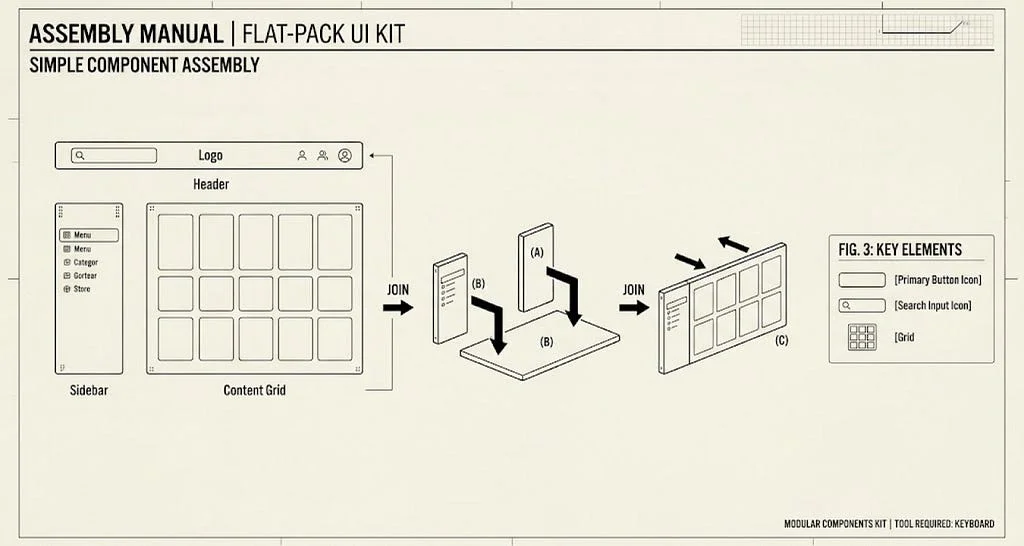
Generative UI, also known as radically adaptive UI, represents a new paradigm where interfaces are built dynamically for each user and request. This approach aims to move beyond static, one-size-fits-all designs. Protocols like A2UI, stand for Adaptive Adaptive User Interface, facilitate this by acting as a communication layer between AI and the interface. The core idea is that the AI agent generates a "recipe" for a screen, but it can only use pre-defined components from a designer-created catalog. This ensures that generated interfaces are built from well-designed, accessible, and thoughtfully implemented elements. The user experience shifts from navigating menus to receiving precisely the screen needed at the moment of their request. For instance, instead of browsing hotel options, a user asking for a New York hotel in March would immediately see a calendar and guest stepper. The process involves an agent deciding on the screen's structure, an AI model writing a recipe based on the user's request and the component catalog, and a renderer in the user's app building the actual interface. Designers play a crucial role by defining this component catalog, which includes not just basic elements but also complex, branded components. This catalog is a curated slice of a larger design system, exposed to the AI. The limitations arise when the AI encounters a request for which no suitable component exists in the catalog. In such cases, it may fall back to generic components or revert to a chat interface, highlighting the importance of a comprehensive and well-designed catalog. The success of generative UI hinges on the quality of the designer's contributions to this catalog. This shift empowers designers by making their foundational work directly influence the final user experience, offering more control than ever before. Designers need to understand how this system works to effectively contribute their expertise.
CdXz5zHNQW_dC4der1jDU.jpeg

While everyone talks about AI, design is gaining power

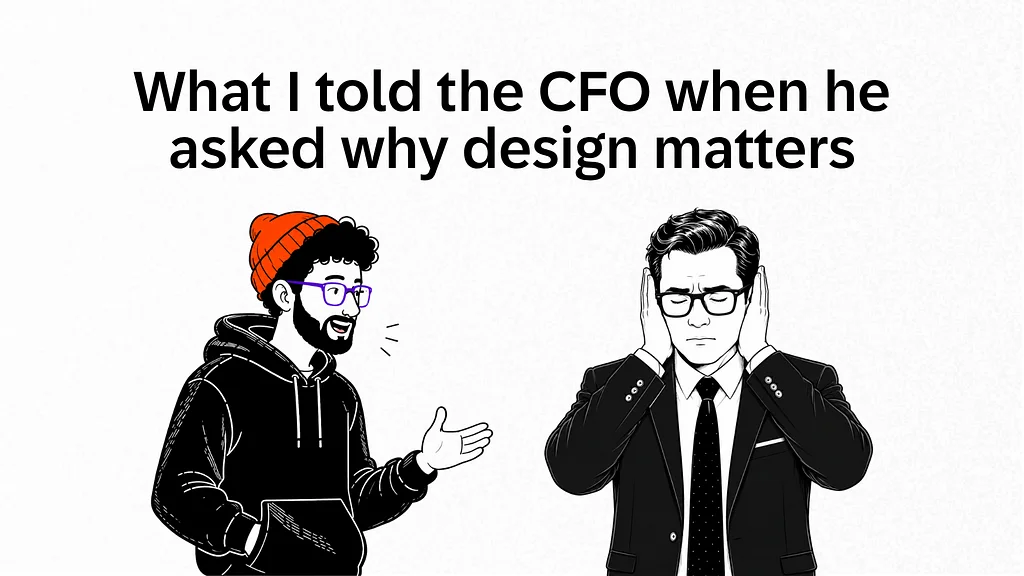
Major technology companies are strategically elevating design from a supporting role to a core function. This shift is evident in new leadership appointments like Chief Design Officers at Microsoft, Samsung, and Shopify. Meta has also significantly bolstered its design leadership team with former Apple executives. OpenAI's substantial investment in Jony Ive signals a deep integration of design philosophy. The rapid advancement of AI has made building things faster and cheaper than ever before. However, this ease of creation carries the risk of building the wrong things. Design is becoming critical in deciding what technologies should be developed and how they integrate into human lives. Companies are no longer winning solely on speed or capability; instead, they are succeeding by creating coherent experiences across hardware, software, services, and AI. True value lies in turning AI capabilities into user-friendly experiences, where thoughtful design and meticulous craft are paramount.
CdXz5zHNQW_ahKLwuLI5P.png

The hidden UX of payments

Trust in financial products is not built through branding but in small, often overlooked micro-moments. These critical interactions, like loading states and confirmation screens, significantly impact user confidence. While onboarding and brand systems matter, the true behavioral trust that drives retention is decided in these subtle user experiences. The author argues that teams often underinvest in these seemingly minor details, treating them as engineering tasks rather than design problems. In payments, principles like "visibility of system status" and "error prevention" become the emotional foundation of a product. For instance, when designing instant payments, the focus on speed needs tempering with deliberate friction to build user confidence. Stripping away all confirmation steps can alarm users, as seen in early PayPal experiences. Tools like Domino's Pizza Tracker or TurboTax's progress sequences illustrate the "labor illusion," where users trust services more when they see the work being done. At Highnote, three design decisions addressed the speed-vs-safety dilemma: making speed legible upfront with icons and copy, adding deliberate confirmation steps like slide-to-confirm, and showing a processing state rather than an instantaneous change. These choices aimed to convert anxiety into agency by giving users perceived control. In B2B financial products, the weight of confirmations must match the impact of decisions. High-stakes actions like setting interest rates require layered confirmations to prevent catastrophic errors. The author emphasizes "graduated ceremony" where the confirmation's difficulty aligns with the decision's blast radius, citing GitHub's repository deletion as an example. However, habituation remains a challenge in professional tools, requiring ongoing management rather than a permanent solution. Furthermore, designing for different risk profiles and avoiding simple rejections, instead offering alternatives, builds greater user loyalty. Finally, for abstract products like virtual cards, the focus should be on showing practical use cases rather than just features to make the offering feel real and trustworthy.
CdXz5zHNQW_ODuYmcUQzI.jpeg

No, design is not dead. Neither is engineering or product.

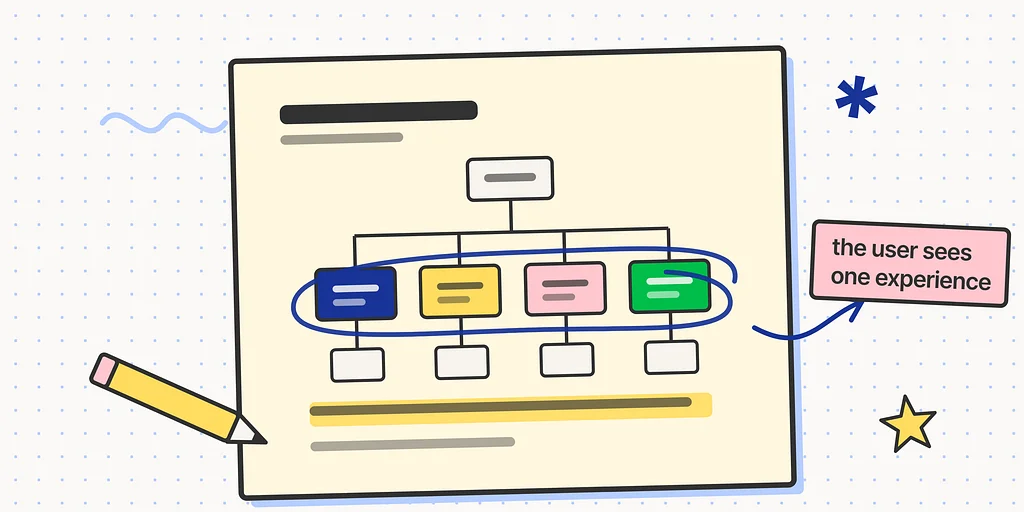
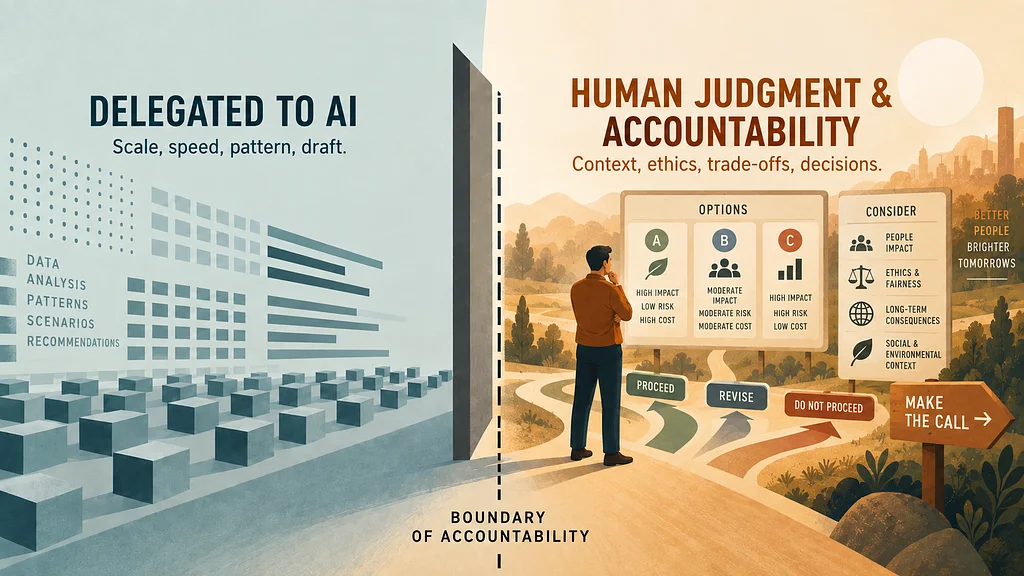
The notion that AI will replace designers, engineers, and product managers is a narrow perspective. Instead, these roles are evolving into specialized builders: design-oriented, engineering-oriented, and business-oriented builders. The value of these distinct perspectives lies in the productive tension they create, driving teams toward better products. AI, with its limitations and tendency to amplify existing biases, cannot replace this essential human dynamic. AI is best utilized to augment human expertise, not substitute it. Specialized builders will direct AI to perform tactical work, freeing them to focus on strategy and long-term vision. Teams will collaborate in shared environments, moving away from traditional handoffs and silos. Codified judgment, like design systems, allows AI and non-experts to make informed decisions under expert guidance. Each builder establishes boundaries, defining where AI and others can operate independently versus requiring their sign-off. This democratization of building risks a drop in quality. Therefore, a crucial part of the builder's ongoing role is to maintain standards, update encoded judgment, and enforce quality. By removing bureaucratic overhead and fostering shared understanding, this new model increases efficiency. Ultimately, AI is transforming how we build by concentrating decision-making power in specialized builders.
CdXz5zHNQW_fRmSXM9yRk.jpeg

The T-shaped UX professional is giving way to the polymath architect

The traditional T-shaped model for UX specialists, emphasizing deep skill in one area and breadth for collaboration, is becoming obsolete due to AI. AI is collapsing the distance between idea and execution, automating many of the handoffs that were previously where specialized work occurred. This shift favors polymaths, individuals with broad knowledge who can manage entire processes, rather than specialists confined to one station on a human assembly line. The article argues that specialization in UX was an artificial construct that fragmented the field into increasingly narrow roles. This fragmentation is now being undone as AI makes breadth of skill less costly to acquire. Historically, breadth was expensive, but AI has reduced this "tax" to near zero, allowing individuals to operate end-to-end. The evolution of desktop publishing, which absorbed numerous print production specialists, serves as a historical parallel to AI's impact on interface and product work. The focus is shifting from headcount to outcomes and from production tasks to judgment. Specialists are now advised to map their relays, understand which handoffs AI can perform, and reframe their value in terms of outcomes. Acquiring adjacent skills with AI assistance is encouraged, and treating the tool stack as part of the craft is essential. The polymath is defined not by omniscience, but by range, judgment, and the ability to direct tools across the entire workflow. The core of survival in this new landscape lies in understanding the purpose of one's discipline and focusing on judgment over production.
CdXz5zHNQW_LvMKo2SyCj.png

Fluent AI, Liquid Glass, flaw as a feature, AX Design

This week's curated design resources highlight the evolving landscape of AI in design, cautioning that while not inherently ugly, AI-generated designs can become predictably fluent. A sponsored report explores the disconnect between researcher insights and decision-making, revealing workflow frictions and AI's impact on research. Editor picks delve into the value of "polish," strategy in the machine age, and the different types of design work and fatigue. The UX Collective, an independent publication, aims to elevate unheard design voices and promote critical thinking. A new creator-driven indie type platform, fonts.xyz, is also featured. Key thought-provoking articles discuss the tension between exploring and exploiting in design, particularly with AI's influence on delivery speed versus quality. The issue of falling in love with the build itself, leading to justification after creation, is also explored. Other notable pieces cover the subjective nature of interface aesthetics with "Liquid Glass," AI's future through the lens of a Hong Kong walled city, and the societal shift of once logging off. Practical resources include design for pain points and how icon design informs accessibility. Finally, the newsletter introduces the role of AX Design and encourages support through sponsorships.
CdXz5zHNQW_XJuMDG25AX.jpeg

How difficult could it be to design a chatbot?

Building culturally aligned chatbots is more complex than often assumed and carries significant consequences. A misaligned chatbot can harm customer satisfaction, retention, and overall product goals. Interestingly, users high in horizontal individualism sometimes respond better to collectivist framing, especially for prosocial behaviors like blood donation. This occurs because framing the action around personal gain can create a "contribution conflict" against altruistic motivations. The underlying logic of the action, rather than the user's cultural background, should guide framing when asking users to do something for others. Research highlights that culture significantly shapes interface design and user interaction, influencing mental effort, trust, and decision-making. For instance, high-context users prioritize social presence in chatbots, while low-context users focus on performance. Integrating cultural context into app design, such as using icons and appropriate layouts, can improve usability. The Culturally Responsive AI Chatbot Framework emphasizes that cultural fit should be a foundational design principle, not an afterthought. Hofstede's cultural dimensions, when viewed as design levers, inform choices about chatbot authority, individualism versus collectivism emphasis, uncertainty avoidance, tone, time orientation, and expressiveness. These are not superficial choices but impact user trust and willingness to act. Misalignment in low-stakes situations causes annoyance, but in high-stakes contexts like mental health support, it can lead to harm. Studies on mental health chatbots reveal that cultural orientation dictates user needs, with some preferring non-confrontational bots and predictable responses due to collectivist or face-saving norms. In customer service, while efficiency and availability are universally valued, cultural variables influence trust in AI, with collectivist cultures favoring warmth and individualistic cultures prioritizing accuracy. Ultimately, AI pipelines are often skewed toward Western defaults, and developers must consider whether these defaults align with their users' cultural expectations.
CdXz5zHNQW_Mx4hueHUMz.png

A shortlist of one: how AI became our shopping adviser

Search engines have evolved from providing a list of options to delivering a single, curated verdict. This convenience involves a transfer of judgment from the consumer to an inspectable AI system. Previously, purchasing items like an office chair required tedious research, but now AI chatbots present a pre-selected option with accompanying reasons. A significant majority of shoppers now utilize AI in their buying process, mainly for product research rather than direct purchasing. Consumers are delegating the pre-purchase sifting and second-guessing, shifting the power to those who shape the AI's suggestions. Search results have transformed from directories of links to direct recommendations, condensing reviews and comparisons into a single rating. The speed of this shift is remarkable, with many consumers already purchasing AI-recommended products. Retailers are adapting by integrating AI assistants that not only answer questions but also make selections based on budget and constraints. The appeal of AI's confident recommendations stems from our innate desire to minimize cognitive effort and the paralysis of choice overload. We tend to trust machine output, a phenomenon known as automation bias, even if it means accepting a potentially flawed answer. Consumers are more likely to defer to AI for practical, measurable purchases than for sensory or personal ones. Despite widespread skepticism about AI's reliability, the habit of using AI for shopping advice persists. The influence of AI in commerce is growing, with new optimization strategies focusing on being the source for AI-generated replies. Sponsored messages within AI responses are blurring the lines between genuine recommendations and paid placements. The trend is moving towards AI not only suggesting purchases but also executing them, with infrastructure being built to automate transactions. This automation risks removing the consumer's final decision-making pause, making it harder to compare options or even notice the purchase has been made. The daily practice of deliberation and discovery through manual searching is diminishing as AI streamlines the buying process.
CdXz5zHNQW_2xXWDYwlc9.png

The digital Kowloon

The Kowloon Walled City serves as a cautionary tale for AI development, illustrating unchecked ambition leading to chaos. It began as a military outpost and became a lawless enclave where refugees built densely without planning or coordination. Residents illegally tapped into power grids, and structures grew upward haphazardly, creating a complex, unmaintainable environment. Despite its function, the city lacked an overarching vision and was ultimately demolished due to its unmanageable nature. This mirrors early software development where engineers, driven by machine logic, designed products without considering user needs. Error messages like "Abort, Retry, Fail?" exemplify this programmer-centric approach. The emergence of user experience (UX) as a discipline shifted focus to user needs, with Windows 95 being a key turning point. Today, the AI boom risks repeating past mistakes by prioritizing speed over thoughtful design. "Vibe coding," while impressive, bypasses crucial research and design processes. Companies are measuring AI tool usage literally, leading to performative adoption rather than genuine innovation. This rapid, uncoordinated development, akin to the Walled City, creates isolated builders without a shared vision or understanding of potential negative consequences. The focus on speed overlooks the real bottleneck: ensuring we build the right things.
CdXz5zHNQW_H9nkPx6Csw.png

We stopped clicking, and AI became the Internet

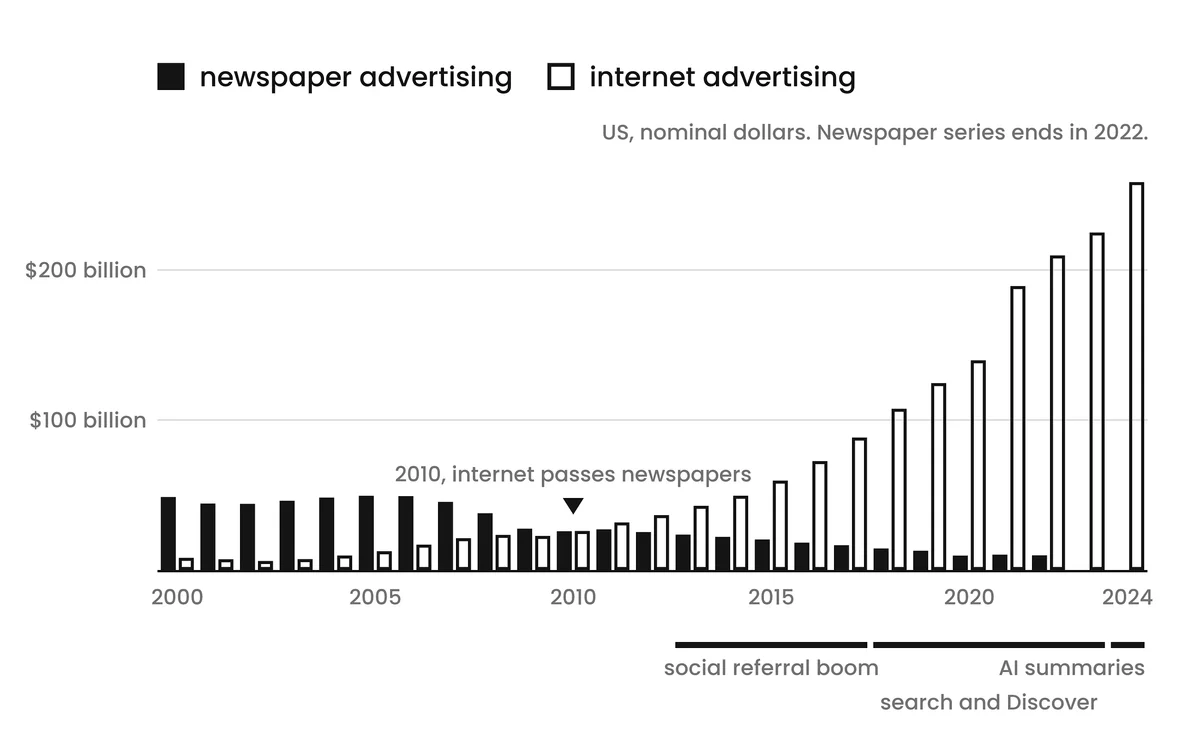
The internet's early promise of openness and universal access is being eroded by convenience and the rise of AI. Initially a vast library and global conversation, the digital space has shifted towards curated, attention-monetizing platforms. These platforms, driven by algorithms, often reinforce existing beliefs and reduce the scope of debate. This trend is exacerbated by bots, which are projected to generate over half of web traffic by 2026. A significant problem is the decline of human clicks, the economic lifeblood of independent creators, as AI tools provide immediate, pre-digested answers. This "displacement" means the open web isn't dead but is losing its ability to sustain original human content. AI systems train on human labor, summarizing it and intercepting the traffic that once supported its creators. This creates a feedback loop where AI content based on other AI summaries replaces genuine knowledge. The greatest risk is not efficiency but the loss of human diversity in thinking and the capacity for genuine discovery. Ultimately, convenience is trading against diversity, creating a more conformist internet where user attention is the product, and the extraction is increasingly intimate and difficult to refuse.
CdXz5zHNQW_xQ0DgZXa0X.png

Design for pain: how to make the worst moment better

Designing pain management technology for children presents significant challenges, aiming to distract them from painful procedures. Poorly managed pain can lead to increased distress, longer procedures, and lasting negative health impacts like phobias and healthcare avoidance. Distraction methods leverage the gate control theory of pain and the multidimensional nature of pain perception. Low-tech devices like Buzzy use vibration and cold to interfere with pain signals. Social robots offer emotional support and distraction, impacting the cognitive-emotional aspect of pain. Virtual reality provides a highly immersive experience that engages both sensory and cognitive pathways, effectively reducing pain perception. Augmented reality reframes procedures by overlaying digital information onto the real world, reducing anxiety and helplessness. Practical implementation faces hurdles such as time constraints for clinicians and the need for seamless integration into existing routines. The duration of a procedure is critical, with VR being more suitable for longer interventions, while Buzzy is better for quick ones. The novelty effect is a concern for children with chronic conditions, as the effectiveness of distraction may decrease with repeated exposure. Clinician communication can be challenging with fully immersive technologies like VR, though AR offers a partial solution. Certain children may be excluded from VR due to physical or developmental limitations, and headset designs are often not child-friendly. Despite these challenges, pediatric pain distraction technologies are increasingly used in hospitals, with ongoing research aiming to address limitations and improve accessibility.
CdXz5zHNQW_ywwkgwKk7K.png

The gesture and the instruction

The author, a product designer, experiences a new kind of fatigue due to shifts in design tools. Traditionally, designers developed a physical connection with tools, fostering a "making-feel" where thinking occurred through direct manipulation. This embodied interaction created a feedback loop, allowing for a deep engagement with the problem. Canvas-based tools and even earlier digital tools maintained this "making-feel" through direct gesture. However, the rise of AI agents in design workflows introduces a disconnect. Instead of direct manipulation, designers now provide verbal instructions. This shift moves from "making-feel" to "result-feel," where designers react to the outcome rather than being immersed in the creation process. The act of translating tacit knowledge into explicit instructions is inherently more tiring than the direct, spatial engagement of physical tools. This abstraction, unlike previous tool transitions, fundamentally alters the designer's interaction. The author questions whether this fatigue will lessen with skill or is an unavoidable cost of using agentic tools. The author suspects it's a permanent cost, a tax on articulating what the body intuitively knows.
CdXz5zHNQW_icHjKhmXRE.jpeg

Dieter Rams avoids computers. His ten rules still fit designing for AI.

Dieter Rams, a renowned designer, championed principles of restraint, honesty, and clarity, which are particularly relevant in the age of AI. For four decades, he created iconic products for Braun and influenced companies like Apple through his minimalist-functionalist approach. His ten principles for good design, established in the 1970s, emphasize usefulness, innovation, aesthetic beauty, and understandability. These principles focus on human outcomes rather than technology for its own sake. Rams believed true innovation involves removing complexity, not adding it, and that a product's usefulness is paramount. Aesthetic beauty, for him, emerged from function and the quality of interaction. Good design should be understandable, explaining itself and setting clear expectations for users. Unobtrusive design, like Rams' tools, should serve the user without being overly assertive. These timeless principles are crucial for navigating the current AI landscape, urging a focus on user benefit and thoughtful implementation. Ultimately, good AI design is simply good design, guided by user needs and long-lasting principles.
CdXz5zHNQW_K4GBd7ce4Y.png

Strategy in the age of the machine

AI often evokes a dual response of existential dread and immense excitement regarding creative potential. The narrative of AI-driven productivity is a capitalist ploy to extract further growth, rather than a genuine next step in innovation. This focus on productivity has led us to trade creativity and imagination for optimization, echoing past warnings about sacrificing long-term brand building. The author recounts a personal experience at Nike, illustrating how data-centricity can blind companies to real-world shifts in consumer sentiment. Current AI usage is not inherently solving problems but rather a dangerous outsourcing of critical thinking. Our value as strategists lies in our unique understanding of the real world and human behavior, which AI currently lacks. Observing human behavior, like changes in smoking habits, highlights AI's limitations in grasping nuanced real-world context. While creatives are innovating with AI, strategists must exercise caution and establish personal rules for its use. These rules include maintaining childlike creativity while scientifically editing, delegating administrative tasks to AI while engaging directly with the world, and injecting personal creative code into AI prompts. Learning from engineers and building compounding AI ecosystems is crucial, with human judgment remaining the ultimate accountability. Ultimately, embracing AI means daily experimentation to architect it properly, rather than passively accepting its outputs. This approach ensures that AI becomes a tool for deeper thinking and personal expression, not a replacement for human ingenuity.
CdXz5zHNQW_OEh4Jfqf9r.png

AI has become the third wheel

A designer recounts a client using ChatGPT to review their website design, which felt initially insulting but ultimately prompted a discussion. This experience highlights a new reality where clients use AI for feedback, creating an "uninvited participant" in design discussions. While designers integrate AI into their own workflows, client use differs due to varying understanding of AI's limitations. The challenge lies not in bad AI feedback, but in plausible suggestions that require analysis. This situation may ultimately elevate the importance of human judgment and expertise in contextualizing AI-generated information. Designers should avoid taking it personally, ask for AI prompts to understand output, and treat AI feedback like any other stakeholder input. The designer's role is evolving towards curation and translation, managing a deluge of information from both humans and machines. This new dynamic requires designers to adapt to clients who have access to a confident, tireless digital intern. Ultimately, designers must learn to navigate these AI-assisted client interactions effectively.
CdXz5zHNQW_dMASHRrmCI.jpeg

The forgotten science behind self-improving companies

Cybernetics, the science of goal-directed systems, is re-emerging as a crucial body of knowledge for AI development. Practitioners are independently arriving at cybernetic principles without explicit knowledge of the field. Boris Cherny from Anthropic highlights this by no longer prompting AI directly, but instead writing loops that enable AI to self-prompt and self-correct. This shift towards self-referential control loops defines the current transition in AI engineering. Tom Blomfield of Y Combinator illustrates this with an AI query agent that self-heals and improves through automated monitoring and correction loops. He argues that traditional hierarchical company structures are becoming obsolete, replaced by recursive, self-improving loops, aligning with Stafford Beer's Viable System Model. Mahesh Murag at Anthropic emphasizes memory as a key primitive, enabling agents to accumulate capability over time, directly reflecting Gordon Pask's Phase Space principle. Murag also introduces "Dreaming" as a second-order homeostatic mechanism, analogous to biological memory consolidation, which maintains the quality of the regulatory architecture itself. This process consolidates experiences and identifies patterns across sessions, enhancing future performance. Daisy Hollman of Anthropic explicitly states that tighter feedback loops, not just better models, are the secret to effective AI work. This aligns with Norbert Wiener's foundational cybernetic argument from 1948, emphasizing the significance of feedback mechanisms for purposive systems. A system's performance is determined by the quality of its feedback, not solely by its component power. Whether in AI or organizations, the ability to detect discrepancies and implement corrective behavior is paramount. The rediscovery and application of these century-old cybernetic principles are now driving advancements in agentic systems.
CdXz5zHNQW_OEoSZYoYUb.jpeg

The flaw is the feature

Perfection, once a marker of human effort, is now easily achievable by machines, diminishing its intrinsic value. The pratfall effect suggests that minor errors can actually increase likeability, as demonstrated in a 1960s psychology study where a speaker's coffee spill made him more relatable. The design industry now strives for flawless output, sanding away any imperfections, but this leads to a homogeneous and forgettable aesthetic. This pursuit of perfection is a strategy driven by tighter deadlines and leaner teams, where mistakes are seen as too risky. Historically, polish signified dedication and skill, but with generative AI capable of producing flawless results instantly and cheaply, this proof of craft has become invisible. AI's perfection is derived from human labor, highlighting an irony where the industry chases a quality it can no longer uniquely claim. The key insight is that flaws only enhance work that is already strong; imperfection is not a substitute for skill. We were never just paying for the final product, but for the human effort, judgment, and intentionality invested in it, which machines cannot replicate. Studies show that people value objects more when they believe they are handmade, and knowing something is AI-generated significantly reduces its perceived value and skill. Interestingly, placing human-made art alongside AI art can make the human creation appear more creative. The flaw, when recognized by an attentive process, can sometimes become the feature, as seen with the invention of Post-it notes. Instead of relentlessly polishing, the industry should consider embracing deliberate imperfections to signal human involvement. While skill and polish remain valuable, they no longer command a premium as they once did. The greatest value may now lie in intentionally leaving the human trace, the small, deliberate irregularities, in our work.

CdXz5zHNQW_E68l3IVRPE.png

Sharp tools, AI token scarcity, AI-created document fatigue

This week's curated resources for designers explore the profound impact of AI on design thinking and practice. José Torre highlights how efficient tools can narrow creative paths, leading to predictable ideas. A sponsored course emphasizes the critical need for designers to learn how to design AI-powered products, not just use AI tools. Editor picks delve into the rising cost of computing due to AI, the evolution of design's identity, and why more content doesn't always equate to higher quality. The "Make me think" section reveals the frustration users experience with conversational AI and the psychological crisis of AI-related job grief among tech workers, stemming from a loss of professional identity. It also discusses how AI shifts engineering work, forcing a holistic approach to system design. Little gems touch on user-centricity over organizational charts, the decline of workplace loyalty, and the convergence of design and solution architecture roles. Tools and resources offer insights into designing for agentic computing, the importance of accessibility for AI agents, and strategies to combat AI-created document fatigue. The newsletter encourages readers to support its mission by engaging with sponsors, forwarding content, or sponsoring an edition.
CdXz5zHNQW_6rJrBN9pT6.jpeg

The psychological cost of moving too fast

The increasing ease of AI-powered coding has drastically reduced engineering costs, making it quick to build prototypes. However, this speed introduces a psychological cost: design fixation, where early functional prototypes harden ideas, hindering pivots. This sunk cost fallacy makes teams resistant to new information, even when it contradicts their initial assumptions. Design Science offers a framework to counteract this by treating practical problems as engineering tasks and knowledge problems as research, emphasizing measurement over mere building. The original Lean Startup philosophy, focused on Minimum Viable Products (MVPs), aimed for validated learning but can still fall prey to design fixation, especially with AI's rapid prototyping capabilities. UX professionals must now shift their value proposition from saving engineering time to mitigating market and reputational risk. The concept of a Minimum Viable Experiment (MVE) reframes testing as a codeless probe to validate risky assumptions before significant development. Scenario-Focused Engineering (SFE), augmented by AI, can anchor teams to user experiences by using interrogation prompts and treating initial AI-generated prototypes as disposable. Bias-check reviews, using AI as an impartial mirror, can help teams confront uncomfortable data, but require careful framing to avoid defensiveness. Ultimately, discovery remains crucial not to save engineering time, but to prevent the immense market and reputational damage of rapidly building unwanted products.


CdXz5zHNQW_2zQZWcXuEK.jpeg

Employment expiry and the end of workplace loyalty

The author reflects on a conversation between two women discussing layoffs in a coffee shop. One woman describes being terminated unexpectedly during her lunch break, feeling it was more an inconvenience than a trauma. This experience highlights a shift in employment, where jobs are presented as expiring rather than ending. The author compares this to an expiring milk carton, noting the lack of a visible expiration date on employment contracts. Historically, job loss was viewed as a significant rupture, implying a broken relationship. However, the contemporary view sees employment as administrative and scheduled, reflecting a changed psychological contract. This contract previously promised stability and a future in exchange for loyalty and dedication. Now, companies offer a paycheck until an unseen expiry date, encouraging employees to protect their own interests. The author realizes the two women have adapted to this new reality, no longer mourning a broken covenant. They are not coping with the new contract but are living proof of its established change. The author concludes that they are still seeking a date on a milk carton, metaphorically speaking, while others have already moved on. This observation shifts their journaling into note-taking about the evolving nature of employment.
CdXz5zHNQW_9HHFqqjOB0.png

Design’s alive and kicking. It just got some flashy new names.

The rise of AI is sparking new design roles, shifting focus from "pixel-pushing" to more strategic areas. Instead of fearing job displacement, designers are adapting to create new workflows and experiences. In the B2B sector, roles like the embedded AI Design Consultant are emerging to help companies integrate AI into their operations. These consultants bridge the gap between technical capabilities and human adoption. Another B2B role is the agentic UX Architect, who designs asynchronous experiences and visual progress indicators for complex AI tasks. These architects manage user interaction with AI agents performing multi-hour workflows. In the B2C space, the Proactive Interaction Designer focuses on creating intuitive experiences where AI predicts user needs. This involves mapping invisible triggers for AI to anticipate intent and manage intrusiveness. The Generative UI System Architect designs the constraints and guardrails for AI-generated interfaces. This ensures dynamic UIs remain consistent with brand guidelines and accessibility standards. The Trust Designer addresses declining consumer confidence by creating visual signals for verification and transparency. These roles translate complex AI processes into understandable consumer-facing cues. Additional emerging roles include Prompt/Context Designers who align AI output with brand voice and Design Engineers who use AI to build interactive prototypes. Ultimately, the AI age elevates designers who can orchestrate human-AI collaboration, emphasizing cognitive psychology and systems thinking over mere visual execution.
CdXz5zHNQW_KH7r2qHafc.jpeg

Designing for care, not growth

The booming pet economy reflects a shift towards smaller, self-contained households. "Healing fiction," featuring cats, offers solace to lonely individuals within these changing home structures. This trend mirrors declining birth rates and an increase in single-person households globally. Japan leads in this phenomenon, with cats surpassing dogs and significant spending on pets, known as "catnomics." This pattern is also evident in South Korea, where pet strollers now outsell baby strollers. China is experiencing similar demographic shifts, impacting industries like infant formula which are pivoting to pet food. In the West, pet ownership is also rising, with some Americans preferring pets to children. While pets are treated like family, they are not the primary cause of declining birth rates. Instead, they fill the emotional and budgetary space vacated by children due to economic factors and later marriages. The pet economy showcases design principles for shrinking households, focusing on products like smart feeders and remote monitoring for single dependents. This adaptation offers a template for designing for an ageing, solitary population seeking low-effort connection and reassurance.
CdXz5zHNQW_2Ch2zW1j7b.png

The rhetorical mask of innovation

The word "innovation" is often used broadly to describe anything new, regardless of its actual benefit. This can lead to a false assumption that new ideas automatically represent progress. While innovation simply means introducing something new, progress signifies a genuine improvement. Unfortunately, the positive connotations of progress are often applied to innovations prematurely. History shows examples like antibiotics and smartphones, which were innovative but also brought unintended negative consequences. The Reliant Robin car is an example of an innovation that quickly revealed its flaws. The rhetorical power of "innovation" allows institutions to claim advancement without proving it. This is particularly evident with generative AI, where societal-scale systems are deployed before adequate frameworks exist. Flawed AI products are often framed as "minimum viable products" or having "features, not bugs." This framing shifts risk to the public, who become involuntary testers. Universities, hospitals, and governments are also adopting AI based on its innovative status, assuming it represents progress. The author suggests viewing innovation as a hypothesis awaiting validation, emphasizing outcomes over novelty. Ultimately, innovation indicates change, but progress confirms its worth.
CdXz5zHNQW_ydZvlxkJY7.jpeg

AI-created document fatigue: how I designed my way out of it

Generative AI promised a leisure revolution by automating tedious tasks, but in reality, it has led to an increase in documents to consume and review. The author, facing this document review fatigue, designed a voice-first application called Audio Review Companion (ARC). ARC allows users to listen to documents verbatim and provide feedback through voice commands, without needing to be at a desk or look at a screen. This enables work to be done in more flexible and enjoyable environments, such as during a walk or while preparing meals. The development of ARC involved building the AI model and user interface concurrently, leveraging tools like Gemini Flash Live and Claude Design. While ARC offers liberation from traditional desk-bound workflows, the author acknowledges the potential for AI tools to blur the lines between work and personal time. ARC is designed to empower users to integrate work into their day on their own terms, not to encroach on downtime. The author emphasizes the importance of designing AI tools that align with desired ways of working. ARC is open-source, encouraging community contributions to improve its functionality and address limitations. The goal is to use AI to reclaim control over work rather than be controlled by it.
CdXz5zHNQW_QvwWsgbxUp.png

Default Bias: Who chose your settings?

People tend to stick with pre-selected options rather than actively choosing alternatives due to inertia. Changing a default feels like a risk, and the implied endorsement of the default suggests it's a reasonable choice. The cognitive effort of evaluating options further encourages people to accept the status quo. This "default bias" significantly impacts outcomes in areas like organ donation, retirement savings, and privacy settings. Designers' pre-set choices often become users' permanent choices, regardless of user benefit. Therefore, the moment a default is chosen is critical, acting as a policy decision for all users. Designers can leverage defaults to benefit the majority while keeping alternatives accessible. Conversely, ignoring this principle means defaults reflect internal convenience over user needs. Examples include setting less intrusive communication preferences and pre-selecting the most relevant plan for upgrades. Destructive actions should never be the default, requiring affirmative user action instead. Privacy settings should default to the most private configuration, with expansion as a user choice. Recommended settings should be clearly labeled to provide transparency rather than hidden authority. Countries with automatic organ donation and automatic retirement enrollment see significantly higher participation rates. Microsoft and Google have also utilized defaults to increase adoption of features, sometimes with privacy implications. Apple's shift from an opt-out to opt-in ad tracking dramatically reduced consent rates.
CdXz5zHNQW_k4eYDx9193.jpeg

The register shift

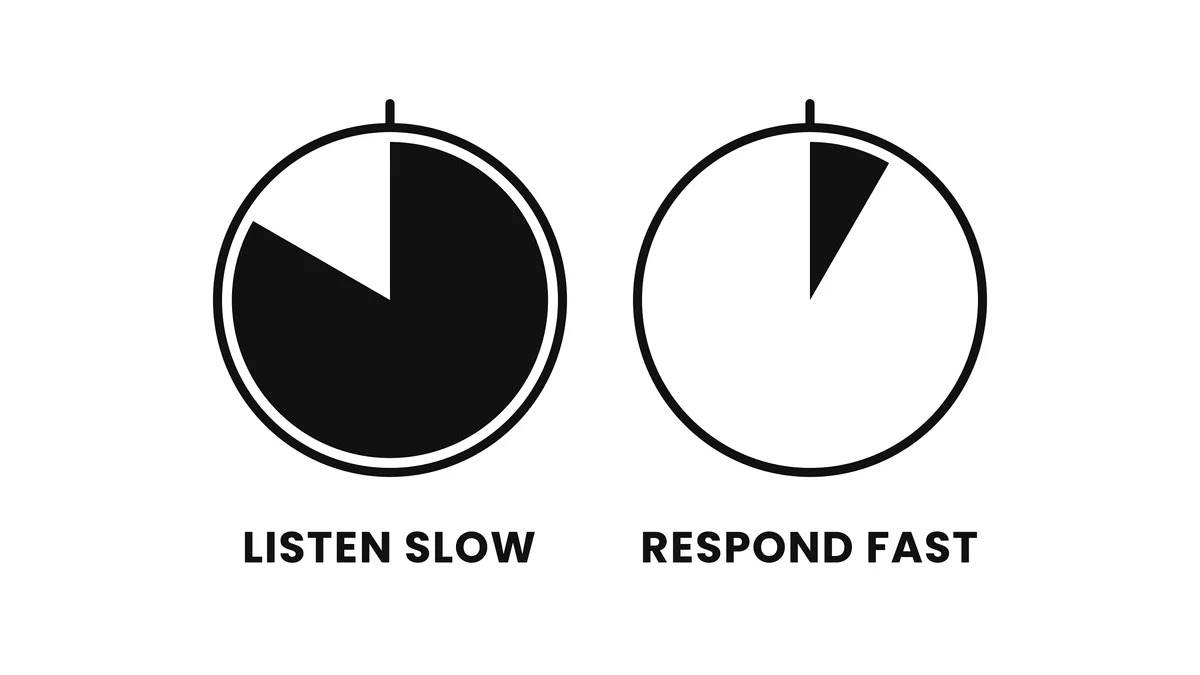
The core problem in AI interaction is the gap between conversational exploration and precise delegation. While AI tools are becoming increasingly fluent and human-like, this conversational style can obscure the fundamental difference in how humans and machines process information. People tend to treat AI as a colleague, engaging in "talking in writing" where the meandering process is the thinking itself. However, when this exploratory text is given as a directive, it leaves the AI guessing between open questions and firm commitments. Observing users revealed three interaction styles: collaborative, commanding, and over-explaining, with a common issue of accepting AI suggestions that drifted from original intent. This acceptance, even when suggestions diverge, is a problem for delegation but beneficial for exploration. The fluency of conversational interfaces creates a dissonance, as users assume a shared mental model that typically doesn't exist. Humans resolve ambiguity socially by asking clarifying questions, whereas AI agents silently commit to a single interpretation. This misinterpretation is highlighted when instructions are under-specified. The author's example of "new entries" meaning "new to me" illustrates how shared context is taken for granted, leading the AI to commit to a more plausible alternative. This leads to a two-sided failure: the agent over-commits by guessing, and the user under-resists by deferring to the confident, seemingly authoritative suggestions. In voice-first interfaces, where conversation is the entire interface, this problem is amplified as visual cues for delegation are absent. Designing for this gap requires new disciplines, drawing from fields like theatre directing and legal drafting, where the performance and performative nature of language are paramount. The focus shifts from making the machine understandable to making its response visible and controllable. Ultimately, closing this gap is about developing a new literacy for a world where conversation serves as the primary interface for action.
CdXz5zHNQW_leJzOFP46X.png