UX Collective | Medium
Follow
From vibe to specs: reclaiming the design process with SAID framework
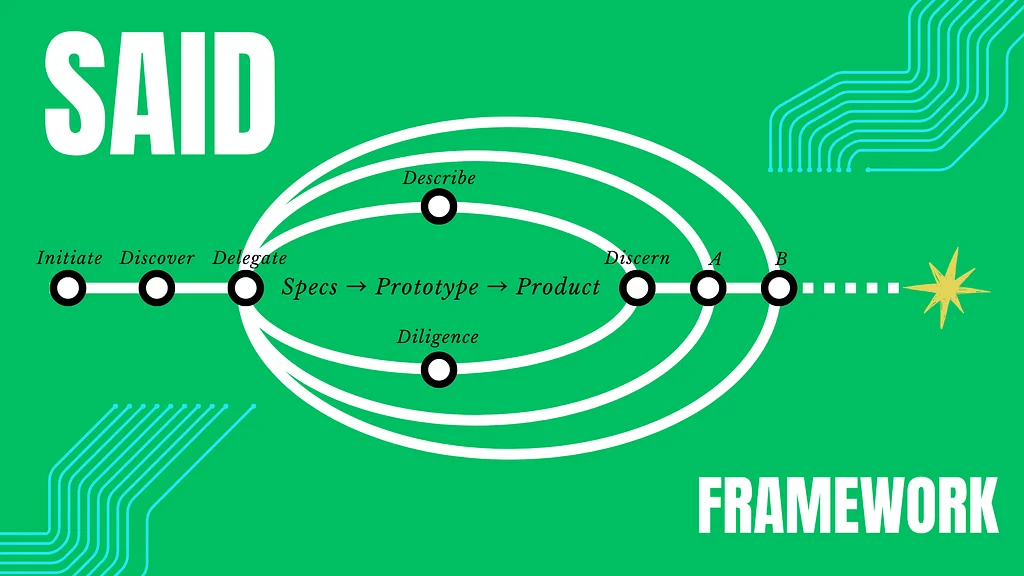
Modern AI-native workflows are replacing static handoffs with a continuous, spec-driven product engine, moving away from linear processes to feedback loops. The foundational strategic phases establish guardrails for rapid, high-velocity cycles in prototyping and production hardening. This shift blurs the lines between engineering, product, design, and data science, emphasizing fluidity and closer integration of design with implementation. Teams now comprise individuals who can move between archetypes like Prototyper, Builder, Sweeper, Grower, and Maintainer, with skill and adaptability being more crucial than titles. Git has become a central shared workspace, consolidating specs, code, and iteration, moving from tool fragmentation to a unified environment. Interactivity is expressed through direct prototyping, and spec-driven development (SDD) is gaining prominence as the source of truth for human and AI agents. Designers are shifting from pixel alignment to defining system rules, behaviors, and constraints, ensuring ideas are translatable into testable actions. This requires redesigning underlying system structures and mental models around human-AI collaboration, as exemplified by Anthropic’s 4D AI Fluency Framework. The new product lifecycle, termed SAID, involves Specifying intent, Agentic delegation, Iterative description, and human Discernment and diligence, forming a loop centered around specifications. This structured, spec-driven approach, moving beyond "vibe coding" to a professional lifecycle, accelerates development by managing AI as a production system.