UX Collective | Medium
Follow
The screens are getting demoted
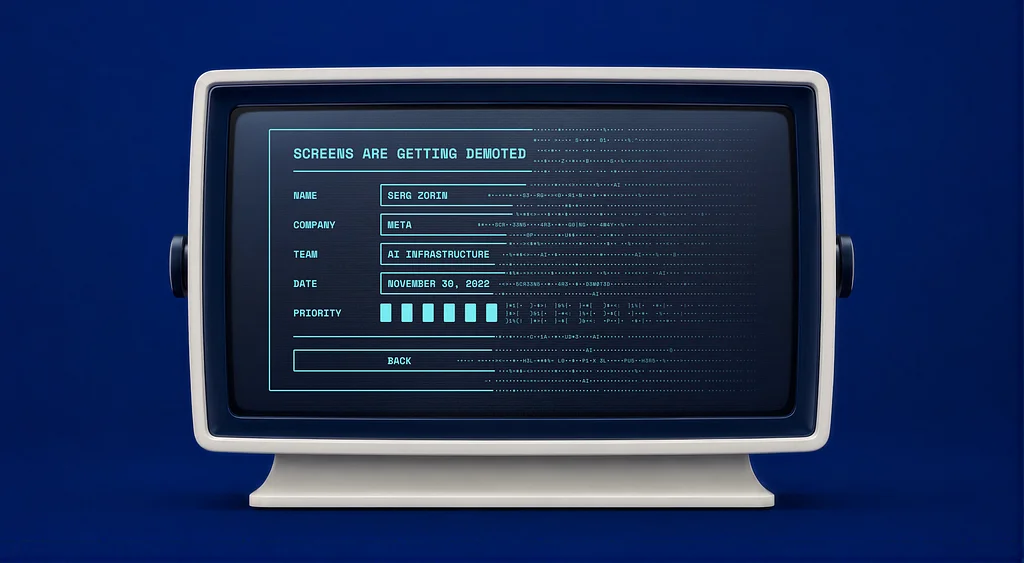
AI's advancement is shifting design focus away from interfaces and towards the necessity of screens. Historically, UX design heavily involved screen creation, despite the common adage that UX is more than just pixels. However, AI changes this by enabling systems to directly understand user intent and perform actions. For instance, sending a photo now requires fewer manual steps, as AI can manage the process. AI tools can also provide summaries of articles, reducing the need for users to read lengthy content.This shift means that many screens previously designed to bridge gaps in system understanding are becoming obsolete. Configuration pages, setup wizards, and dashboards often existed because software couldn't predict user needs or desired outcomes. AI, by contrast, can infer settings, guide users implicitly, and present relevant information without requiring explicit user action across multiple screens. The core goal for users has always been the result, not the screens, and AI now offers a more direct path to achieve these results.This evolution means designers must now question the fundamental need for screens rather than just how to design them effectively. The concept of "no interface" is becoming technologically feasible, unlike ten years ago. Complex systems are experiencing this change most acutely, as power users have historically tolerated complex interfaces for desired outcomes. User behavior is evolving, with a growing preference for AI skills and agents that directly fulfill intent.This trend is evident in industry shifts, such as Microsoft replacing a multi-step form with a conversational agent. Projections indicate a significant increase in the use of agents over traditional interfaces. Screens are being demoted from central roles to supporting functions, such as confirmations or backups when AI falters. The focus is shifting to understanding user intent rather than managing execution steps.However, "sensemaking" screens, used for tasks like problem diagnosis, are likely to persist alongside AI. These screens assist users in understanding and recovering from system issues, where the "second gulf" of evaluation remains the designer's responsibility. A crucial consideration is that users might lose their mental model of system operations as screens are replaced. Verifying outcomes and ensuring user understanding become paramount. The new design critique challenges the very existence of workflows and interfaces.