UX Collective | Medium
Follow
Did you verify that — or was it just too easy to believe?
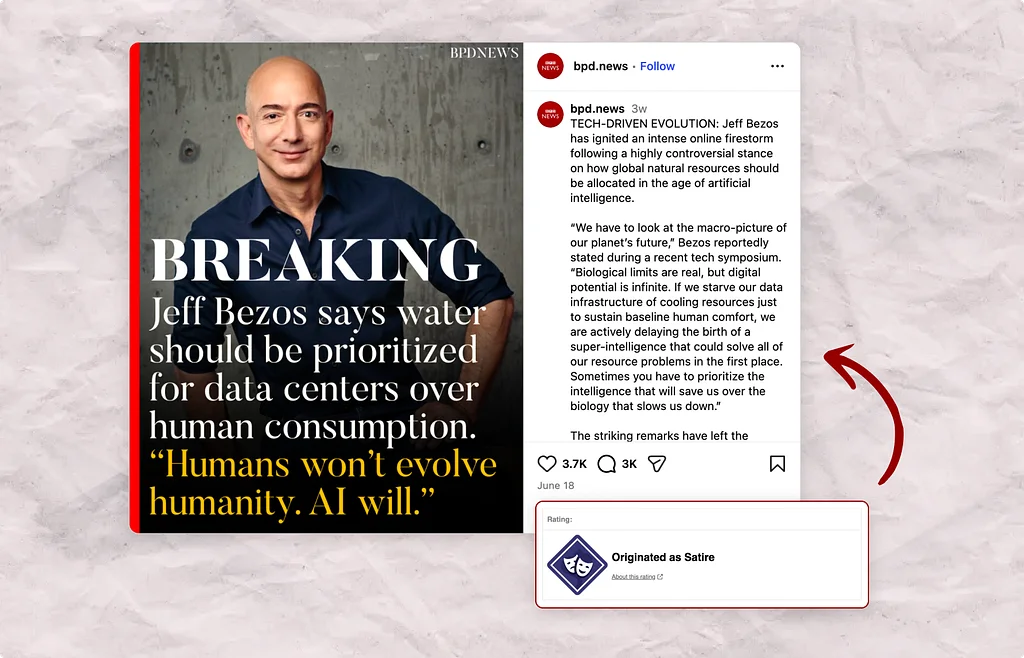
A fabricated quote attributed to Jeff Bezos, suggesting humans should consume less so machines could consume more, went viral, sparking outrage. This quote, however, was traced to a parody account and never actually said by him. The incident highlights a broader issue of people readily believing information, especially when it aligns with pre-existing sentiments, without verification. This lack of critical checking is pervasive, with studies showing most people do not verify AI-generated summaries. Automation bias, the tendency to favor automated systems' answers, contributes to this phenomenon, amplified by AI's consistently confident output. Experts are not immune, as shown by a study where radiologists' accuracy decreased when presented with AI-generated incorrect interpretations. The problem extends to professional settings, with companies like Deloitte using AI that produced false information. The legal field is also struggling, with a growing database of court cases that include AI-invented citations. While the fake Bezos quote consumed public attention, the actual, more nuanced debate about AI's environmental impact and resource consumption went largely unnoticed. The real figures reveal significant water and power demands from data centers, often subsidized by taxpayers. The market is responding with AI detection tools, but these are also imperfect and require constant updates. Meanwhile, human fact-checking organizations face funding crises, despite growing audiences. Ultimately, the responsibility of critical evaluation and verification remains with individuals, demanding greater attention and a more transparent AI interface.