Google Cloud Blog
Follow
AlloyDB adds group authentication to secure enterprise scale and AI agents
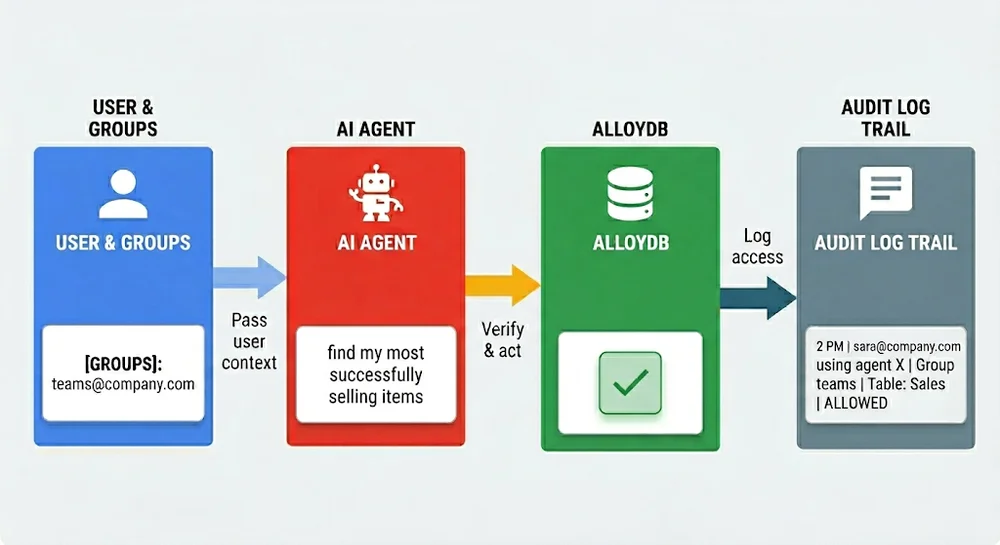
Traditional database security struggles with managing numerous passwords, creating an operational burden and security risk. Google Cloud aims to simplify database access by making it transparent, secure, and passwordless. They are introducing Identity and Access Management (IAM) group authentication for AlloyDB, a preview feature that brings identity-driven access control to enterprise workloads. This new capability unifies the security approach across AlloyDB and Cloud SQL, which already uses this successful pattern. Managing access individually at an enterprise scale leads to onboarding bottlenecks, off-boarding risks, and error-prone policy management across systems. Simplifying access management by using single powerful accounts introduces significant risks and limits granular auditing. The increasing deployment of AI agents further complicates database identity and access controls, as generic accounts can lead to confused deputy problems and mask individual accountability. Granular authentication allows AI agents to pass user identities through, ensuring queries run on behalf of the authorized user and limiting data access. IAM group authentication allows defining functional Google Groups, with Google Cloud validating group context to authorize access and capture precise audit trails. Enterprises like Bilt have already benefited from this centralized identity principle, eliminating shared credentials and templating database and role provisioning. This unified approach across Cloud SQL and AlloyDB allows organizations to enforce a standardized, defense-in-depth access strategy for their relational databases. By combining IAM group authentication with other security features, database access for both humans and AI agents is bound to verified corporate identities and secure network perimeters, paving the way for a Zero Trust database future.