Axios
Follow
America has more majority-minority rural counties than urban and suburban ones
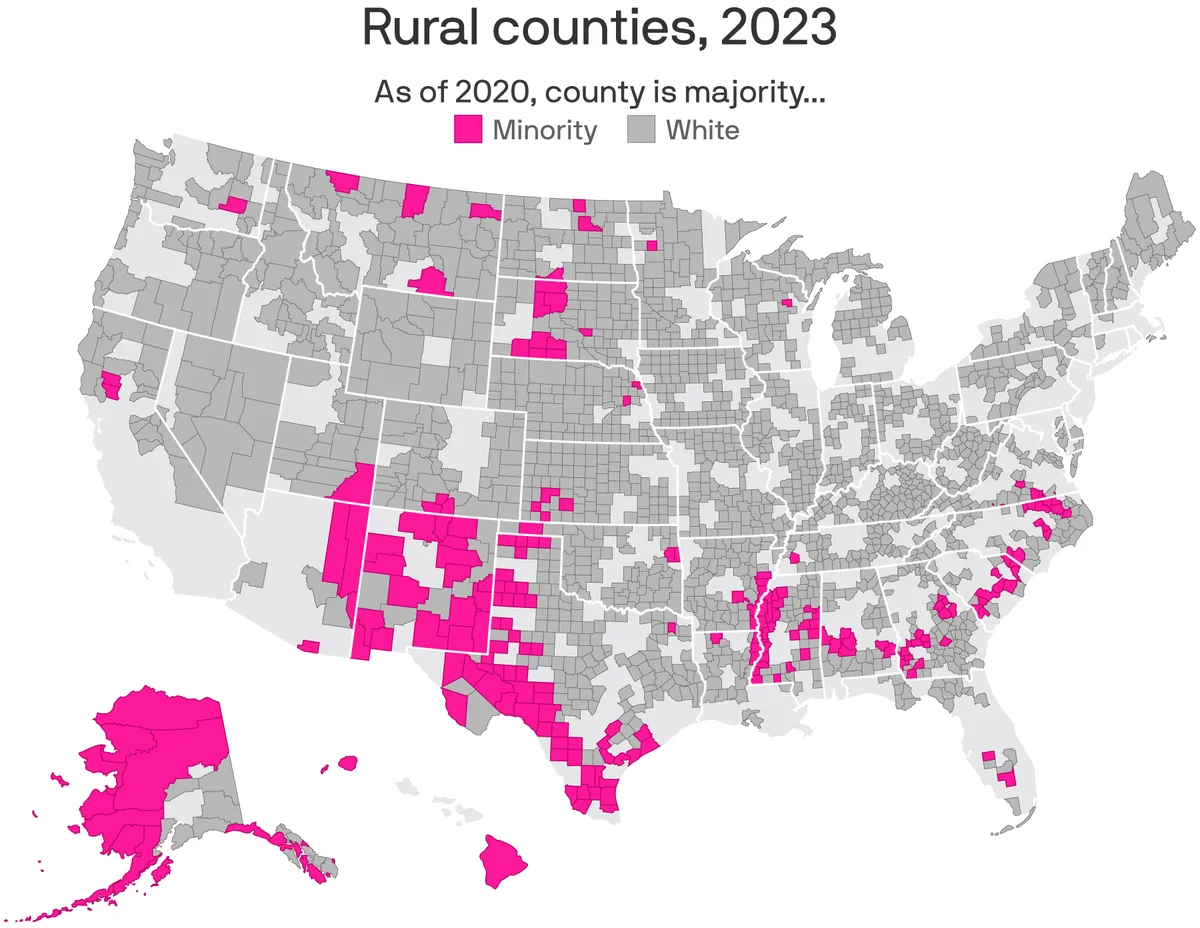
Hundreds of rural U.S. communities have already become majority-minority, years before the national projection of 2046. This demographic shift, driven by immigration and increased mobility, is revitalizing some areas but also presenting significant challenges. Rural governments often lack vital resources like interpreters and translated materials to accommodate their changing populations. Schools, courts, and election offices are especially strained by these rapid population shifts. Examples of these transformations can be seen in Kansas, Nebraska, South Texas, the Deep South, and Alaska.These demographic changes are placing unprecedented pressure on already cash-strapped rural institutions. Simultaneously, federal policies have reduced language access directives and narrowed anti-discrimination enforcement. An analysis found 403 U.S. counties, or 12.8%, are already majority-minority, including 221 non-metro counties. Texas leads with 57 rural majority-minority counties, followed by Mississippi and New Mexico.These rural shifts are occurring for different reasons, with some areas seeing minority growth due to immigration and higher birth rates, while others are experiencing a decline in their white populations. Federal language assistance coverage is often inadequate for dispersed minority communities due to strict population thresholds. Experts note that rural local governments already struggle with service delivery, and adding multilingual needs exacerbates these difficulties.