ZeroHedge News
Follow
America Turns 250. At 125, It Looked Like The End...
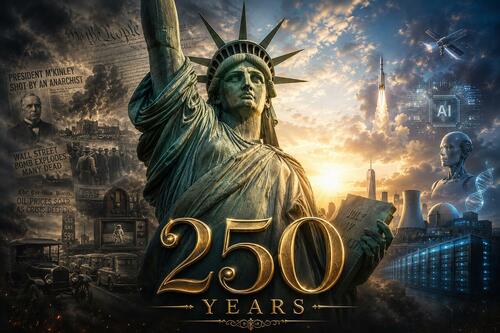
President William McKinley was assassinated in 1901 by Leon Czolgosz, an unemployed factory worker who saw the president as a symbol of oppression. This act reflected a period of significant social and economic turmoil in America, marked by a widening rich-poor divide, growing socialist movements, and political violence. The nation experienced recurring financial panics, leading to the establishment of the Federal Reserve and the implementation of the income tax. Simultaneously, America was a hub of innovation, with breakthroughs like the Model T, motion pictures, and radio reshaping the global economy. Decades later, the nation faced stagflation, oil shocks, and political disgrace in the 1970s. Yet, this era also saw the rise of the personal computer and the Internet, ushering in a period of unprecedented economic growth. Today, America grapples with revived political violence, immigration challenges, and massive national debt. However, it also leads in cutting-edge technologies like AI and advanced nuclear power. Throughout its history, America has overcome numerous crises, repeatedly emerging stronger. The author argues that America's resilience stems from its founding ideals and its tendency to find solutions after enduring significant hardship. While acknowledging potential future instability, the author expresses optimism for America's long-term prospects, suggesting that invention and chaos have always coexisted.