Axios
Follow
America's 250th fireworks party collides with burn-bans
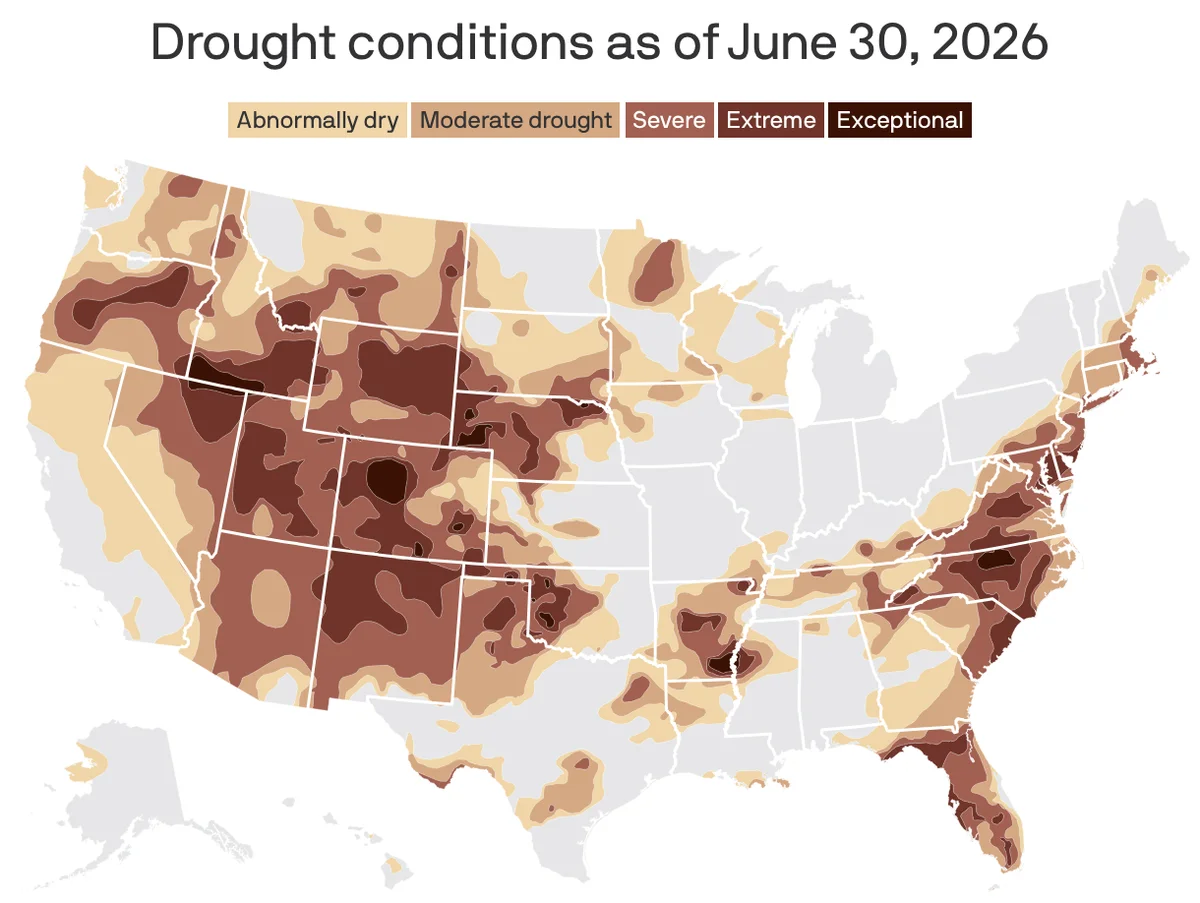
Backyard fireworks are expected to surge this Fourth of July, coinciding with severe drought and a heatwave that significantly heightens fire risks across the U.S. Climate change exacerbates wildfire likelihood and intensity, with large portions of the country under burn bans due to dry conditions. Experts warn that even small sparks can ignite fast-moving fires in dry vegetation, and embers can smolder unseen for extended periods. Surface greenness is deceptive, as soil can still be dangerously dry just inches below. A patchwork of local burn bans exists nationwide, with some cities and counties outlawing fireworks entirely. Florida, however, has no statewide ban due to a law prioritizing its "fireworks holiday." Approximately 50% of the U.S. is currently experiencing drought, with numerous new fires being reported daily and firefighters battling large blazes. The influx of fireworks during celebrations presents a major ignition source, creating a perfect storm with dry conditions and heat. Consumer demand for fireworks is at record levels, with neighborhood celebrations lacking the safety precautions of professional displays. While intermittent rain offers slight surface relief, it hasn't ended the drought. Many people consider fireworks a right, but experts emphasize the potential for harm to others.