ZeroHedge News
Follow
As A Former Head Of MI6, It's Clear That Britain's Climate Policy Is Leaving Us Dangerously Exposed To Our Enemies
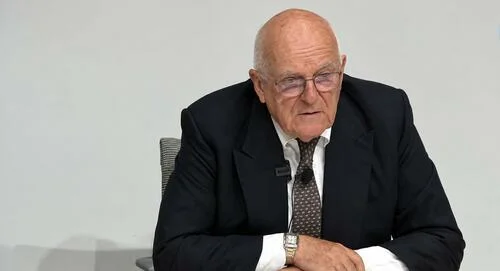
Sir Richard Dearlove, former head of MI6, delivered a lecture to the Global Warming Policy Foundation, emphasizing a strategic, unprejudiced view of energy security, distinct from emotionally charged climate change debates. He critiques the UK's lack of a coherent energy policy, suggesting it has a climate policy that is more akin to extracting sunbeams from cucumbers. Dearlove asserts that the most pressing threat to the UK is not man-made climate change, arguing against simplistic links between climate actions and preventing natural disasters. He categorizes national security threats into direct hostile state actions, vulnerabilities from infrastructure shortcomings, and unidentified threats, citing Russia, defense neglect, and the Covid pandemic as examples. Dearlove acknowledges natural hazards like extreme weather, advocating for contingencies but stressing that mankind cannot control nature's forces.His lecture primarily focuses on the vulnerabilities of energy infrastructure and their potential exploitation by foreign powers. Drawing on his intelligence background, Dearlove recounts a significant conversation with a Chinese general about the exploitation of cults and movements. He explains the Chinese Communist Party's practice of exploiting enemy "cults" to weaken them, seeing climate catastrophism and associated green movements as such vulnerabilities. Dearlove highlights the extensive "active measures" capabilities of Russia and China, with the SVR and 2PLA deeply involved in undermining Western nations. He details the Chinese Communist Party's United Front Work Department (UFWD), describing its vast operations and budget aimed at shaping a world favorable to PRC interests, citing the Christine Lee case as an example.The Russian threat is presented as immediate and actual, with Putin's Russia engaged in "gray warfare" against the West, exemplified by the GRU's sabotage capabilities. Dearlove specifically draws attention to Russia's significant investment in underwater warfare, enabling interference with undersea cables, pipelines, and electricity grid interconnectors. While acknowledging the illogicalities of current energy policies—like extreme Net Zero targets and reliance on imports—he refrains from dwelling on them, aiming instead for a fresh perspective on national energy security. Dearlove concludes by warning that the UK has negligently made itself vulnerable, and adversaries are poised to exploit this fragility, echoing Napoleon's advice not to distract an enemy making a mistake.