Becoming an AI Team
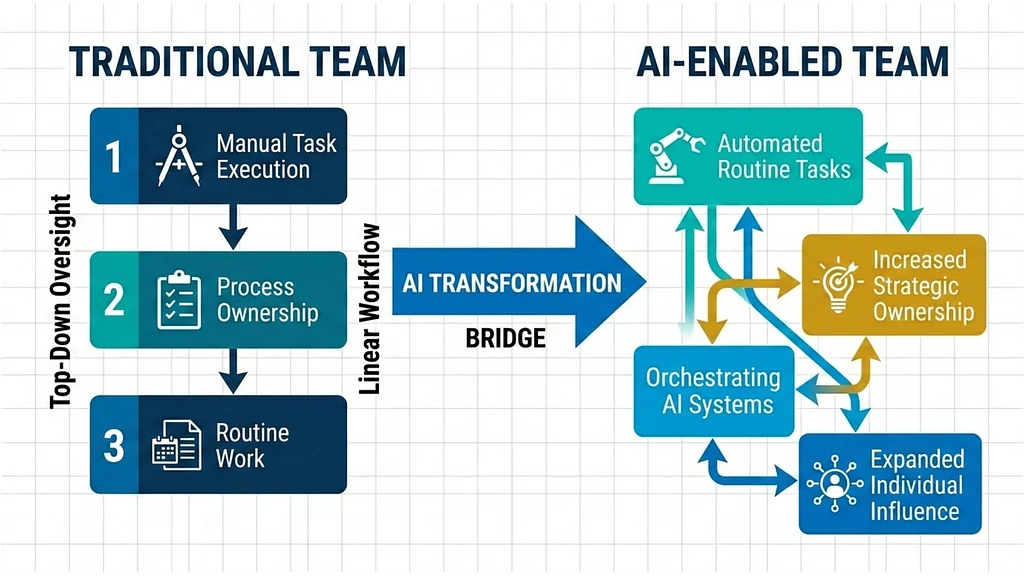
The transformation into an AI team requires a fundamental shift in operational models, philosophies, and roles, moving beyond simply using AI tools. Team members become empowered strategists and problem-solvers, leveraging AI for automation and analysis to focus on higher-level thinking. This evolution makes previously intractable problems solvable and drastically alters the nature of engineering work. Pinterest's infrastructure teams are adapting this out of necessity to scale reliability and efficiency. Accessible AI tools significantly raise performance ceilings, enabling complex projects like codebase refactoring to be completed in days instead of months. This expanded capability necessitates even more critical strategic prioritization, as feasibility doesn't equate to strategic alignment. Engineers will shift from execution to strategic thinking, problem definition, and validating user needs, using AI as a force multiplier. Managers will move from process enforcement to strategic guidance, focusing on vision, maximizing impact, and talent development. Pinterest is actively implementing AI for data exploration, content creation, and infrastructure improvements. The future of high-performing teams is intrinsically linked to the symbiotic relationship between human expertise and machine intelligence. Teams must embrace this cultural change to remain competitive and innovative. AI integration increases team capacity, creating a surplus needed for skill development and fuller tool leverage. The transition to an AI-powered environment is complex and turbulent, requiring leadership to navigate the deluge of information and guide teams effectively.