Google Cloud Blog
Follow
Behind the scenes: How we build, test, and scale Google Agent Skills
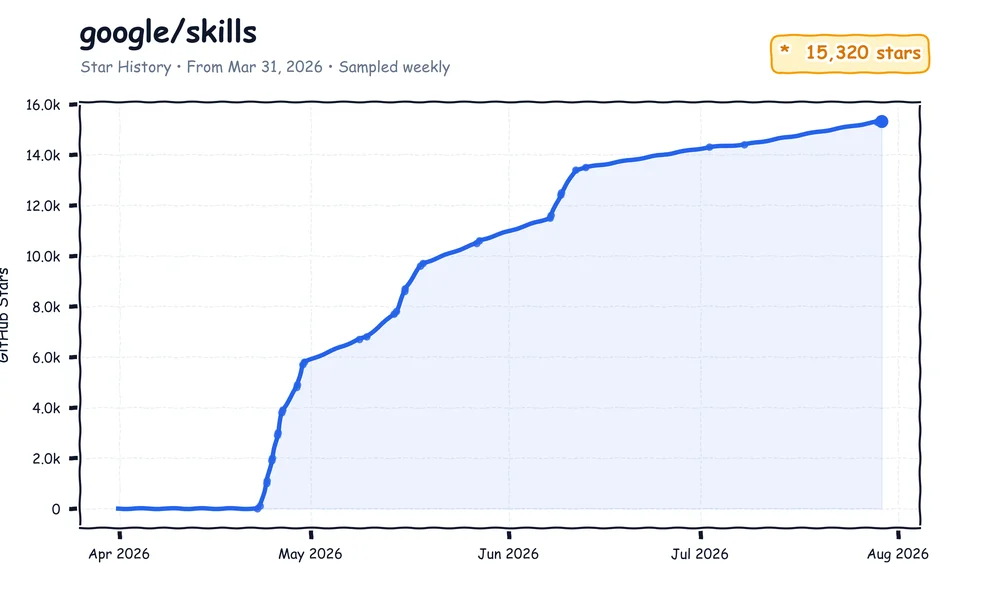
AI agents' effectiveness depends heavily on the quality of instructions and context provided. Google Agent Skills aims to enhance AI coding agent capabilities by encoding Google Cloud domain knowledge into structured, open-source instructions. This initiative, launched as a rapid "swarm" effort for Google Cloud Next 2026, aims to make AI agents smarter, safer, and more accurate. A cross-functional team developed standardized, agent-readable instructions for Google Cloud knowledge. The project quickly gained traction, with over 15,000 GitHub stars indicating strong community interest.The growing popularity presented a significant challenge in maintaining quality control across diverse team contributions. To address this, strict standards and automated governance were established to prevent a chaotic repository. Each skill adheres to a standardized layout, prioritizing remote MCP tools for better architecture. Skills are rigorously built and evaluated internally before being publicly exported, stripping sensitive internal data and ensuring cleanliness.Automated checks, including linters, link checkers, and AI-assisted validations, are performed before any skill is merged into the repository. Continuous evaluations, both on-submit and weekly, are crucial to catch regressions caused by evolving documentation, APIs, or LLM models. These evaluations measure accuracy and efficiency, ensuring skills provide a measurable uplift. The project emphasizes that skills are treated as living products requiring ongoing maintenance, with defined ownership for repository health and individual skill upkeep.To support authors, tools and agentic workflows have been developed to assist in creating effective instructions and evaluation suites. A parallel internal initiative, DevRel Skills, focuses on building agent skills for internal team workflows to improve efficiency and consistency. Google Agent Skills offers public skills on GitHub and related introductory materials for developers.