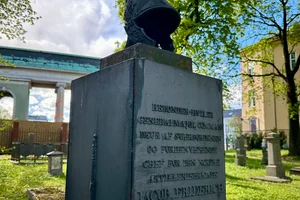
Black Death Monument (Peststøtten) in Oslo, Norway
Oslo experienced its last major plague outbreak in 1654, which tragically claimed over 1500 lives, potentially up to 40% of its population. The severe death toll necessitated the creation of a new burial site, leading to the establishment of Christ graveyard. To mark this somber event, the city erected "peststøtten," or the plague-marker, which stands today as Oslo's oldest public monument. Although originally situated outside the city's boundaries, the graveyard served its purpose from 1654 until after World War II. Notable figures, including prominent generals, politicians, and academics, are interred there. The graveyard also holds the remains of Sophie Munch, Edvard Munch's sister, who inspired his "Sick Child" paintings. The plague-marker bears an inscription detailing the graveyard's inauguration in 1654 during the great plague. It commemorates its establishment by Colonel Hans Jacobsen Schist and its consecration by parish priest Michel Pederson Escholt by order of Bishop Henning Stockflez. The inscription also notes the supervision of Captain Laurits Pederson during its fencing. The first person buried in Christ graveyard was Arne Sivardson, a soldier from Wang parish.