UX Collective | Medium
Follow
Bounded delegation: How much authority should AI have?
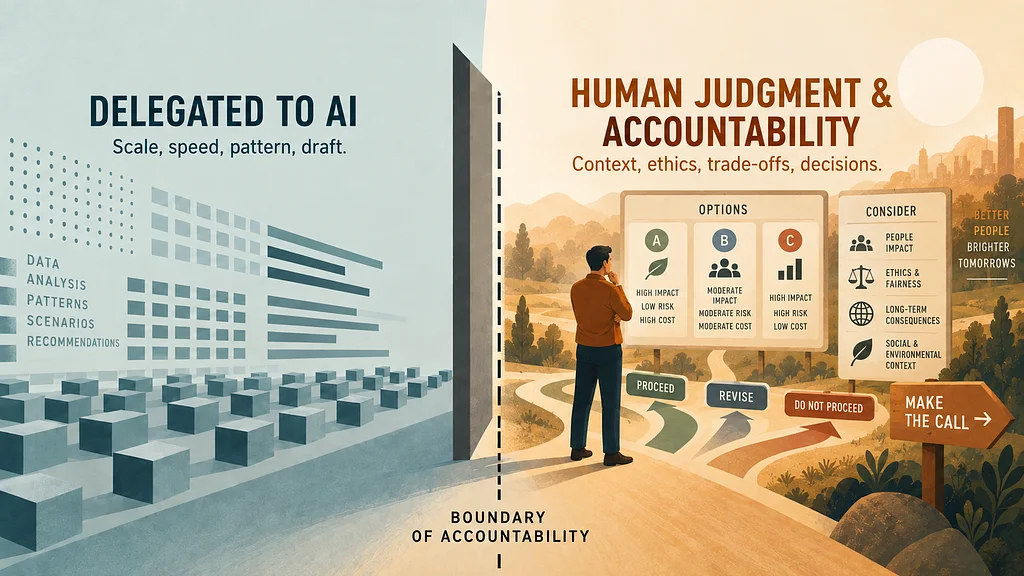
AI tools can assist product teams but require careful governance to define their authority. AI capability refers to what a system can produce, while authority concerns what an organization permits it to decide or initiate. Bounded delegation suggests giving AI broad scope for cheap exploration and delegating analysis when evidence is inspectable. Authority should narrow as stakes and accountability rise, distinguishing between generation, analysis, and commitment. Commitment involves consequential decisions like resource allocation or customer experience changes, where AI should inform but not own the outcome. A significant risk arises when AI frames problems, potentially obscuring alternative interpretations or explanations. Human sign-off is insufficient if AI has already shaped the decision-making process. Four questions help establish boundaries: What if we are wrong? Who is accountable? Can the work be inspected? Is this generation, analysis, or commitment? The focus should be on bounded authority rather than simple autonomy or vague "human in the loop" oversight. Utilizing "Judgment Points" in workflows makes these boundaries explicit, allowing AI for exploration while preserving human ownership of commitment. This approach ensures AI assists effectively without relinquishing crucial organizational accountability.