ZeroHedge News
Follow
Chinese Stocks Crash After Beijing Seeks To Contain Bubble: What Happens Next
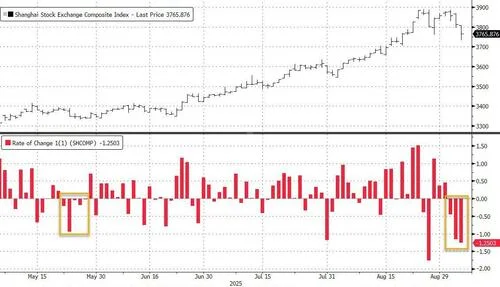
China's equity rally has lost momentum, with the Shanghai Composite falling and breaking key support levels after a significant surge. This downturn was triggered by a report suggesting financial regulators are considering cooling measures to curb speculative trading. These potential measures include removing short-selling restrictions and introducing other controls. While these signals are officially attributed to "people familiar," it's suspected they might be strategically leaked to create a buying opportunity. The "National Team" intervened at the close to support stocks, contradicting a desire to pop a bubble. Some brokers have already increased margin requirements, and mutual funds are limiting subscriptions. The CSRC Chair has pledged to ensure market stability and promote long-term investing. State-backed funds have shown increased volume in favored ETFs, indicating support within a comfortable correction range. Technology and innovation stocks were particularly hard-hit, experiencing significant daily losses. BYD also lowered its annual sales target due to intense competition, adding to the risk-off sentiment. However, China's solar sector showed strength, with a leading producer suggesting the sector has bottomed out. Overall, Chinese equities were the largest net sold market in the region, driven by long-only investors. The derivatives market shows mixed activity, with ongoing demand for options despite choppy spot trading conditions. The author suggests the market may be getting ahead of economic fundamentals, potentially signaling a bubble. Upcoming economic data will be crucial in determining the strength of the recovery. Despite the correction, overall market activity remains exceptionally high, with daily turnover exceeding 2 trillion yuan and margin balances reaching record levels. Recent fund flows show strong buying interest in Chinese equities, particularly A-shares, although China remains underweight in emerging market funds.