Google Cloud Blog
Follow
Demystifying AI Exploits: A Blueprint for AI-Assisted Vulnerability Management
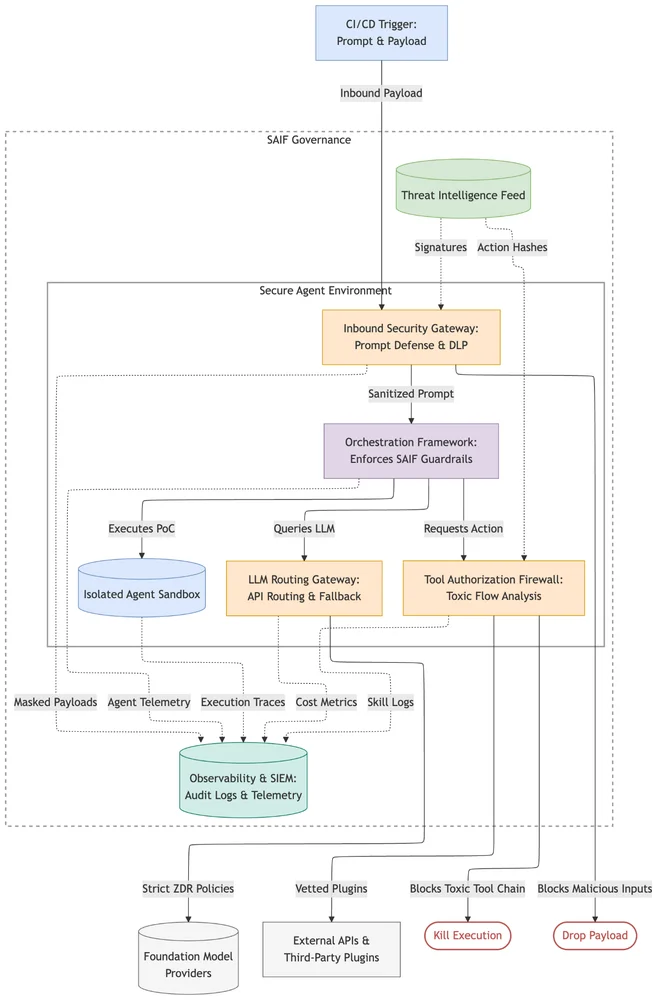
The rapid exploitation of vulnerabilities, occurring even before patches are available, necessitates new approaches for security teams. Integrating large language model (LLM) agents into development pipelines offers automated vulnerability discovery and remediation. However, deploying privileged AI agents requires mature integration processes to avoid new architectural risks. Mandiant Consulting offers guidance on establishing operational guardrails for AI-assisted vulnerability management. Organizations should adopt frameworks like NIST AI Risk Management Framework and OWASP Top 10 for LLMs. Extending existing deterministic controls into the AI execution environment is crucial for safe implementation. This includes pre-agent data security with synthetic data and defense-in-depth models, along with strict workload isolation. Red teaming AI agents and employing least-privileged machine identities with human controllers are vital assurance measures. Supply chain resilience for AI skills and robust toxic flow analysis are necessary to prevent new attack vectors. Human-led threat modeling remains critical for reasoning about business risk and architectural design flaws. AI agents can assist in Enterprise Vulnerability Management and Product Security, but foundational security must also be addressed. Risk-based vulnerability management, informed by normalized data and threat intelligence, is essential for prioritizing remediation efforts.