ZeroHedge News
Follow
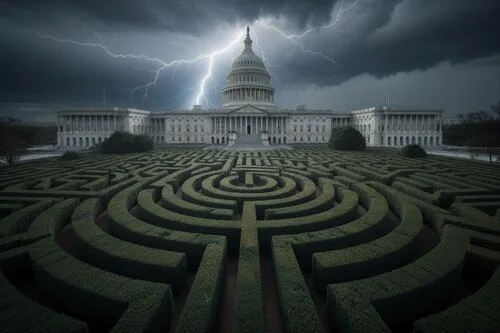
Election Integrity: Is Representative Democracy A Foolish Fantasy?
The US Constitution, while historically significant for establishing representative government, was crafted for a vastly different societal landscape. Its framers envisioned a moral, religious, and less diverse populace, with restrictive voting rights based on property ownership. Today, the foundational conditions for this system no longer exist, with widespread atheism, a diverse cultural identity, and the prevalence of ideologies like Marxism. The author questions the efficacy of unquestioningly adhering to a system designed for a different era, especially when certain segments of the population actively seek to undermine the republic. He suggests that the current drive for total democratic inclusivity might have inadvertently destroyed the social structures that once made the country and its elections function. The author highlights the contentious issue of voter ID laws, noting the overwhelming public support for them despite opposition from a radical minority and some politicians who, he implies, have ulterior motives regarding election integrity. He raises concerns about vulnerabilities in the electoral system, including the influence of the mentally ill, low-IQ individuals, and psychopaths, arguing that their participation compromises sound decision-making. Furthermore, he criticizes the entrenched bureaucracy and "deep state" as a persistent obstacle to governmental transparency and accountability, asserting that it often thwarts attempts by elected officials to enact meaningful change. The author concludes by suggesting that the current legal framework and the Constitution itself no longer offer solutions to these deeply rooted problems. He posits that extraordinary measures, potentially outside constitutional norms or even a popular revolution, might be necessary to rescue the country from its current trajectory, as simply doing nothing is not an option.