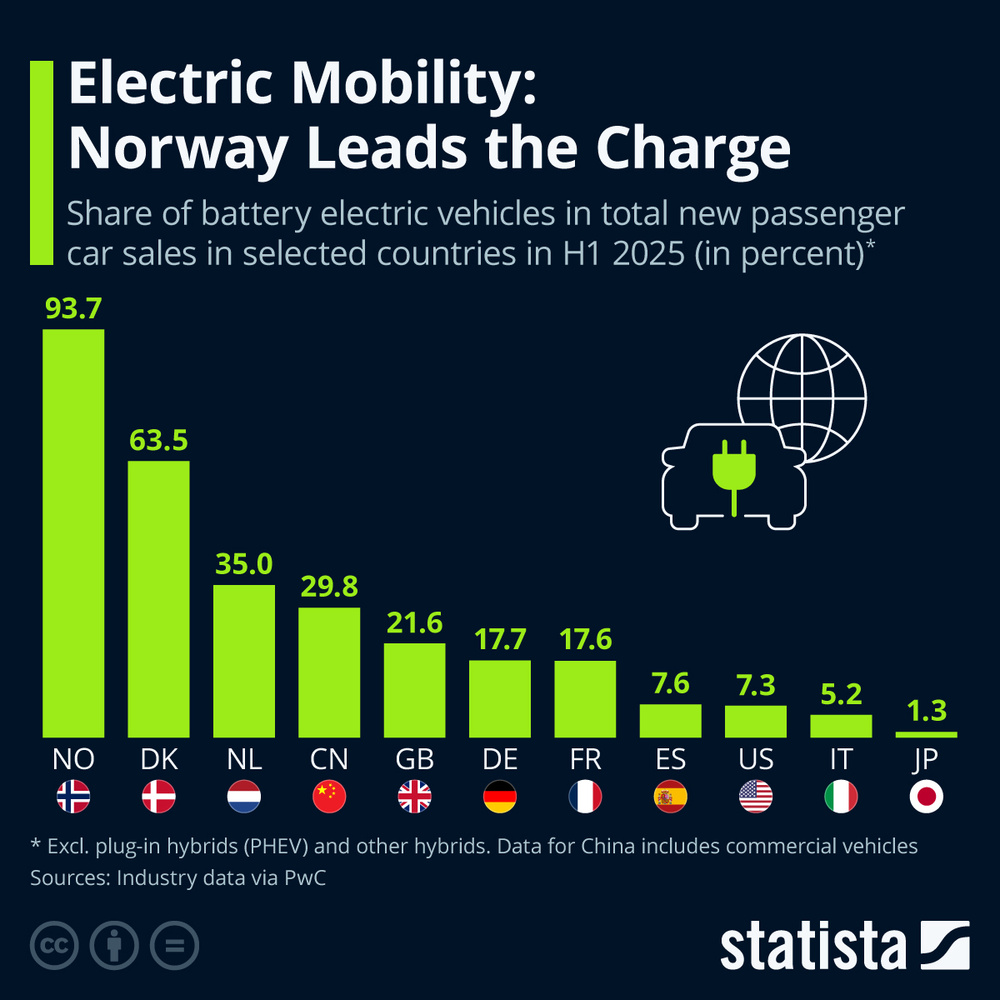
The global market for battery electric vehicles has surpassed the 10 million annual sales mark for the first time in 2024, with sales increasing by nearly 10 percent compared to 2023. In May 2025, China reached a major milestone with over one million electric cars sold in a single month, according to the International Council on Clean Transportation. China dominates the global market in terms of sales volume, but some European countries lead the way in terms of adoption. Norway has been a notable exception, with more than 90 percent of newly registered passenger cars being electric in the first half of 2025. Denmark and the Netherlands also have high market shares, with 63.6 percent and 35.0 percent of new vehicles sold being electric, respectively. In comparison, the United States lags behind with a BEV share of just 7.3 percent, while China has a BEV share of 29.8 percent. Norway's policy measures, such as tax exemptions and toll exemptions, have been effective in promoting electric cars, but this model cannot be easily transferred to other countries. Norway's high import duties and car registration taxes make cars expensive, and waiving these duties for electric vehicles is a significant subsidy that larger countries may not be able to afford. Norway's high level of income, with a median household income after taxes of around $64,000 in 2025, also contributes to its high adoption rate of electric vehicles. The country's unique combination of wealth and policy measures has made it a leader in electric vehicle adoption, but its model may not be replicable in other countries.

zerohedge.com
zerohedge.com

RSS Hunter
2025-10-24