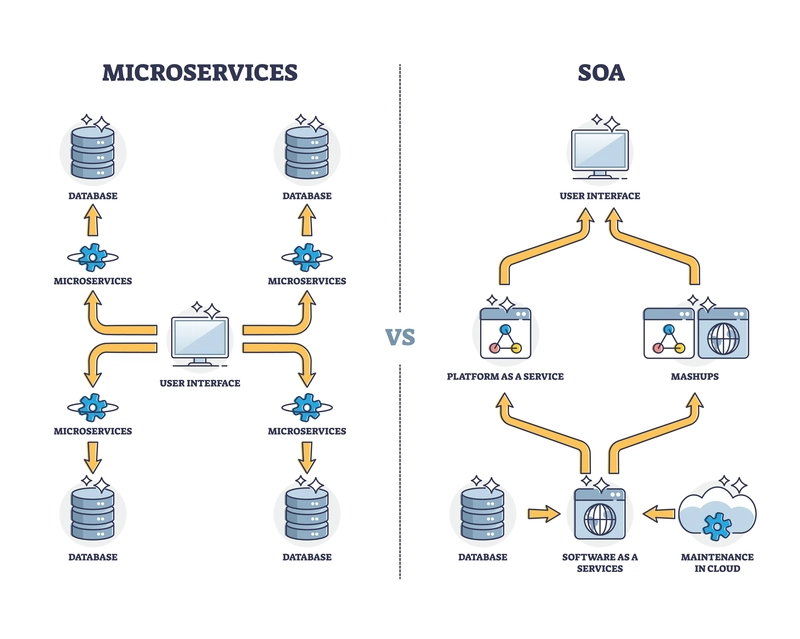
Akash, a developer, initially built ShopStream, a live-streaming e-commerce app, as a monolithic application to quickly meet an investor deadline. The monolithic architecture, with its single codebase and database, allowed for rapid development, simple deployment, and low initial costs. ShopStream's success led to massive user growth and a large team, transforming the monolithic structure into a complex, error-prone system susceptible to scaling limitations when traffic surged. To address these issues, Akash adopted a microservices approach, breaking the monolithic application into independent services communicating through APIs. Microservices enhanced fault isolation, enabled independent scaling, and provided technological freedom for different teams. However, the move to microservices introduced debugging complexities, operational overhead, and increased development costs. Ultimately, the best architecture depends on the company's stage and needs, with monoliths suitable for startups and MVPs, and microservices ideal for large-scale enterprises. The key takeaway is to start with a monolith and transition to microservices only when the drawbacks of managing the monolith outweigh the complexities of microservices.

dev.to
dev.to

RSS Hunter
2026-01-10