Axios
Follow
Exclusive: How the permitting bill could change the energy landscape
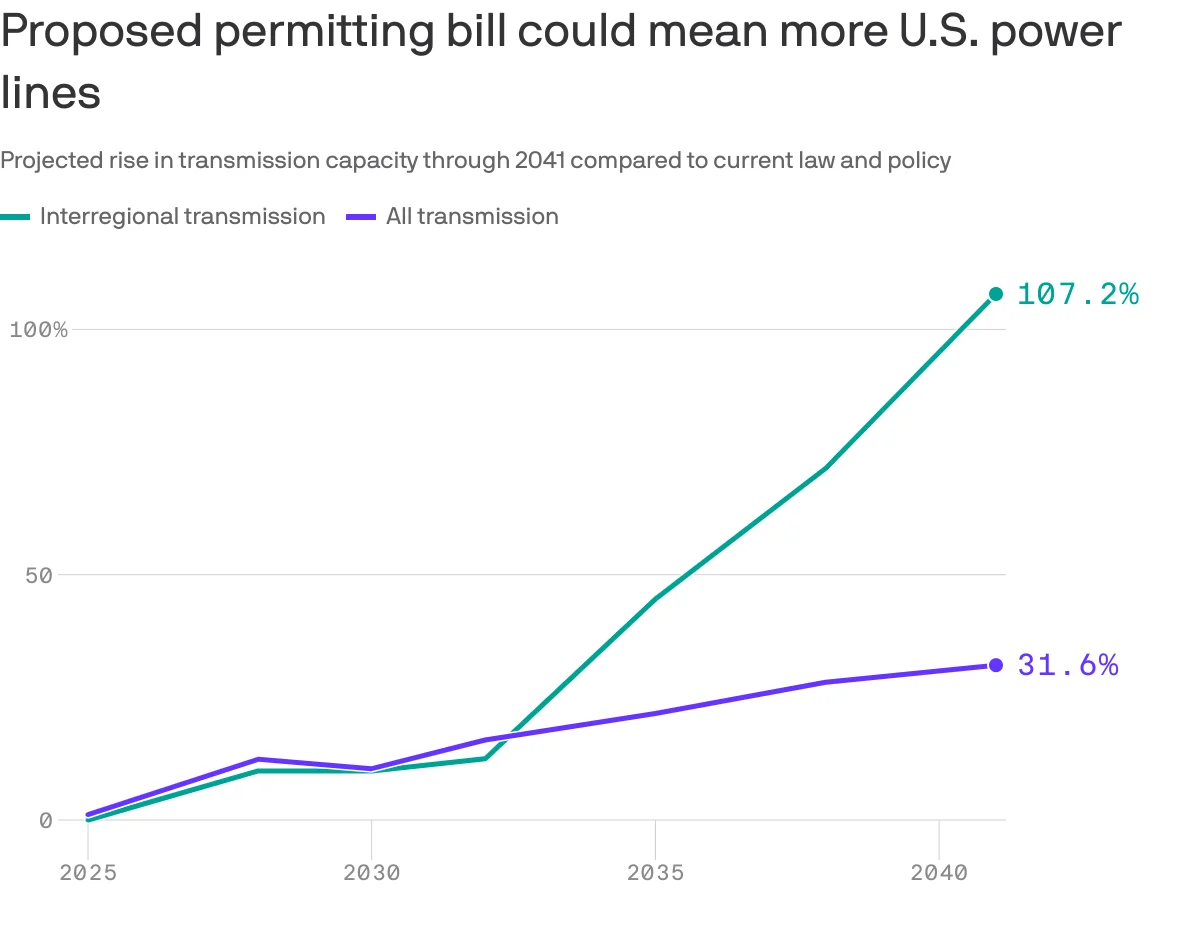
A new analysis from Resources for the Future (RFF) indicates that the Senate's permitting plan would reduce power plant emissions in the near term and help stabilize electricity prices. This detailed independent modeling offers crucial insights for the bill's upcoming test vote on November 9th. The analysis projects "robust" transmission expansion, facilitating greater use of clean energy and existing resources of all types. Overall electricity system costs are estimated to be 3.5% to 7% lower annually through 2041, saving over $350 billion by 2050. This cost reduction should translate into lower electricity bills for consumers, although retail prices were not directly modeled. The bill is expected to boost renewable energy development, displacing fossil fuels despite some continued additions of gas-fired capacity. Power sector CO2 emissions would initially decrease as coal use declines, then gradually climb while remaining below projected levels without the bill. By 2028, the central outlook anticipates approximately 60 gigawatts more clean energy capacity compared to current law. While the study projects an initial downward trend in emissions, the long-term upward trend is not guaranteed, as the analysis relies on various assumptions and variables. The RFF study, however, does not cover every aspect of the extensive bill, such as its impact on mining, pipelines, or activities outside the power sector. Other analyses, including one from the White House, also project significant economic benefits and power bill savings from the bill.