ZeroHedge News
Follow
Fed Over-Tightening: How Much Runway Is Left Before It Bites?
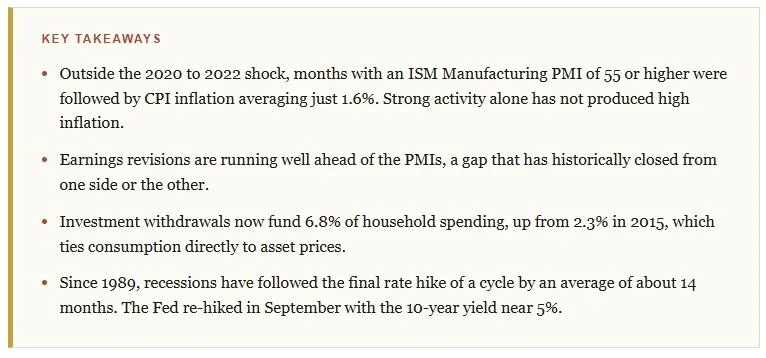
The risk of Federal Reserve over-tightening is escalating due to the convergence of 5% Treasury yields, a diminishing savings cushion, and the Fed's "hike-cut-hike" policy. Long-term rates are already tightening significantly, raising questions about the necessity and impact of further rate hikes. Current economic activity, while strong, does not strongly correlate with inflation, suggesting the Fed's demand-side tools may be misdirected. Inflation appears driven more by "bad" factors like energy prices than robust economic health, which the Fed's actions exacerbate for consumers.Earnings are outperforming the economy, but this growth is concentrated in credit-independent sectors like AI, while credit-dependent parts of the economy struggle. The consumer's reliance on withdrawing from investment portfolios for spending has dramatically increased, making household spending highly vulnerable to asset price declines. This asset-dependent spending, coupled with low savings rates, means a market downturn could trigger a recession by curbing consumption.Historical parallels suggest the lag between Fed hikes and economic trouble might be shorter this time. With the 10-year Treasury yield already near 5%, borrowing costs are reflecting a much tighter stance than the Fed's target rate. While some argue 5% rates are "normal," they are abnormal relative to the current high debt levels and asset-dependent consumer behavior. Investors should rebalance portfolios, limit exposure to rate-sensitive businesses, and respect the yields offered by Treasuries. The bond market and the asset-dependent consumer have already shortened the fuse, making each additional hike more perilous.