UX Collective | Medium
Follow
Five eras of UX design and the lessons to keep in the AI era
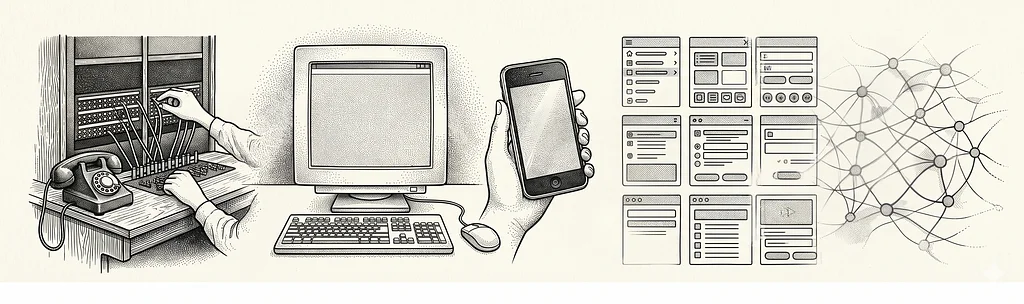
The field of User Experience (UX) has a rich history predating its current name, with its roots stretching back to the Human Factors era. Bell Labs' work in the 1940s on human-centered design for systems like telephones laid foundational principles still relevant today. While formal education provides tools, it often omits this crucial historical context, creating a gap in understanding why these tools exist. UX history is not a linear progression but a series of eras, each building upon and sometimes repeating the mistakes of the last. A consistent pattern observed is Jevons paradox: as computing becomes cheaper and more accessible, its use expands rather than contracts. This expansion is evident from room-sized mainframes to pocket-sized smartphones. The current AI era represents a similar, albeit larger-scale, expansion, and understanding this historical trend is key to avoiding present-day panic. A durable lesson that has endured through these eras, emphasizing function over mere aesthetics, was championed by figures like Steve Jobs. This fundamental insight, that design is "how it works," has been either embraced or overlooked by successive eras. Each historical period has contributed unique insights and methods, but also developed its own blind spots and habits that should be discarded. The Human Factors Era focused on the entire user system, not just the screen, but later narrowed its scope. The Web Era established information architecture as crucial for organizing online content, yet this discipline has since become less visible. The Mobile Era introduced vital constraints that sharpened design, but these constraints have since eroded. The AI era presents a new frontier, demanding a deep understanding of UX history to discern enduring lessons from fleeting trends.