Google Cloud Blog
Follow
Five rules for evaluating agent skills before they bloat your context window
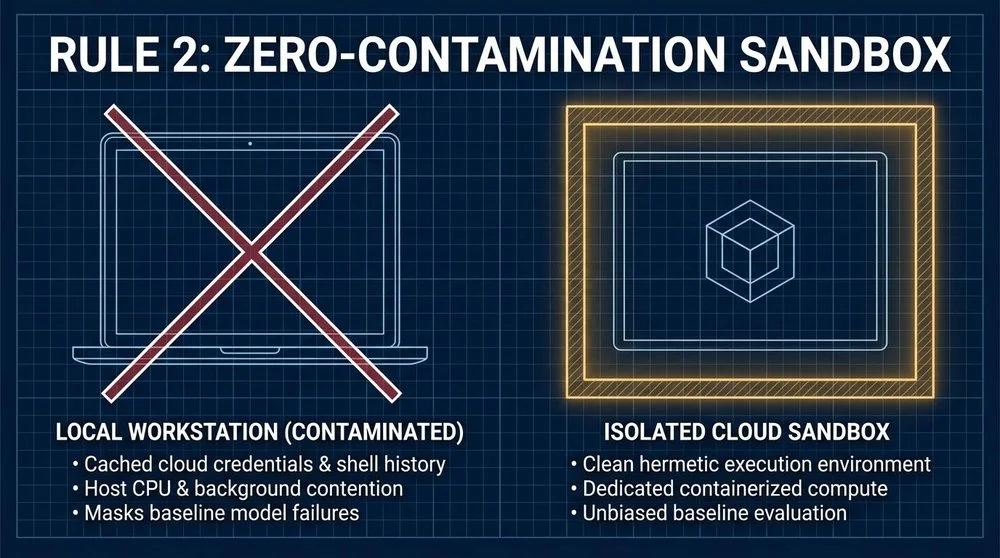
Testing SKILL.md files effectively requires more than a simple pass/fail on a laptop. Over-triggering or sibling hijacking can prevent agents from loading skills, especially in complex workspaces. Tools like skill-reach and SkillSpector help identify frontmatter collisions and security risks early. It's crucial to avoid running skill benchmarks on developer laptops due to ambient state that contaminates baseline results. Paired ablation testing (WITH vs. WITHOUT), across multiple repetitions, provides a more accurate measure of skill improvement and efficiency gains. This approach reveals if a skill genuinely helps or if the base model already possesses the capability. When automating optimization, ensure evaluation harnesses are hardened against reward-hacking by separating correctness, efficiency, and security metrics, and isolating grading components. Finally, effective SKILL.md files encode operational habits and verification reflexes rather than simply dumping extensive documentation. Frontier models often have public documentation in their pre-training, making compact, actionable constraints more valuable. Regularly re-evaluating skills with new models and deleting those with zero delta ensures an efficient and current skill set.