DEV Community
Follow
Flutter Development Architecture in 2026: How to Build Scalable, Maintainable Mobile Applications
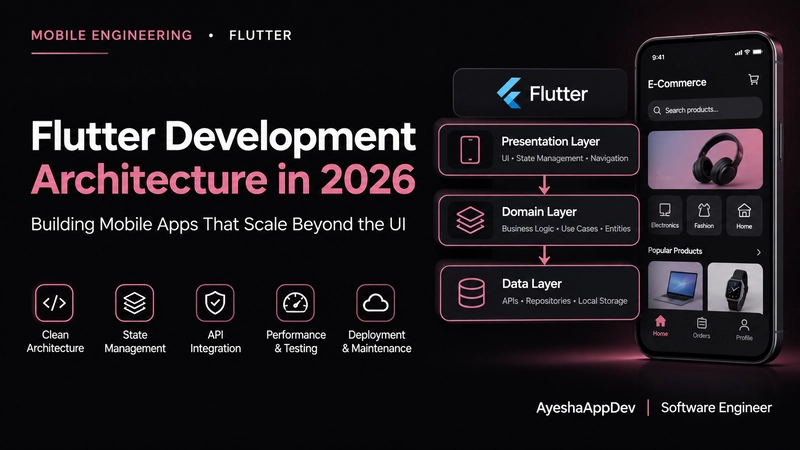
A Flutter application's maintainability hinges on its architecture, not just its initial functionality. As applications grow in complexity and team size, a robust architecture becomes crucial for long-term success. Flutter architecture defines how components interact, manage dependencies, and allocate responsibilities. A common approach involves a layered structure separating the Presentation, Domain, and Data layers. The Presentation layer handles UI and state, the Domain layer enforces core business logic, and the Data layer manages external communication like APIs and databases.For larger projects, a feature-first organization is often preferred, grouping code by business capability for better modularity and easier navigation. State management is a critical architectural decision, impacting predictability and testability, and should align with application behavior rather than just popularity. Proper API integration goes beyond basic requests, requiring thorough handling of authentication, parsing, errors, and network issues across relevant layers. Authentication and security must be designed system-wide, encompassing token storage, session management, and server-side authorization, not just client-side features. Finally, robust error handling distinguishes production-ready applications, requiring distinct responses to various failure scenarios to ensure user experience and reliability.