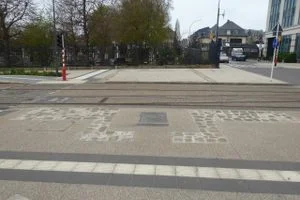
Former Site of the Chapel of Glacis in Luxemburg, Luxembourg
In the early 17th century, Luxembourg City faced numerous hardships including war, famine, and the Protestant Reformation. To provide hope and promote veneration, Father Jacques Brocquart organized a procession in 1624 to erect a statue of the Virgin and Child, known as 'Notre-Dame du Glacis', outside the city fortifications. A chapel was subsequently built for the statue between 1625 and 1628. The statue gained significant recognition following the 1639 publication of the "Book of Miracles," which documented answered prayers. This led to the annual Octave celebrations, where the statue was brought to the Jesuit college church, and its designation as 'Our Lady, Consoler of the Afflicted'. It became the patron saint of Luxembourg City in 1666 and protector of the Duchy in 1678. During the 1794 French invasion, the statue was moved to the Jesuit college church for safekeeping, and the original Glacis Chapel was destroyed by revolutionaries. The church housing the statue became a cathedral in 1870, and the statue evolved into a national symbol and protector of an independent Luxembourg, particularly after WWII. A new neo-Gothic chapel was built on Glacis square in 1885, reversing the Octave tradition, with the statue now leaving the cathedral for veneration there. The Octave was extended to two weeks in 1922, though retaining its original name. In 2016, construction for a tram line uncovered the original chapel's ruins, which were protected and marked out with paving stones. Despite this, the outline is often overlooked by passers-by. Nevertheless, the rediscovery of the chapel's remains was significant, and the strong bond between Luxembourgers and their patron saint is still evident in the enduring popularity of the Octave and the traditional Mäertchen market.