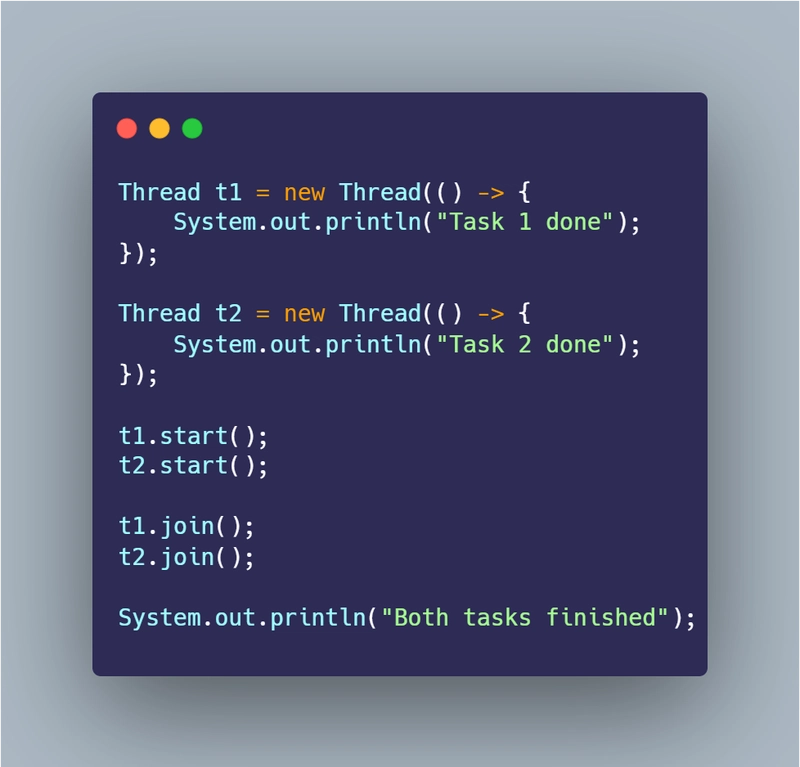
The author, having learned Java, expected Go's concurrency to be similar, but was surprised by a significant shift in perspective. The key difference wasn't syntax, but how the languages encourage you to think about concurrency. Java requires managing threads explicitly, creating objects and joining them for completion. In contrast, Go uses goroutines, which are lightweight and disposable, initiated using the `go` keyword. Java's approach feels thread-centric, focusing on thread management and lifecycle, while Go emphasizes coordinating tasks. Go uses a `WaitGroup` to track completion, shifting the focus from individual threads to overall task completion. This change is demonstrated by comparing a simple "run multiple tasks concurrently and wait" problem in both languages. In Java, you manage individual threads, whereas in Go, you define tasks and use the `WaitGroup` to wait for their combined completion. This shift makes Go's concurrency easier to understand and reason about, as you focus more on the work being done. The author realized Go's model emphasizes the independent tasks and their completion. This focus on tasks enables an easier understanding of concurrent code in Go. The mental shift facilitated in understanding the concurrency model in Go much easier. The `WaitGroup` is an essential component, allowing a focus on the tasks finishing. This mental shift was key for the author's comprehension of Go's concurrency.

dev.to
dev.to

RSS Hunter
2025-12-27
Create attached notes ...