Netflix TechBlog | Medium
Follow
GenPage: Towards End-to-End Generative Homepage Construction at Netflix
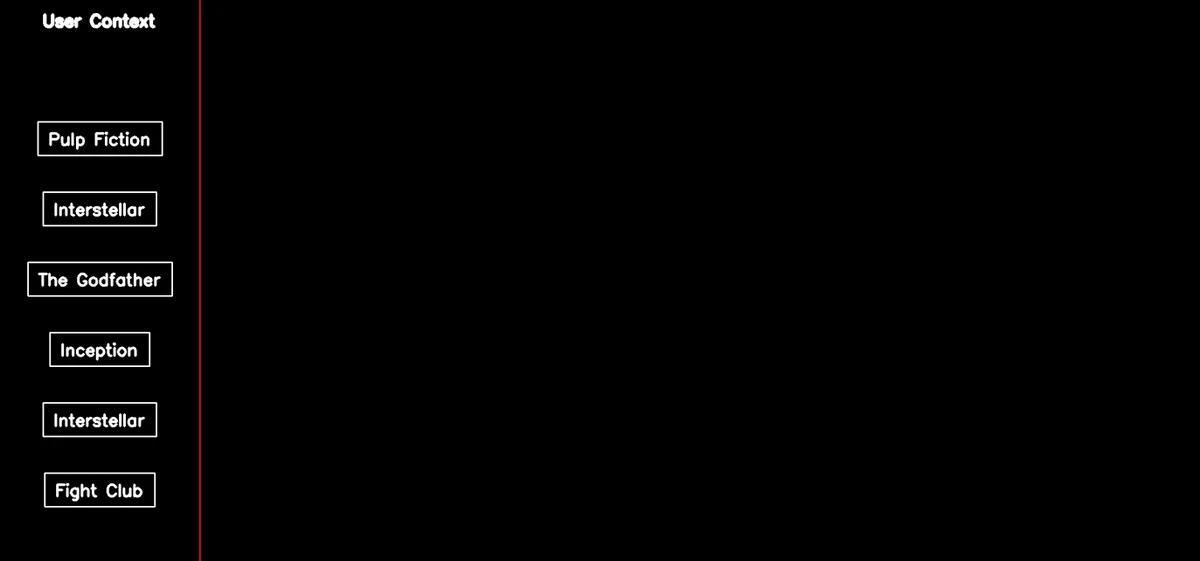
The Netflix homepage is a highly personalized and structured interface for content discovery. Traditionally, its generation involved a complex multi-stage pipeline. GenPage, a novel approach, utilizes a single generative transformer model to autoregressively construct the entire homepage. This end-to-end model takes user context as a prompt and generates rows, entities, and layout simultaneously. Key goals include simplifying the recommendation stack, enabling whole-page optimization via reinforcement learning, and improving scalability and flexibility. Production challenges involved real-time serving latency, entity cold start, and maintaining model freshness. GenPage has demonstrated significant improvements in user engagement and reduced serving latency in A/B tests. The data is tokenized into context tokens representing user information and page tokens for the homepage structure. Domain-specific tokenization enhances computational efficiency and product control compared to generic text tokenization. User history, profile, and request context form the prompt, while entities and rows are represented as tokens in the generated page. The system uses a reward system based on user feedback to quantify recommendation value and guide training. GenPage employs a standard decoder-only transformer architecture and follows an LLM-like training recipe of pretraining and post-training. Pretraining uses next-token prediction to teach the model the homepage language, followed by post-training with weighted binary classification or reinforcement learning. This generative approach offers a more integrated and direct path to optimizing the entire Netflix homepage experience.