Google Cloud Blog
Follow
GKE under the hood: Container-optimized compute delivers fast autoscaling for Autopilot
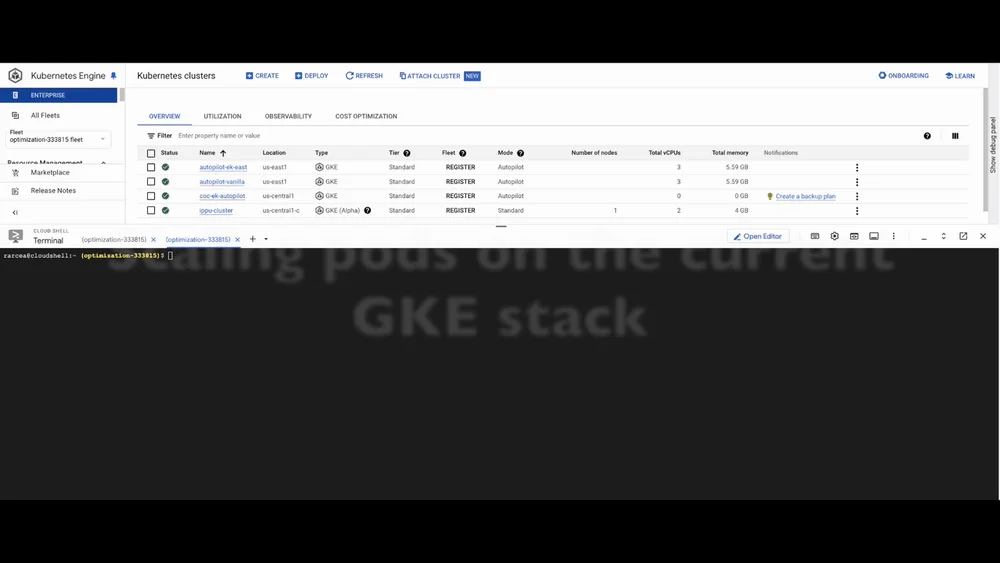
Google Kubernetes Engine (GKE) Autopilot is a fully managed mode of operation that provides ease of management, but it has limitations when it comes to autoscaling workloads, taking several minutes to create and add new nodes. This is not suitable for high-volume, fast-scale applications. To address this, Google introduced the container-optimized compute platform for GKE Autopilot, a reimagined autoscaling stack that provides near-real-time, vertically and horizontally scalable compute capacity. The new platform runs GKE Autopilot nodes on virtual machines that can be dynamically resized while running, without disrupting workloads. It also maintains a pool of dedicated pre-provisioned compute capacity that can be automatically allocated for workloads in response to increased resource demands. This results in a flexible compute that provides capacity where and when it's required, with key improvements including up to 7x faster pod scheduling time and significantly improved application response times. The container-optimized compute platform is available out of the box in GKE Autopilot 1.32 or later, and can be leveraged by creating a new GKE Autopilot cluster or upgrading an existing one. To optimize performance, it's recommended to use the general purpose compute class for workloads that require gradual scaling and small resource requests. The container-optimized compute platform is not suitable for specific deployment types, such as one-pod-per-node deployments and batch workloads.