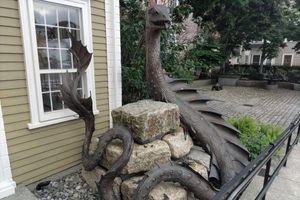
Gloucester Sea Serpent Statue in Gloucester, Massachusetts
In the summer of 1817, Gloucester, Massachusetts, experienced a phenomenon reminiscent of Jaws, but with a sea serpent instead of a shark. Initial sightings by a few individuals quickly escalated as hundreds witnessed an unusual creature. Experts arrived to investigate amidst growing hysteria, fueled by the difficult economic and environmental conditions of the time. The appearance of the serpent was interpreted by some as an apocalyptic omen. The Linnaean Society of New England investigated, concluding it was a new species, Scoliophis atlanticus, after examining a deformed snake. However, later scientific investigations revealed the snake was a common species with a spinal deformity. Decades later, the Boston Society of Natural History officially debunked the sea serpent as a case of mass hysteria. Several theories have been proposed to explain the sightings, including humpback whales, narwhals, or sperm whales with debris. Regardless of its true nature, the sea serpent has left a lasting impact on Gloucester's culture and folklore. The creature is still commemorated through art, statues, and historical tours, reminding visitors of the enduring mystery.