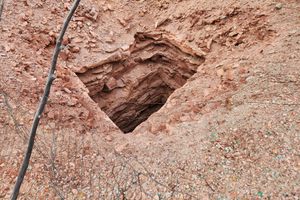
Grand Gulch Mine in Littlefield, Arizona
Copper's industrial importance surged in the late 19th century with electrical technology, shifting focus to previously inaccessible deposits. The Grand Gulch deposit, discovered after the Civil War, began mining in 1872 due to these changing economics. Its ore concentrates were exceptionally rich, up to 75-80% copper. These concentrates were wagon-freighted to St. Thomas, Nevada, and then shipped to Salt Lake City smelters. Despite demand, transportation challenges made the operation marginal, with peak production during World War I. This era saw about 80 people employed at the mine, including families. Post-war, plummeting copper prices and declining ore grades led to the mine's closure in 1919. A revival occurred in the early 1950s using sulfuric acid leaching technology on leftover low-grade ore. This process recovered approximately 6.6 million pounds of copper and 24,000 oz of silver. The deposit formed within a breccia pipe, a geological structure created by collapsing overlying rocks into underground caves. These pipes can act as conduits for metal-bearing solutions, precipitating mineral deposits. While many breccia pipes exist nearby, few contain metal deposits, and Grand Gulch's lack of economic uranium deterred further exploitation during the 1950s uranium boom.