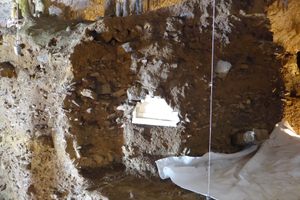
Grotte Scladina in Andenne, Belgium
Sclayn is a small Belgian village near Andenne, between the Meuse and hills. In 1971, a cave was discovered there by speleologists, who uncovered carved tools. The University of Liège joined excavations in 1978, continuing work uninterrupted since. These excavations yielded 120,000 animal bones and 20,000 Middle Paleolithic artifacts.
The most significant discovery occurred on July 16, 1993, with a left human mandible. Subsequent findings included 16 teeth, a right lower jaw, and jawbone pieces. These were the first Neanderthal remains found since the late 19th century. Scientific studies confirmed all 19 bones belonged to "Sclayn's Child," an 8-year-old Neanderthal, likely female, who lived 127,000 years ago. Exceptionally, DNA was extracted from a molar, representing the oldest human DNA ever sequenced.
The cave contains almost 15 meters of sediments in 28 main layers, making it Belgium's most complete sequence for climate research. Researchers worldwide regularly request samples from these layers. Due to the Sclayn child's remains and significant stratigraphy, the cave was declared an archaeological site in 1996. It was listed as exceptional immovable heritage of Wallonia in 2016. Since 2019, it's on the provisional UNESCO World Heritage List of "Neanderthal fossil sites in Wallonia." The Sclayn cave is Belgium's only active excavation site open to the public, making it unique.