Google Cloud Blog
Follow
GTIG AI Threat Tracker: From Prompting to Autonomy – The Evolution of Adversarial AI
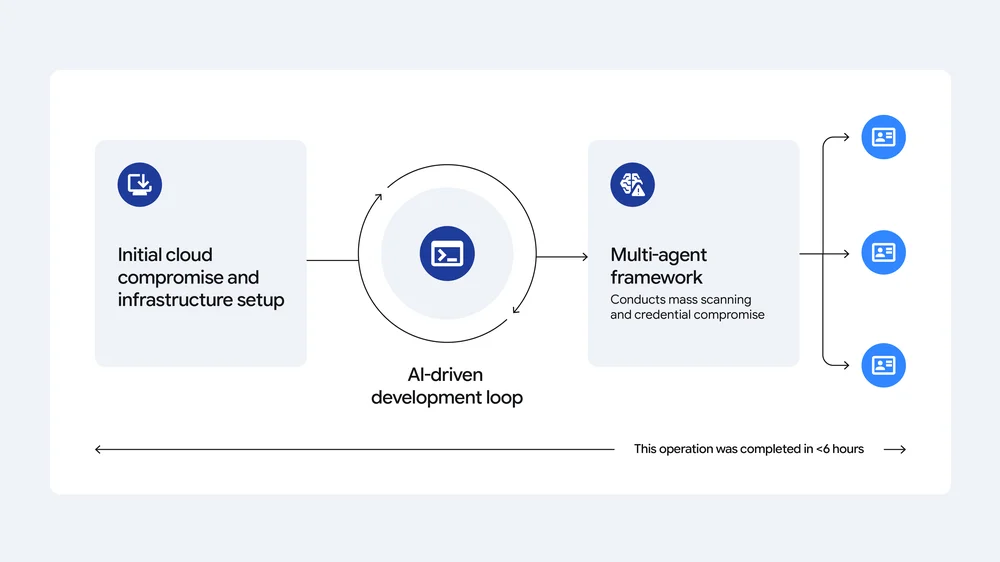
Adversarial actors are rapidly evolving their techniques, moving from basic AI prompting to sophisticated agentic AI workflows and automation. This evolution significantly reduces response windows for defenders. In Q2 2026, threat actors executed a mass credential harvesting operation using AI in under six hours after compromising a cloud resource. Furthermore, threat actors are increasingly targeting AI assets, including proprietary models, source code, and cloud compute resources for espionage, extortion, and theft.Software supply chain risks are expanding due to the integration of AI-assisted coding tools and open-source software. Adversaries are actively targeting developers, AI coding assistants, and AI security scanners to compromise open-source software. Proprietary AI intellectual property, such as models and code, is also becoming a prime target across various sectors. The shift towards agentic AI and automation enables adversaries to autonomously manage complex attack pipelines and resolve operational errors.AI serves as a force multiplier across the entire attack lifecycle, from reconnaissance to malware obfuscation and post-exploitation activities. Threat actors are also experimenting with AI to scale information operations campaigns. To bypass access costs and circumvent security measures, adversaries are procuring illicit accounts and hijacking enterprise cloud infrastructure for unauthorized AI computations. This intensified threat landscape necessitates robust defense strategies, including proactive model safeguards, specialized threat intelligence, and targeted containment. Google is implementing these multifaceted defenses to protect its customers and infrastructure. These advancements highlight a critical need for enhanced security measures in the rapidly evolving AI landscape.