Axios
Follow
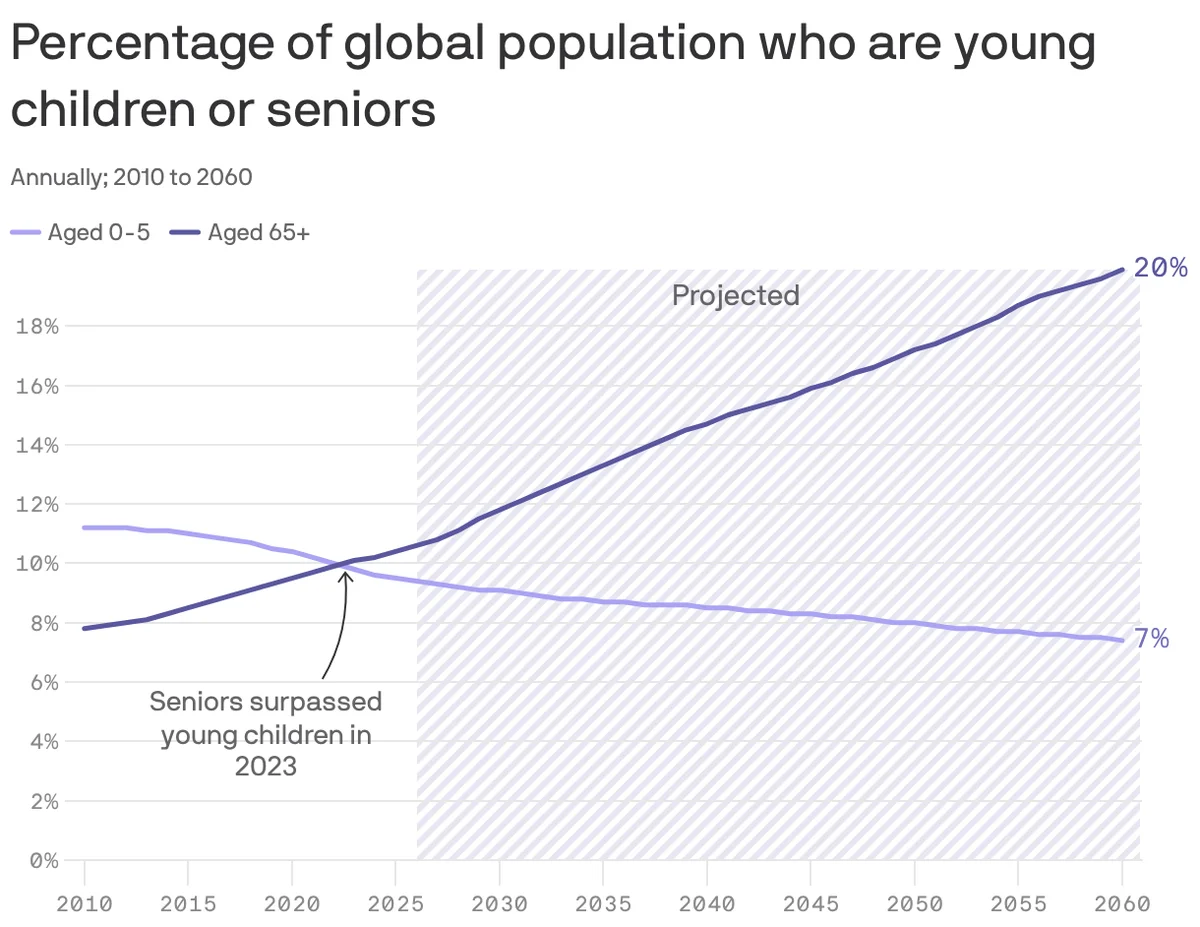
Historic first: Older adults now outnumber the youngest children for the first time
For the first time, individuals aged 65 and older now outnumber young children globally due to declining fertility and increased longevity. This demographic inversion is rapidly altering the balance between working-age and older populations. The aging trend is accelerating faster than demographers predicted, posing challenges for elder care and social programs. Over 71% of the world's population now lives in countries with fertility rates at or below replacement level, a significant increase from a decade ago. The 65+ population is expected to more than double by 2060, accounting for a substantial portion of global population growth. This low-birth era has extended beyond wealthy nations, with China and India now experiencing below-replacement fertility. Many countries face a "fertility trap" where shrinking younger generations support growing older ones, straining resources. While the U.S. is aging, other countries are aging at a faster pace, changing its global rank. Asia will see the largest numerical increase in its elderly population, while Africa's older population will more than quadruple. Despite the challenges, longer lifespans are a societal achievement, and aging populations can be viewed as an economic asset with proactive planning.