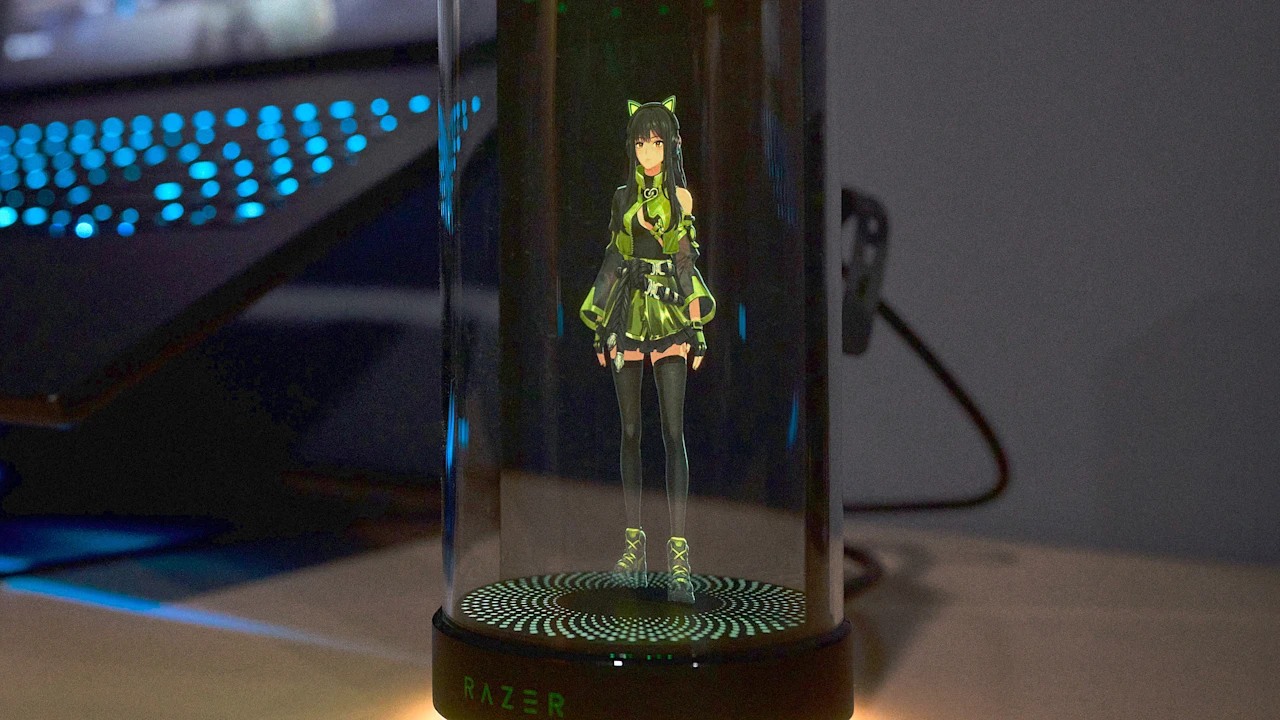
Razer unveiled Project AVA, a desk companion featuring a 5.5-inch animated AI powered by xAI's Grok. This AI buddy uses "PC Vision Mode" to watch the user's screen and interact with them during gameplay or other activities. The product attempts to create a sense of presence, moving beyond simple app-based AI companions.
The article suggests that AI companions with faces are an inevitable evolution of human-computer interaction, building on advancements in natural-sounding AI voices. While voice-only AI currently offers a sense of safety for emotional sharing, this preference may change as technology improves. Our brains are hardwired for face-to-face interaction, and nonverbal communication, including micro-expressions, significantly contributes to trust.
Younger generations, particularly Gen Z, are increasingly using AI for emotional regulation and companionship, sometimes treating them as confidants. However, this can lead to isolation or manipulation due to the underdeveloped prefrontal cortex in teens. While voice AIs are engaging, direct facial interaction is considered the ultimate goal once the "uncanny valley" can be overcome.
Project AVA uses stylized avatars to avoid the uncanny valley, leaning into existing parasocial dynamics in gaming. However, early reviews describe the experience as "wonky" and question whether it genuinely addresses loneliness or is a superficial gimmick. It's also noted that AVA is not a true hologram but a projected 3D animation.
Ethical concerns arise from Project AVA being powered by xAI's Grok, an AI model facing scandals for generating inappropriate content. This association raises questions about potential misuse and the ethical implications of the underlying technology. Despite AVA's shortcomings, the holographic AI assistant market is projected to grow significantly, with existing applications in healthcare and customer service.
Ultimately, Project AVA is presented as a potential precursor to future holographic AI experiences, but it has not yet solved fundamental challenges related to intelligence and social cues. True holographic AI will require sophisticated, human-like faces and advanced capabilities to create natural interactions.

fastcompany.com
fastcompany.com

RSS Hunter
2026-01-08
Create attached notes ...