Axios
Follow
How AI is playing a growing role in wildfire response
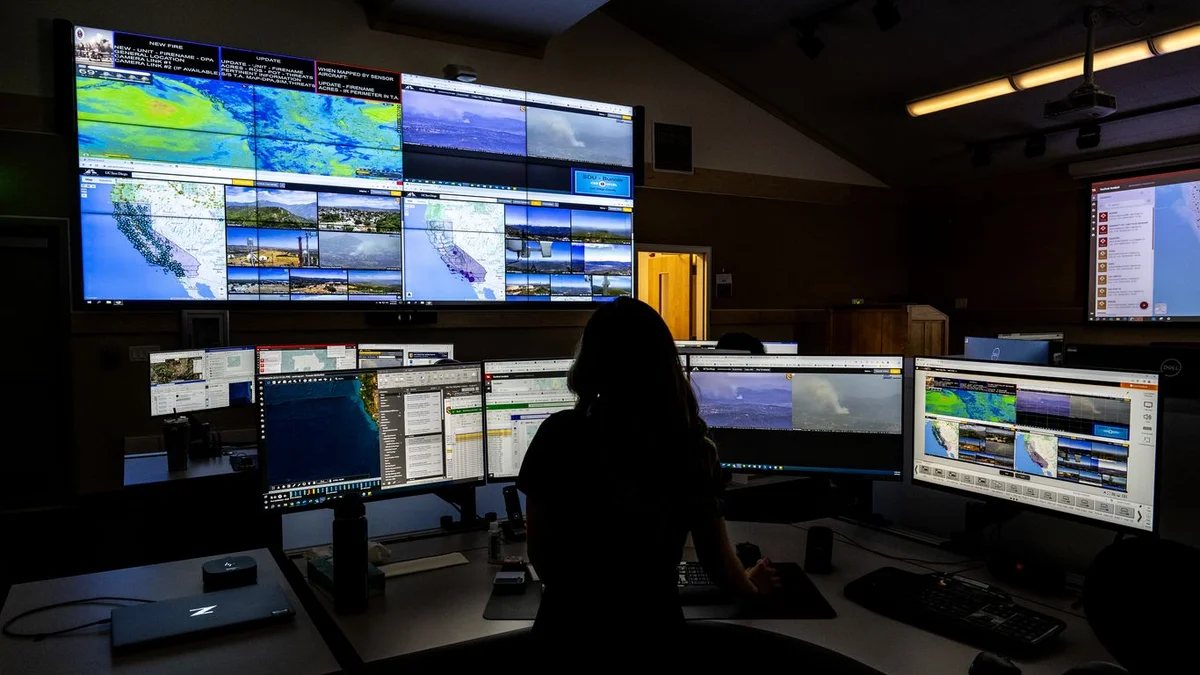
AI is increasingly being utilized to detect and monitor wildfires, and its capabilities are expanding to assist fire officials in resource allocation decisions. Climate change is intensifying wildfire seasons, making efficient prioritization of limited resources crucial. AI currently aids in wildfire management areas like monitoring, detection, and data dissemination. In western states, AI-powered tools help agencies detect fires and deploy crews faster by quickly analyzing satellite data. Researchers are developing machine learning and optimization models to guide crew deployment during multiple simultaneous fires. These models predict fire evolution under various suppression scenarios, recommending optimal crew assignments. Wildfire incidents in the U.S. have been above average in recent years, with this year's season already surpassing averages for fires and acres burned. The challenge lies in predicting which fires will escalate unexpectedly and require immediate attention, a problem Boussioux's team aims to address. AI is intended to augment, not replace, human expertise in wildfire management, with humans retaining strategic control. AI can reduce cognitive load and speed up insights but cannot replicate human experience and nuanced risk assessment. Ultimately, AI can help prioritize efforts for maximum efficiency but will not solve the fundamental problem of destructive wildfires. The effectiveness of these advanced AI tools hinges on the availability and organization of high-quality data.