Google Cloud Blog
Follow
How to Build Highly Available Multi-regional Services with Cloud Run
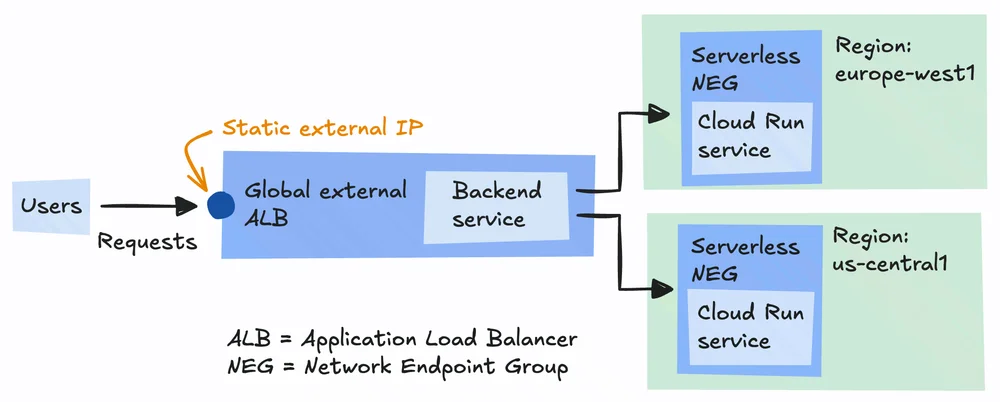
The Cloud Next 2025 talk, "Run high-availability multi-region services with Cloud Run," highlights how to build resilient applications on Google Cloud's serverless platform. Cloud Run offers built-in fault tolerance through autoscaling, which adjusts capacity to meet demand. It also features a decoupled data and control plane, ensuring management operations don't affect running services. N+1 zonal redundancy is provided by default within a region, isolating applications from zone failures. Container probes, specifically liveness probes, are crucial for identifying and removing unhealthy instances. While 100% availability is unattainable, applications can be made highly fault tolerant. To achieve regional resilience, developers must architect multi-regional deployments using a global external application load balancer and Serverless NEGs. Data redundancy and replication are key challenges in multi-regional architectures, with services like Cloud Spanner offering solutions. A preview of the upcoming "Service Health" feature promises automatic traffic failover between regions if a service becomes unavailable. This feature, currently in private preview, requires setting up readiness probes and minimum instances on each Cloud Run service. Readiness probes check instance health, while liveness probes shut down unhealthy instances. Service Health uses the aggregate readiness of instances to determine service health and reroute traffic when necessary. The demo showcased how Service Health enables seamless traffic migration to a healthy region during an outage.