DEV Community
Follow
Integrating Vision-Language Models into Agentic RAG Systems with ColPali
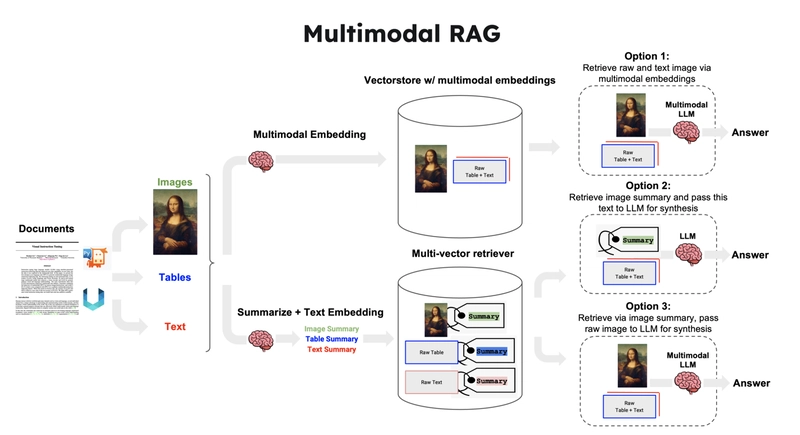
This tutorial explains how to build a Retrieval-Augmented Generation (RAG) pipeline using a vision-based model called ColPali, which addresses the challenges of traditional RAG systems with multimodal data. Traditional RAG struggles with documents containing images and tables because it fragments the data and loses context. ColPali, unlike traditional methods, processes entire document pages visually, preserving spatial relationships and context by utilizing vision-language models (VLMs). The system divides documents into patches, generates embeddings using VLMs, and calculates similarity scores between queries and document patches. It employs components like Image Encoders, Text Encoders, and LLMs to understand both visual and textual data, thereby creating rich embeddings for efficient retrieval. The tutorial also covers computing the ColBERT scoring matrix to rank and select the top-K relevant pages for response generation. It integrates CrewAI to create a collaborative agentic workflow where specialized AI agents handle retrieval, reasoning, and response generation. The setup involves installing necessary libraries and loading the ColPali model from Hugging Face, utilizing GPU or MPS for efficient processing. The tutorial uses a Class X Science book from NCERT as a sample dataset. Finally, the tutorial emphasizes the practical implementation of this system using Python.