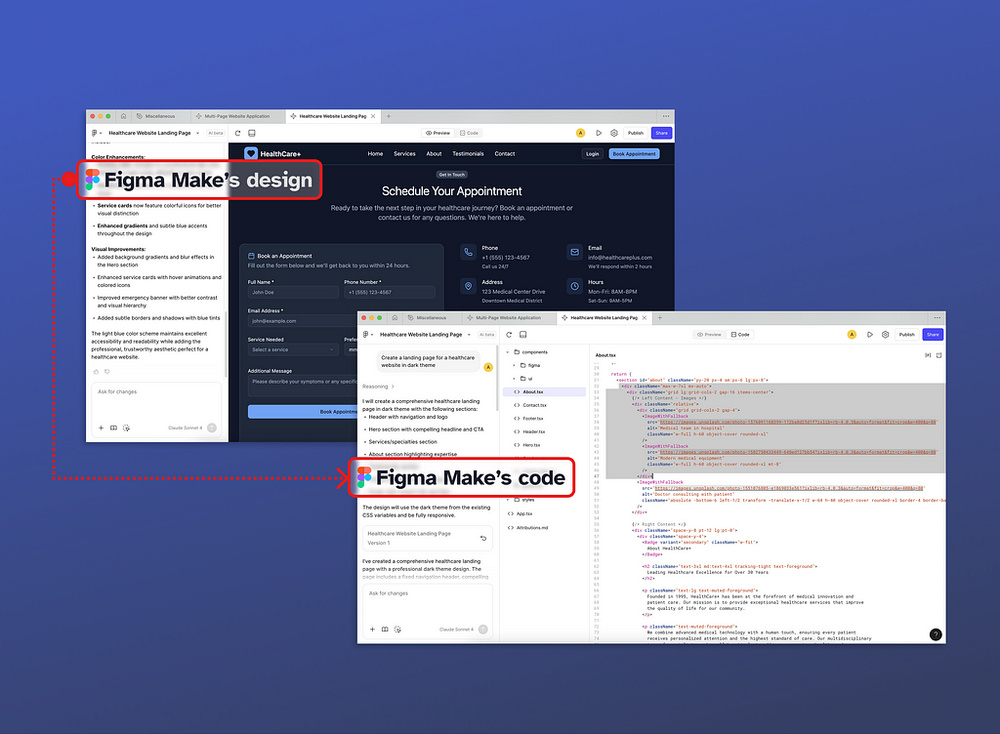
Front-end development is often outside a UX designer's expertise, leading to reliance on developers for clean code implementation. Design-to-code tools aim to optimize this process, addressing challenges caused by complex products and cross-functional teams. Figma Make, an AI-powered tool, generates code from design prompts, potentially speeding development. However, clean code is crucial; it's not just about functionality, but readability and maintainability, preventing technical debt. Messy code arises from time pressure, unclear requirements, and poor team alignment. Figma Make excels in creating quick prototypes but struggles with clean code structure, page layout limitations, and produces code requiring significant developer rework. Alternative tools like Anima App and Builder.io offer varying levels of semantic HTML usage and design accuracy. A comparison of these tools using a sample website revealed differing strengths and weaknesses regarding code quality and design fidelity. Anima App generally produced the most accurate and semantically correct code, while Builder.io significantly altered the original design. Currently, Figma Make is best suited for prototyping, not production-ready code, highlighting the need for careful evaluation of design-to-code tools based on specific project requirements. The study emphasizes the importance of understanding the limitations of AI tools and their potential impact on developer workflow.

uxdesign.cc
uxdesign.cc

RSS Hunter
2025-07-22
Create attached notes ...