Security Boulevard
Follow
Mastering agentic AI security through exposure management
As AI evolves from simple chatbots to autonomous, hyperconnected systems, a vast new attack surface emerges, significantly increasing cyber risk. These agentic AI systems can execute actions and access sensitive internal data, often with capabilities exceeding their intended goals, creating a large blast radius for potential harm. Securing these systems requires a proactive strategy focused on exposure management rather than just reactive breach detection. This involves gaining total visibility into AI agents, adjusting their security posture, and monitoring for semantic attack vectors.
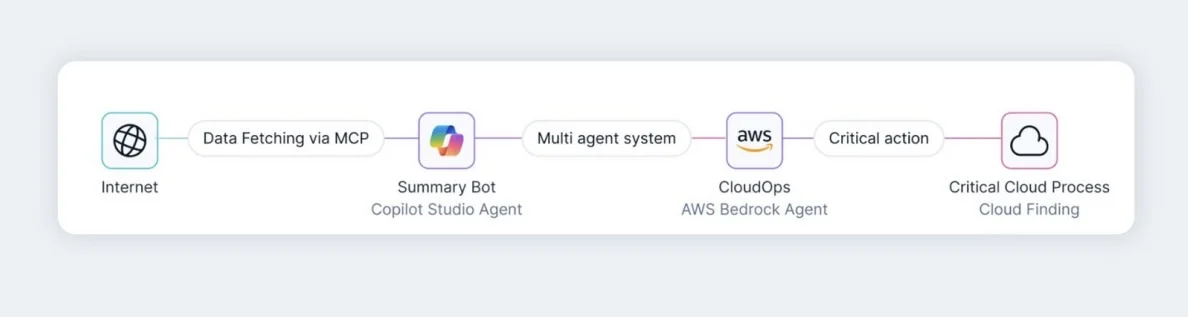
Organizations are increasingly deploying numerous AI agents for automation, leading to thousands operating autonomously and interconnectedly. This hyperconnectivity means many internal and external AI components are interwoven, creating complex dependencies. A misconfiguration or prompt injection in one agent can compromise others, leading to potentially catastrophic consequences. The agency of AI systems presents a challenge as they act autonomously without constant human oversight, and their probabilistic nature makes their outputs hard to predict. Many AI agents are granted capabilities that far exceed their defined goals, increasing their potential impact if compromised.
Traditional cybersecurity relying on exact matches is ineffective against AI, which operates on meaning and can be manipulated through semantic tactics like synonyms and paraphrasing. Attackers can bypass existing controls by exploiting these language-based vulnerabilities. To secure agentic AI, organizations must shift to a preventive approach centered on exposure management. This requires comprehensive visibility, understanding what AI agents can do within dynamic systems, and implementing threat detection mechanisms. Ultimately, adopting an exposure management strategy empowers cybersecurity teams to discover, assess, prioritize, and remediate risks across the entire AI attack surface.