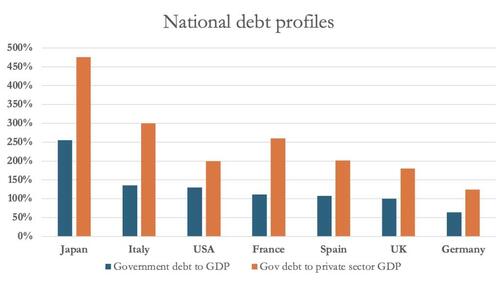
Stagnating economies and high government debt levels are creating funding crises and debt traps, particularly for the fiat dollar, Eurozone, and UK. A debt trap occurs when economic growth and tax revenue fail to keep pace with increasing debt and interest costs. Historically, post-WWII debt was managed through revenue growth outpacing debt, unlike today's situation where debt grows much faster than revenue. The article argues that the historical reduction of war debt was not due to financial repression but rather revenue growth outpacing debt, facilitated by a gold standard. In contrast, the current millennium shows government debt rising significantly faster than GDP and government revenues. This creates a classic debt trap for the US, exacerbated by a decline in foreign buyers of Treasury debt and rising interest rates. The Federal Reserve's ability to suppress interest rates is diminishing, exposing the US Treasury to market demand, leading to increased reliance on short-term T-bills. This shift in debt maturity structure reflects growing risk. The authors predict a bursting of the credit bubble, particularly impacting equities, which are currently vastly overvalued relative to bonds. The accelerating rise of gold prices in dollars is seen as a signal of the dollar's declining credibility and an impending collapse.

zerohedge.com
zerohedge.com

RSS Hunter
2026-01-07
Create attached notes ...