Medieval Strip Farming in England
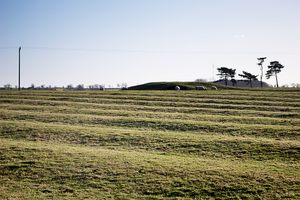
Medieval strip farming, also known as open field farming, was a historical agricultural practice primarily driven by the equitable division of land resources under manorial control. While it incidentally contributed to soil conservation and crop management, these were secondary to the feudal system's need for fair resource allocation. Farmers received long, narrow strips of land across different fields to ensure a mix of soil types. Ploughing these strips created distinct ridges in the center and furrows on the sides. When land transitioned to pasture, these ploughed patterns left visible scars of alternating ridges and furrows.This system has largely disappeared in the UK, but the landforms it created remain common. Two English villages, Laxton and Braunton, and one Welsh village, Laugharne, still practice authentic open field strip farming. On the Isle of Axholme, the practice persisted due to its unique geography as a dry island surrounded by marshland before 17th-century drainage efforts. After drainage, larger enclosed fields became the norm in the reclaimed areas, but the original higher land retained its strip farming methods. The survival of strip farming around Haxey may have been influenced by the need for common land for the annual Haxey Hood game. Although land ownership has shifted and strip farming areas have decreased, its presence is still significant enough to be highlighted by a local cycling route.